



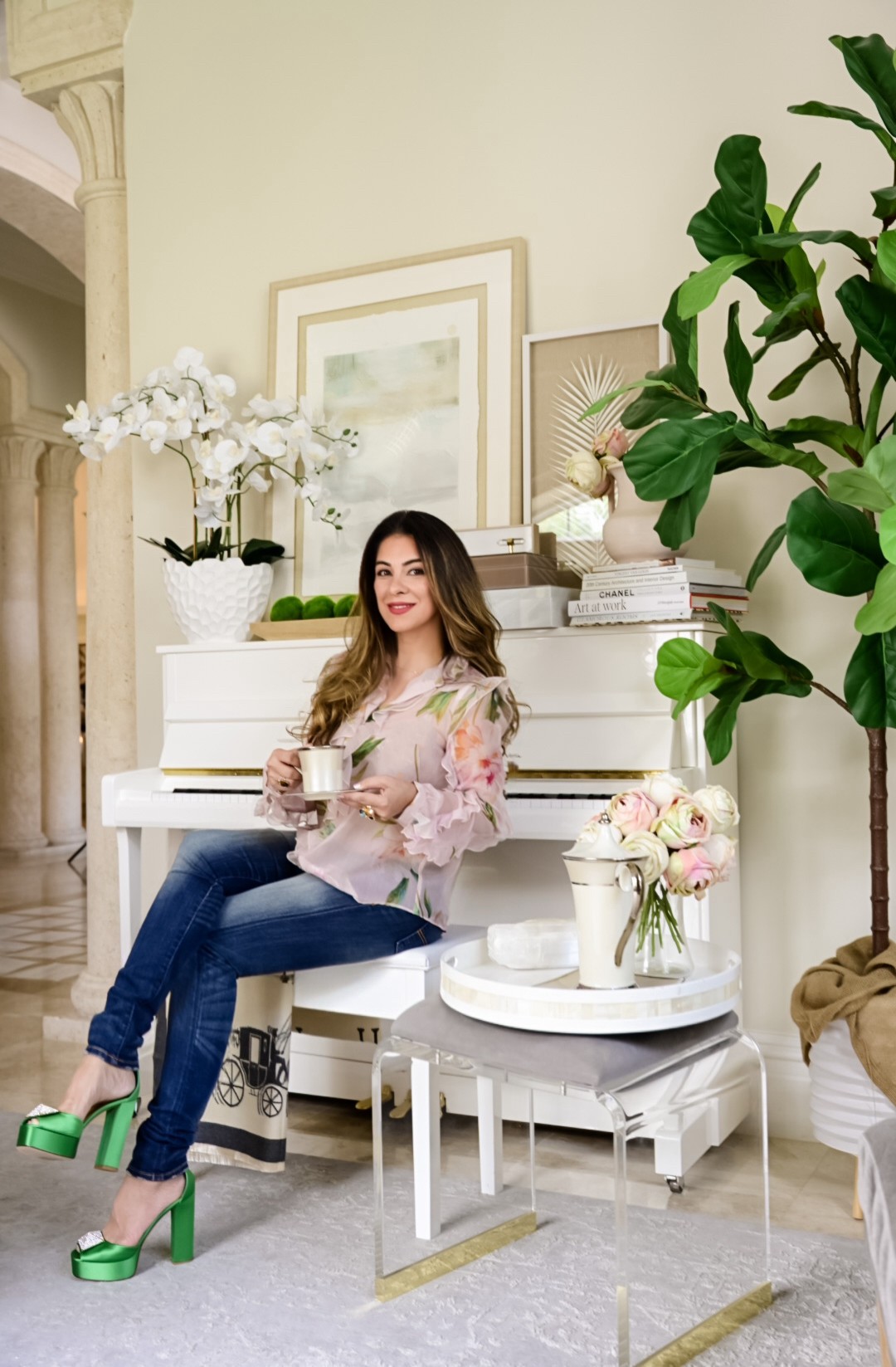
Today we’d like to introduce you to Amara.
Hi Amara, thanks for sharing your story with us. To start, maybe you can tell our readers some of your backstory.
How I Started and Got to Where I Am Today
I started Aalign not because I had everything figured out, but because I couldn’t ignore what I was learning.
I’m Amara Naqvi. I studied Interior Design and Marketing and later became certified in Interior Alignment® Feng Shui. I’ve always believed that design isn’t just about what looks good, it’s about how a space makes you feel. Over time, that idea deepened into something much bigger.
As I became more aware of the hidden chemicals in our everyday environments (in furniture, finishes, air, water, and more), I realized how much our built surroundings shape our well-being. Not just physically, but mentally and emotionally too. At the same time, I started noticing patterns: rising illness, environmental damage, more people feeling disconnected or unwell in their own homes. I felt like there was a missing conversation, and I couldn’t keep that to myself.
That’s really where Aalign began, as a way to bring those conversations forward. It’s a platform that blends practical design insight with a focus on health, energy, and the environment. I share and write about ways to reduce toxins, improve flow and functionality, and make spaces feel better, not just look better.
I also bring in holistic ideas like Feng Shui, biophilic design, and spatial awareness, not to make anything feel mystical or trendy, but because they actually help people feel more grounded, supported, and aware in their space.
My goal with Aalign isn’t to be perfect. It’s to make clean, thoughtful living more understandable and accessible. I share what I find, what I use, and what I believe can help others live and feel better in ways that are practical and real.
Aside from our main hub, which is the website, we also have a growing presence on Instagram and other platforms where we share ideas, tips, and tools through the lens of interior design, but always with a purpose. It’s a way to make these conversations feel more visual, more relatable, and honestly, more fun.
We want people to enjoy what we’re sharing, feel inspired, and see that healthy, mindful living is the future!
Can you talk to us a bit about the challenges and lessons you’ve learned along the way. Looking back would you say it’s been easy or smooth in retrospect?
Not really. One of the biggest challenges from the beginning was figuring out how to explain what Aalign is in a way that people could genuinely connect with. Writing the content was hard, because these aren’t topics most people are familiar with. At best, some are just now starting to understand what’s in their food—things like preservatives, additives, or hormones. But there’s still very little awareness around how the materials in our homes, furniture, and everyday products impact our health too. And it’s not small. These exposures add up, quietly, and they accumulate in a big way.
One of my biggest goals has been to make this feel less overwhelming and less complicated. How do you explain that the very things we live with every day—our flooring, paint, mattresses, even our deodorant—can contribute to real harm, without sounding extreme or alarmist? How do you help someone see that this isn’t just about “the environment” out there somewhere, but about us? That we are part of it. That our bodies are reacting to these exposures every single day.
We’re now living in the aftermath of the industrial age, with over 85,000 chemicals registered for commercial use in the U.S., and tens of thousands still in circulation today. Most of them have never been thoroughly tested for safety, yet they’re used in everyday products and materials, from what we sit on, sleep on, clean with, and breathe around. These chemicals don’t just disappear, they impact our air, water, soil, and our health.
And not just when they’re disposed of, but even during production and use. And those ripple effects are starting to show up everywhere. Whether it’s red tides in our oceans, extreme weather, or the sharp rise in certain health conditions, there’s a connection that too many people still don’t see.
Some of it gets dismissed because climate change and environmental topics have become politicized, and people don’t know what to trust anymore. I understand that. It makes it harder to reach people. But I have to keep trusting the process. My process. Because I know this work matters.
That disconnect between how we live and what we’re exposed to is hard to communicate. Especially when many people don’t yet realize that so many chronic health issues are linked to the environments we spend the most time in.
The second challenge is definitely on social media. Trying to explain what a non-toxic bed actually means, or why energy-efficient design matters, or how green buildings help, those aren’t easy ideas to translate to someone who hasn’t studied this or gone down the research rabbit hole. Finding ways to make the message feel clear, relevant, and empowering, without watering it down—has taken time. But we’re growing. We’re learning. And every time someone reads a post, shares a tip, or simply starts to ask questions, it feels like a step in the right direction. That’s what keeps me going.
Thanks – so what else should our readers know about Aalign?
Aalign is a platform that helps people create healthier, more intentional spaces in a way that feels simple and approachable. We focus on low-toxic living through the lens of interior design, and we try to make things that are usually overwhelming like materials, chemicals, and certifications—feel more understandable.
We share product guides, practical tips, and educational content that connects design choices to health, energy, and the environment. What makes Aalign different is that we don’t just focus on how things look.
We care about how a space feels, how it functions, and what it’s made of. There’s a deeper layer to everything we do, whether it’s about improving indoor air quality, choosing safer materials, or creating better energy flow in a home.
I’m especially proud of the trust we’re building. People come to Aalign for clarity and real tools, not pressure or perfection. And while we’re still growing, we’re already building a community that wants to make better choices, not just for their homes but for their families and the planet.
At the end of the day, Aalign is here to help people feel better in the spaces they spend the most time in—and show that design can be beautiful, supportive, and cleaner all at once.
Are there any important lessons you’ve learned that you can share with us?
The most important lesson I’ve learned is that clarity takes time, and trying to explain everything at once usually does more harm than good. When you’re passionate about something complex, like health and design, it’s easy to over-explain. But small, clear steps connect better.
I’ve also learned to trust my own pace. Building something outside the norm takes patience, and the more I stay true to what feels aligned, the more it resonates with the right people.
Contact Info:
- Website: https://aalign.com/
- Instagram: https://www.instagram.com/aalign_/
- Facebook: https://www.facebook.com/aalignofficial
- Other: https://www.tiktok.com/@aalign_official



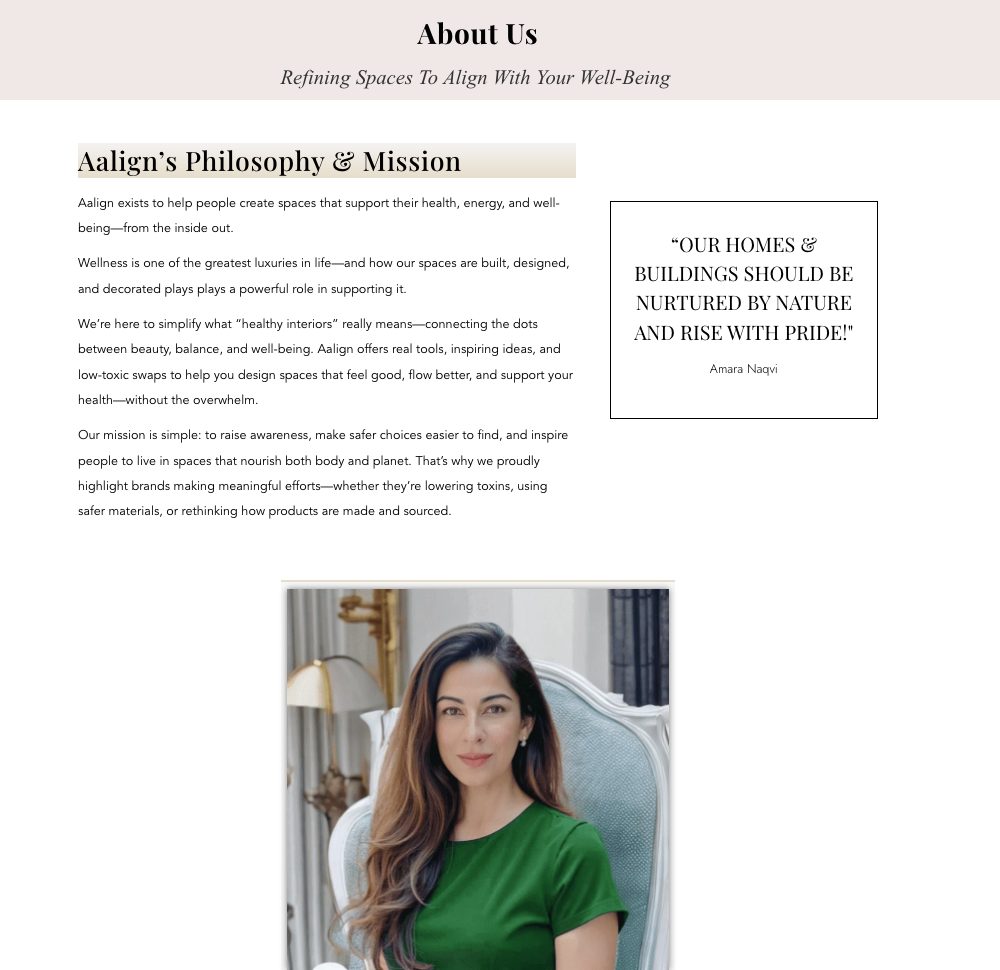
Image Credits
Photographer: Sona Photography
Website: sonaphotography.com
Instagram: @sonaphotography