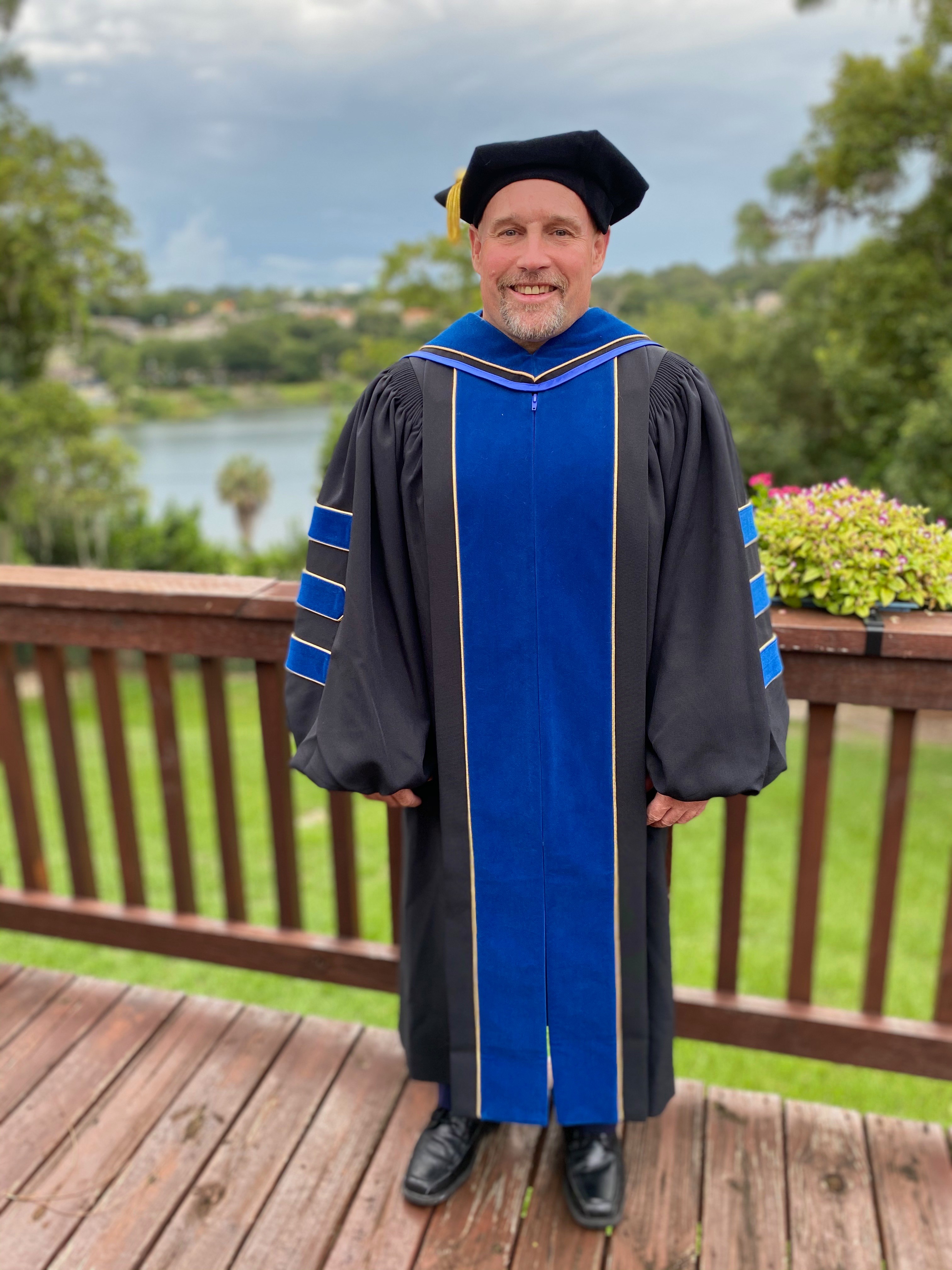



Today we’d like to introduce you to Dr Thomas Moore.
Hi Dr Thomas, so excited to have you with us today. What can you tell us about your story?
Resilience and Perseverance Win
Writing a chapter in a book about resilience and perseverance never entered my mind twenty-four years ago when the judge ordered me into custody of the Florida Department of Corrections on June 22, 2000, to serve a split 15-year sentence for a second-degree violent felony. After serving nine years and three months at four different Florida Prisons, I remember the discharge officer sarcastically asking me if I planned to switch to white-collar crime since I spent a lot of my incarcerated years studying business and taking college courses. I told him, “I will earn a Ph.D. in business and open my own company. Maybe one day you could come to work for me?” Today, I have a Ph.D. in Business administration (Financial Management) and own a Licensed Mental Health Facility in Florida that employs 23 therapists and other staff. I am also a professor of entrepreneurship and other business courses offered by a local state college and a nonprofit organization committed to giving incarcerated individuals a second chance through education. I do not introduce these titles and accomplishments for bragging, but I want incarcerated people to know that second chances are possible, but it comes with a price. The cost of my second chance entailed resilience, perseverance, and a mindset that did not take no for an answer. When people told me, “You can’t do it.,” I asked myself, “How can I do it?” I will emphasize three critical points in my journey where I encountered unique challenges and overcame them through the power of resilience, perseverance, education, and mentorship.
Hello. My name is Tommy, I am a child of God, and I celebrate recovery from drugs and alcohol. I was born into a middle-class family in Orlando, Florida, in 1970. My dad was an electrical engineer for Lockheed Martin, and my mom was an Orange County public school teacher. I have a brother who is three years younger than me. My earliest childhood memory was of a woman from my mom’s Methodist church, telling me God would use me in mighty ways when I grew up. I was somewhere around five years old at the time. That seemed far from the case as my life progressed. I encountered my first trauma at around ten years old. My dad was transferred to Germany for 18 months for a defense project, and since we were technically not military, we had to live in the community and were not allowed to reside on base. I felt lost and nervous and experienced culture shock while trying to fit in with this foreign environment. During these years, I embraced a core character defect that would drive my decision-making for many years. A teenage girl seduced me, and I could not perform. Word leaked out to the children on base, and I found myself being teased and bullied. So, as a 10-year-old boy, I began mastering my survival coping skills of performance-based acceptance and making myself appear important around people. I grew up as the child who would take the dare, get in trouble, and feel accepted, while the kids who did not care about me laughed and walked away as if they had nothing to do with it.
When we returned to the United States, I felt lost again, but I could speak the language here. Around 12 years old, a neighborhood man around the age of 20 molested me in his bedroom. I felt ashamed, dirty, guilty, and confused. Was I gay? Did I like it? How did this happen? Afraid my abuser may turn his sights on my brother, I allowed his abuse to continue. I became resentful of my brother, and hatred started to fill my life. I began acting out and beating my brother up, disrespecting the house rules, and doing what I wanted when I wanted. I found that drugs and alcohol would sedate some of my anger and shame, and they would also grant me acceptance with the friends I thought were cool. By the time I was 15, I was out of control. I was stealing from my family, using drugs daily, and disrespecting everyone who came in contact with me. I hated myself, and I hated everyone else, too. My dad laid down healthy boundaries at his wit’s end and took me to a secular rehab facility in Orlando called “Scared Straight.” This hard-nosed, in-your-face approach terrified me, and the first chance I got, I hit the door and scaled the fence. Determined to change my life, I begged my dad to let me come home. He came and got me, told me I was only welcome back if I completed a program, and took me directly back to straight. I felt insignificant, abandoned, and worthless again. The next time I escaped, I did not call my dad. At 16 years old, I lived on the streets of Orlando, petrified, hopeless, and defeated.
One night, after sleeping behind a garbage dumpster, which I learned was not a good place because I had bug bites all over my body the following day, I wandered into a small church on Forest City Road called Orlando Christian Center, and God met me at the door. The pastor, now a well-known evangelist, Benny Hinn, took me in. He began disciplining me and sent me to a Christian program in Bradenton called “Loving Hands.” I fell in love with Jesus and spent many hours in his word and learning about his grace daily. Benny had arranged for me to go to Oral Roberts University, and I was head-deep in the ministry. However, what I did not do was deal with the hurt and character defects of my past. I also did not have a support group of tangible people around me holding me accountable. So, when I began having sex outside of marriage, I decided I would not be a hypocrite. I would not go to church, raise my hands, praise God, and then go home and live in sin.
I stopped going to church and began the chapter of my life of “controlled drinking and drug use.” I drank every day, smoked pot all the time, used cocaine only on the weekends, and said it was ok because I held down a job. I worked as a mechanic in a 5-star dealership for years. I would go to the bar every night with the guys for a few drinks. The problem was when they left to go home to their families, I stayed, finished their half-empty glass, and ordered more. My character defect of wanting acceptance was in full swing, and I remember the insanity of spending one month on my American Express bill of over $1,000 solely on bar tabs. I needed people to believe I was something I wasn’t. I had to borrow money from my parents to pay for electricity to cover my drinking expenses. I got my first DUI in 1995, and I remember feeling like my career was over, and I was determined to quit. I promised I would only drink at home and I would never drink and drive again. And I didn’t for about a month. My reckless behavior was about fun, and I convinced myself I wasn’t hurting anyone. That all changed in 1999. I was throwing a party at my dad’s dock, drinking and boating with my friends. My then-pregnant girlfriend showed up, we fought, and I dealt with it the only way I knew how I drank. Except it wasn’t like every other night.
On the way home, my phone flew off my visor. I reached down to get it, and when I came up, a car was still parked in front of me. I tried to swerve, but my reaction time was altered, and I hit the right rear corner doing about 60 miles per hour. I went through the windshield of my truck. I recall hearing people in the other car calling for help and me telling the paramedics to help them. I was rushed to the hospital and received over 75 stitches in my forehead, both inside and out. The following day, I remember my mom walking into my room and saying,” The passenger didn’t make it.” I remember falling to my knees and yelling at God. NOOOOOO!!! NOOOO! That morning was the lowest point of my life.
I vividly remember looking at the pull-up bar out in the backyard and tying a rope in a knot, trying to build up the courage to end my life. Because of this tragic event, the judge sentenced me to 11 years in prison, four years’ probation, loss of driver’s license, and restitution. So I entered the Florida prison system at 29 years old with a six-month-old son, convinced I would never make it out alive, but God had different plans. It was in prison that God began to work on my life. I rededicated my life to Jesus Christ and started attending Alcoholics Anonymous meetings. These meetings gave me a glimpse of recovery. I began facing those core feelings of shame, guilt, insufficiency, and worthlessness. I began working on the 12 steps while in prison and started finding healing through a painful yet productive process. I realized that freedom was not a physical but a spiritual state and that I could still be free even though I was behind a razor wire. I began seeing my time as an opportunity to improve myself and grow closer to God. I got involved with Christian 12-step programs offered at the institution, started taking fitness classes, attended bible studies, and sponsored other newcomers struggling through the steps. When the guards come by and clang my bunk, yelling, get up, convict, let’s go, scumbag, I would wash my face in the scratched-up plastic mirror and say quietly to myself, I’m not a convict; I’m not a scumbag, I’m a child of the king, and I would walk to the recreation field with a mindset of royalty. People would come to me and ask how I had hope in such a harsh environment. Did I even feel the suffocating oppression that seemed to occupy the air constantly? That always allowed me to witness and confirm that my circumstances did not define me. Although I did not know how it would work out, I knew God was working things out for my good.
I made some amends with my brother, who would come on annual visits. He had channeled his life toward positive things and had earned his way to the executive director of Chicago Trade on the Chicago Board of Options Exchange. One day, I opened mail from him. He agreed to pay for college business classes, one class a year, beginning immediately. So, I began taking college business courses through Ohio University’s College for the Incarcerated Program (CIP). I fell in love with the topic of business. I started asking my dad to invest some of my commissary money, instructing him where I wanted it. God worked on my life by giving me hope in a dark valley. God gave me favor with guards and inmates, and I began learning A/C work, electrical work, and motor pool work. It wasn’t desirable, but it beat the mow squad. I don’t want to glamorize prison, it sucked, and it was often very volatile and highly frightening. It was hard to stay sober with the abundant drug supply and the pain of watching my son grow up in pictures. I had two major surgeries while incarcerated and almost died once when I did not seek medical attention, which turned into extreme dehydration. But I always felt that if it was my turn to go home, I was going to a better place.
When I got out in September 2009, I surrounded myself with a support group. I knew from experience I could not stay sober alone, so I found the nearest Alcoholics Anonymous meeting and immersed myself in service. I began chairing meetings, sponsoring people, and growing my relationship with God. I attended church regularly, unsuccessfully looked for work, and honestly had a hard time reintegrating back into society. I applied to Lake Sumter Community College, but the administrator said I would not be admitted. I remember coming home triggered by rejection, insufficiency, and unworthiness. But this time, I called my mentor, asked for prayer, and trusted God. The next day, the same enrollment advisor who gave me the admission denial news called me and said, “Mr. Moore, I have worked here for over twenty years, and this doesn’t happen, but they will give you one semester on probation.” That was all I needed.
I took that offer in 2009 and encountered my first unique challenge since serving almost a decade in prison. I had no driver’s license, and the school was ten miles from home. I knew the power of education, so I resiliently pedaled my bike 10 miles a day to attend classes. Envision a middle-aged man, I went into prison at 29 years old and exited at 39 years old, riding his bike in the middle of Florida summer to the local community college. One afternoon, I remember young girls between 18 and 20 years old telling me I should exercise after class because I came into school “stinking.” I laughed with them and said, “You’re probably right. I should consider exercising after class.” They did not know that if I wanted my education, it was my only way to arrive. In 2011, I earned my Associate in Arts degree and automatically had the right to enter the University of Central Florida in Orlando through a direct connect program contract that the two institutions had entered into. The University of Florida mandated I be placed on probation since I would attend on-campus. The administration was not glad I had the same automatic enrollment privileges as the other students who graduated with an Associate in Arts from the community college. I then encountered my second unique challenge: getting there without a driver’s license. Fortunately, there was an option, but it would require resilience, perseverance, and a lot of patience. I had the option of public transportation. I rode a city bus 5 hours a day, 2 ½ hours one way, five days a week, for two years, from 2011 to 2013, and earned, with honors, my Bachelor of Science in Business Administration (Finance) degree.
I remember nearing the end of my undergraduate tenure at UCF and wanting to come off probation before graduating. I had amassed over 30 letters of recommendation, had earned the “President’s List” multiple semesters, and even been inducted into the elite Phi Kappa Phi honor society. I was granted a hearing and remember entering the interview with high hopes. If anyone had shown that change could happen, I had the tangled evidence to present to the board. I remember one doctor on the panel speaking out. He said, “I work with addicts and alcoholics every day, and you all try to manipulate us for favorable outcomes. If I have my way, you will not come off probation as long as you’re on this campus.” I remember the chairman of the interview saying, “What do you have to say to that, Mr. Moore?” I replied, “God grant me the serenity to accept the things I cannot change, courage to change the things I can, and wisdom to know the difference. I can’t change whether or not you let me off probation, but I can continue earning straight A’s in my next two colleges in pursuit of my Ph.D.” Everyone at the table smiled, and I thought I was in a good position. They asked me to exit the room while they deliberated and brought me back in. The chairman then told me I would not come off probation while I was at the university. No one promised me it would be easy, but I knew it would be worth it if I did my part. I did just what I said I would, and in 2015, I earned my Master’s in Business Administration (Finance) degree from the Florida Institute of Technology. On June 10, 2020, in the heart of the coronavirus pandemic, I defended my dissertation and earned my Ph.D. in Business Administration (Financial Management) from Northcentral University.
My employment pursuit remained stagnant. Everywhere I went, employers wanted to know if I had a felony. These days, “ban the box,” which the Prison to Professional organization contributed to getting installed, did not exist. I remember my probation officer telling me if I did not produce a W2 in the next week, he would be required to send me back to prison. This was my first encounter with entrepreneurship. In September 2009, the worst housing and financial recession in decades remained at its lowest point, and I was looking for work to stay out of prison. My dad and I decided to open a business to show my probation officer a weekly pay stub and maintain my freedom.
At first, I was using biweekly checks drafted from my dad’s retirement, but I started putting my education into practice, and the landscape began changing. I would learn theory in school and come home and try it in practice, and guess what, it worked. The business grew, and we sold it in 2014 after completing my probation. The proceeds allowed my dad to retire for the rest of his life and allowed me about three years of living expenses. I began giving back to my community and using my business education to help a recovery program at my local church. We started with two groups and about twelve people. In a few years, we had grown to 12 groups and over 300 people in attendance. The church committee said we must hire him on staff because he is on our campus too often to justify volunteering. So, I began getting paid as a recovery leader and kept my eyes open for the next opportunity.
I have always dreamed of authoring a book after prison release titled “From Prison to Ph.D.,” and so I began embarking on that journey. It was 2017, and I wanted to know if anyone had the right to that title. A simple Google search connected me with Dr. Stanley Andrisse, who would change my life trajectory. He had already written a book, was an accomplished professor, and had just founded a reentry program called Prison to Professional in Baltimore. I got the nerve to write him an email and ask if he would be willing to mentor me since he had already accomplished what I desired. He said he would, but I must attend his program first. He emphasized that he invested in potential and wanted to see if I was genuine in my effort to succeed. I did not graduate from that first cohort. I think it was cohort 8, but I returned and graduated with cohort 11. Dr. Andrisse remained true to his word and began giving me opportunities to partner with P2P, and he gave me a platform to use my voice in second-chance advocacy. I had just started a new venture with my best friend in Florida, opening a Licensed Mental Health private practice. He invited us to partner with P2P in helping find quality therapy in the residence of graduating scholars.
In December 2017, my best friend and I opened Priority One Coaching, Counseling, & Consulting for the primary purpose of helping people in our community. We now have twenty-three licensed mental health marriage and family therapists who practice in our two locations near Orlando and Tampa, Florida. I have had the honor of helping hundreds of people work through deep-rooted issues and watching them flourish and become the best version of themselves. I now have over twenty-four years of uninterrupted sobriety from drinking alcohol. I now have more years of being sober than I have with drinking alcohol. I own my home, and God has bought me a beautiful wife, daughter, and mother-in-law. My wife and I have been married for over eight years now. She loves me for me and holds me accountable to be the God-fearing husband, father, and man I claim to be. My relationship with my son has thrived in authenticity and has never improved. I enjoyed his enthusiasm as he traveled on his educational journey to earn his bachelor’s in computer science from the University of Florida.
My relationship with my parents has grown exponentially. People used to ask me, “Why are you majoring in finance? Florida will not give you a financial advisor license, and no one will hire an ex-felon to manage their money.” I had no good answer. I didn’t know why God led me to this field. Then, in September of 2017, in the second year of my doctorate, my dad asked me to review my parents’ retirement portfolio. I uncovered that their life savings were entangled in high-commissioned financial products that were way too risky for their age tolerance. God gave me the honor of helping them get away from the insurance sales associates’ advisors and into a well-diversified portfolio in a reputable financial firm. I realized that going to school for finance was never about managing a lot of money in corporate America. God had used finance strictly as a medium to reconcile a relationship between a father and son. I’ll never forget the day my dad told me he believed I was on his team again.
To the hopeless person, I encourage you to shift your mindset and realize that your past does not have to define your future. I’m not here to tell you that the path remains easy. If that were the case, the recidivism rate would not stay over sixty percent of offenders returning to prison within the first three years of release. I am here to tell you that I am living proof that resilience and the power of education and mentorship will win as long as you persevere. Keep striving for excellent integrity by doing the next right thing even when no one is looking. I also want to encourage you to have some patience and grace with yourself. These negative coping skills and destructive behaviors that landed us in prison did not develop overnight. They will not be remedied overnight, either. For my future, I do not believe that God is finished with me yet. I have relocated to Nebraska to support my wife’s career, and God has great things for me here. I teach residents in 2 Nebraska prisons character development, job readiness, and entrepreneur skills. My sole purpose is to give hope to the hopeless by letting people know their past does not have to define their future. I can confidently tell you that God is working all things out for my good regardless of my future circumstances. I have gone from prison to Ph.D. and won through resilience, education, and mentorship. Thank you, Dr. Andrisse, for believing in me.
Would you say it’s been a smooth road, and if not what are some of the biggest challenges you’ve faced along the way?
please read my chapter in the previous question. I had to ride a city bus 5 hours a day, 5 wdays a week, for two years to earn my BSBA from UCF
As you know, we’re big fans of you and your work. For our readers who might not be as familiar what can you tell them about what you do?
I teach Business and Entreprenueship for a local community college and a non profit inside the prisons throughout Nebraska, I also own a private practice calle Pr4iority One Coaching, Counseling, 7 Consulting that employees over 23 LMFT and LMHC in two locations, Clermont and Wesley Chapel FL
Do you have any advice for those just starting out?
Factor in the payroll taxes when developing your business plan. Start slow and enjoy the proceess. You never fail you only learn.
Contact Info:
- Website: https://priorityonecoaching.com/