




Today we’d like to introduce you to V. Lee Henson.
Alright, so thank you so much for sharing your story and insight with our readers. To kick things off, can you tell us a bit about how you got started?
I’m V. Lee Henson, and my story is really one of accidental purpose.
I didn’t wake up one day and say, “I’m going to build a global Agile brand.” I started my career inside organizations that were struggling. Smart people with good intentions, but buried under process, politics, and pressure to deliver faster every year with fewer resources. I watched talented teams burn out, leaders become disconnected, and customers get less value, not more.
Agile found me long before it became fashionable.
In the early 2000s, I was exposed to Agile ways of working when they were still considered radical and risky. What immediately stood out wasn’t the framework. It was the humanity. Agile respected people. It emphasized learning, trust, feedback, and outcomes over optics. That resonated deeply with me.
As I leaned in, I realized something important:
Most organizations weren’t failing because they lacked tools or frameworks.
They were failing because leadership systems, incentives, and behaviors were misaligned.
That realization became the foundation of everything I do.
In 2005, I founded AgileDad with a very clear mission:
Make Agile practical, human, and real, without the dogma.
From the beginning, AgileDad was never about certification factories or rigid playbooks. It was about education that sticks. Training that feels more like a conversation than a lecture. Learning that people actually use when they go back to work on Monday.
Over the years, that philosophy took me into Fortune 100 companies, government and DoD environments, startups, healthcare, finance, retail, entertainment, you name it. I’ve had the privilege of coaching and influencing thousands of leaders and teams across industries, cultures, and levels of complexity.
Along the way, I became a Certified Scrum Trainer, built one of the largest independent Agile education libraries in the world, and launched platforms like AgileDad Speaks and The Agile Daily Standup Podcast to reach people beyond the classroom.
The podcast, in particular, came from a simple idea:
What if learning Agile didn’t require a class, a budget, or permission?
Short, daily, practical conversations. No fluff, no sales pitch, just real-world Agile thinking. That mindset mirrors how I teach and how I lead.
Today, my role as Chief Edu-tainment Officer is very intentional. I believe learning should be engaging, memorable, and occasionally uncomfortable, in a good way. If people aren’t smiling, questioning, or thinking differently by the end of a session, I didn’t do my job.
Where I am today is the result of one consistent belief:
Agile is not about frameworks. It’s about people, leadership, and outcomes.
And as long as organizations continue to struggle with change, complexity, and alignment—I’ll keep showing up, teaching, and challenging the status quo.
Would you say it’s been a smooth road, and if not what are some of the biggest challenges you’ve faced along the way?
Not even close, and I say that with complete honesty.
Anyone who tells you the journey has been smooth either hasn’t built anything meaningful or hasn’t been paying attention.
One of the earliest challenges I faced was credibility. When Agile was still emerging, it was often dismissed as “lightweight,” “undisciplined,” or “just for software teams.” Convincing executives, regulators, and deeply traditional organizations, especially in government and highly regulated environments, that Agile could increase discipline rather than remove it was an uphill battle. I spent years translating Agile into leadership language executives could trust.
Another major obstacle was Agile dogma.
Ironically, some of the biggest resistance didn’t come from traditional leaders, it came from within the Agile community itself. There’s a tendency in every movement to protect purity. I’ve always believed that frameworks should serve people, not the other way around. When I challenged rigid interpretations, questioned certifications as the end goal, or emphasized outcomes over rituals, it wasn’t always popular.
But it was necessary.
Scaling AgileDad itself was also a challenge. I made a very intentional decision early on to never chase growth at the expense of values. We don’t outsource teaching to people who don’t live it. We don’t dilute content for volume. We don’t take external funding. That means growth is slower, but it’s also sustainable, authentic, and aligned with who we are.
There were also personal challenges.
Travel fatigue. Burnout risks. Saying no to opportunities that looked good on paper but didn’t align with my purpose. Building a content engine: podcasts, videos, writing, while still coaching, teaching, and running a business isn’t easy. There were moments where stopping would’ve been simpler.
And then there’s the biggest challenge of all:
changing leadership behavior.
Teams want to improve. Leaders say they want change. But changing how decisions are made, how success is measured, and how power is shared, that’s uncomfortable. I’ve had rooms go silent. I’ve had executives push back hard. I’ve had transformations stall because leadership wasn’t ready to look in the mirror.
Those moments are never smooth, but they’re always revealing.
Looking back, every struggle shaped the clarity of the AgileDad mission. It forced me to get sharper, more grounded, and more intentional. It reinforced my belief that real agility isn’t fast, it’s honest.
If the road had been smooth, I probably would’ve missed the lessons that matter most.
Thanks for sharing that. So, maybe next you can tell us a bit more about your work?
I specialize in the intersection of Agile, leadership, and real-world execution. That distinction matters to me. I’m not focused on teaching frameworks in isolation. I focus on how leaders think, how decisions are made, and how teams are enabled (or unintentionally constrained) by the systems around them.
Through AgileDad, my work spans:
Leadership development
Agile and Lean education
Organizational change and transformation
Facilitation and coaching at scale
Helping teams shift from output to outcomes
Integration of AI into the modern workplace
I work with everyone from first-time Scrum teams to Fortune 100 executives and government leaders. What they all have in common is complexity, real constraints, real pressure, real consequences.
I’m also the voice behind AgileDad Speaks and the host of The Agile Daily Standup Podcast, which has become one of the most consistent and accessible Agile learning resources in the world. That platform allows me to teach at scale, daily, without barriers, no paywall, no gatekeeping, no fluff.
What I’m known for
I’m known for pragmatic agility.
I don’t teach theory for theory’s sake. I translate Agile into language leaders understand and teams can actually apply. I challenge rituals without purpose. I question metrics that drive the wrong behavior. And I’m very direct about this truth:
Agile doesn’t fail, leadership systems fail.
People often describe my style as high-energy, honest, and human. I believe learning should be engaging and memorable, what I call Edu-tainment. If people aren’t thinking differently when they leave the room, the training didn’t work.
What I’m most proud of
I’m most proud of impact over volume.
I’ve coached thousands of teams, influenced leaders across industries, and helped organizations avoid costly mistakes by slowing down to think clearly. I’m proud of the fact that people come back—not just for another class, but because something stuck.
I’m also proud that AgileDad has stayed true to its values:
No external funding
No mass-produced trainers
No certification-first mindset
No one-size-fits-all answers
Everything we do is built on trust, experience, and respect for the learner.
What sets me apart
What sets me apart is that I sit comfortably in both worlds:
I can speak to executives about strategy, risk, and outcomes
And I can sit with teams and help them untangle real delivery problems
I don’t sell silver bullets. I don’t pretend change is easy. And I don’t confuse activity with progress.
At the end of the day, my work is about helping people do meaningful work, without burning out, without losing trust, and without losing sight of why the work matters in the first place.
That’s what I do. And that’s why I still love showing up every day.
How do you think about happiness?
Happiness, for me, is deeply tied to meaning and momentum.
What makes me happiest is seeing a shift happen. That moment when a leader pauses, a team exhales, or someone realizes, “Wait… work doesn’t have to feel like this.” Those moments never get old. They remind me that the work matters.
I’m happiest when I’m teaching and facilitating. When a room leans in, laughter breaks tension, and hard truths land in a way that feels safe instead of threatening. That’s where my energy comes from. It’s why Edu-tainment isn’t a gimmick for me; it’s how people learn best. When learning is human, it sticks.
I’m also genuinely happy when I see people regain agency. When teams stop blaming themselves for systemic problems. When leaders realize they don’t have to have all the answers to be effective. When someone leaves a session not just smarter, but lighter. That matters to me.
Outside of work, happiness comes from connection and creativity. Time with my family grounds me. Travel gives me perspective. Cooking, photography, and storytelling give me space to create without an agenda. Those outlets keep me balanced and curious, and curiosity is fuel for everything I do professionally.
And finally, I’m happiest when I’m building things that outlast me.
The content libraries. The podcast episodes. The leaders who go on to lead differently because of a conversation we had years ago.
Happiness isn’t a finish line for me. It’s alignment.
When my values, my energy, and my impact are pointing in the same direction, I know I’m exactly where I’m supposed to be.
Pricing:
- Public Certification Classes – Pricing is standardized and published
- Private Team or Leadership Workshops (A La Carte) – Cost Varies based on Duration, audience, and customization level
- Coaching & Advisory Support – Offered in clearly defined blocks or as a retainer / bucket of hours
- Speaking & Keynotes (via AgileDad Speaks) – Flat rate event based pricing
- Free & Open Resources – Thousands of podcast episodes, videos, white papers, and blog posts
Contact Info:
- Website: https://agiledad.com | https://agiledadspeaks.com | https://dailystanduppodcast.com
- Instagram: https://www.instagram.com/agile_coach/
- Facebook: https://www.facebook.com/RealAgileDad
- LinkedIn: https://www.linkedin.com/in/leehenson/
- Twitter: https://x.com/AgileDad
- Youtube: https://www.youtube.com/@agiledad
- Yelp: https://www.yelp.com/biz/agiledad-davenport
- Other: https://socialjuice.io/agiledad/wall

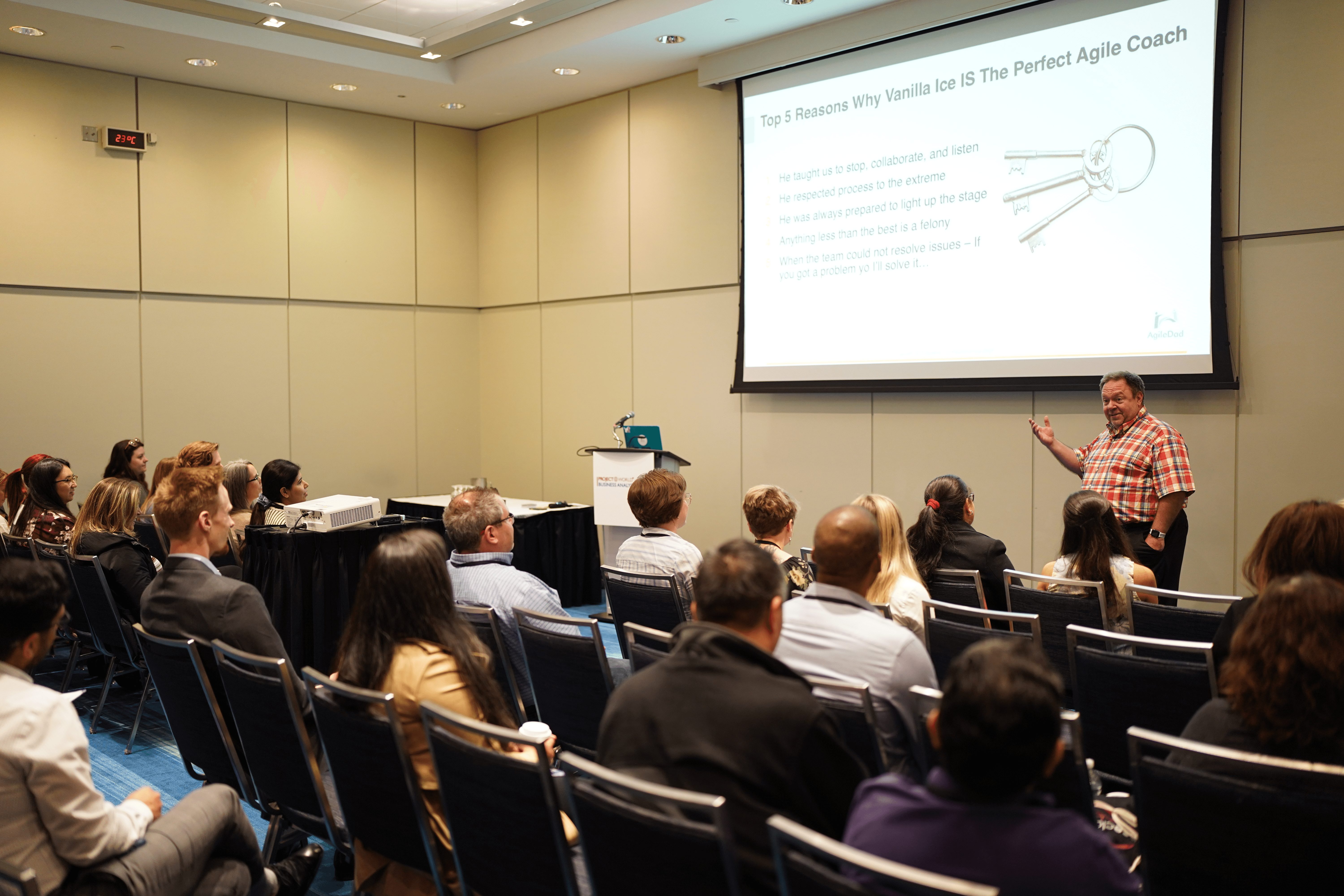


Image Credits
All information and photos provided are my own.