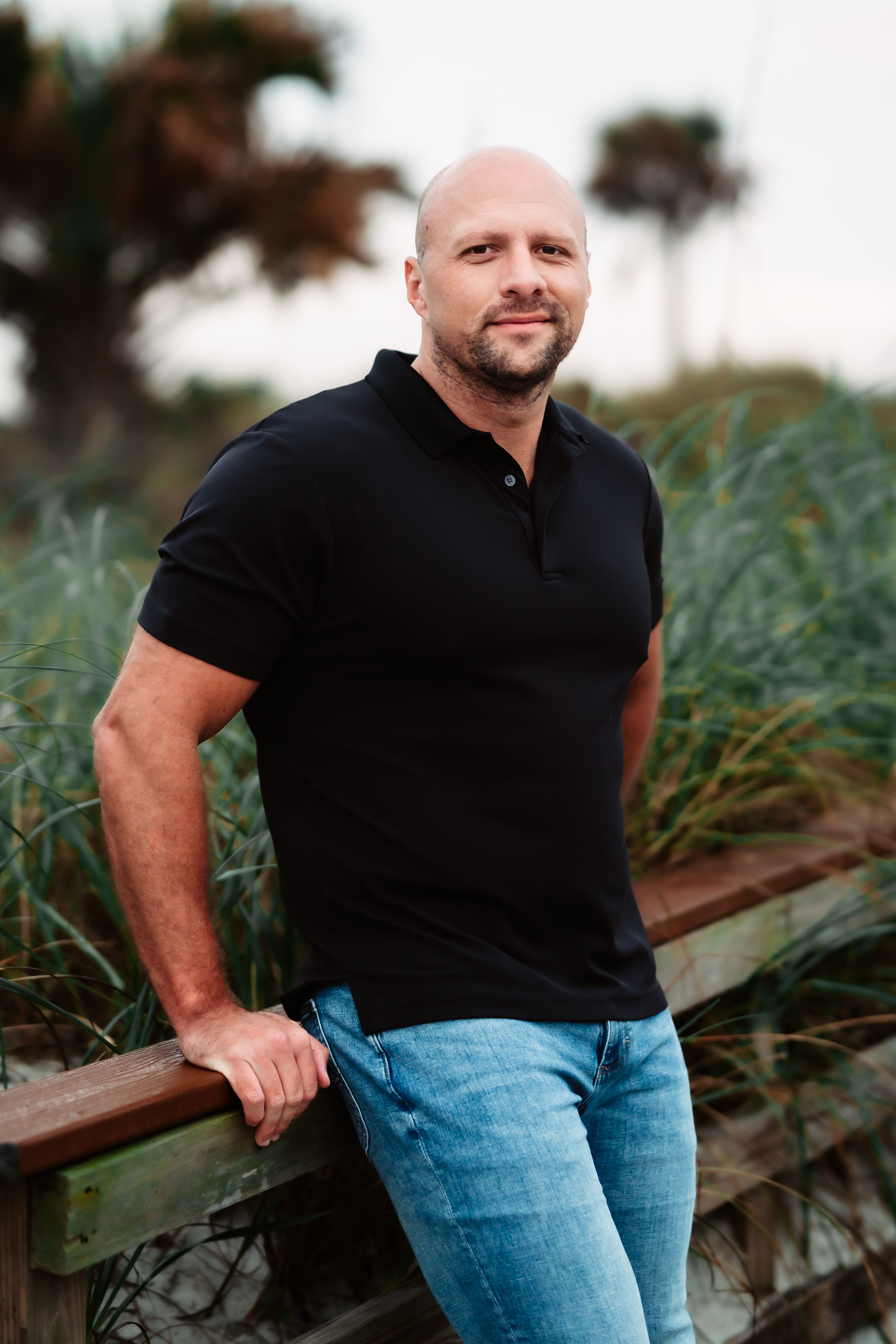



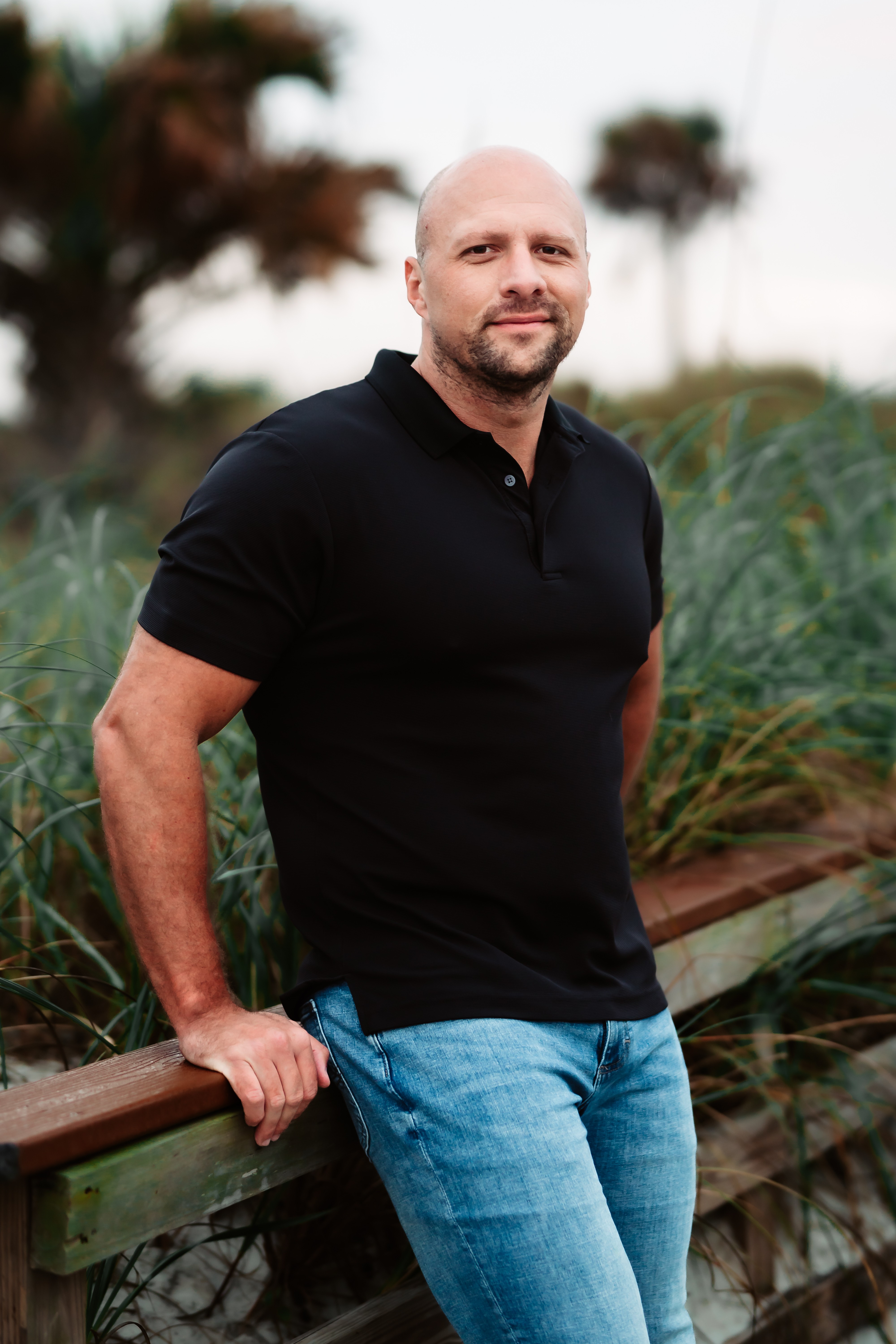
Today we’d like to introduce you to Timothy LeGendre.
Hi Timothy, thanks for sharing your story with us. To start, maybe you can tell our readers some of your backstory.
My Journey: From Contracts to Comprehensive Strategy
My career didn’t start in a cubicle surrounded by spreadsheets; it started in the field as a licensed real estate agent back in 2015. While most agents focused solely on the sale, I found myself captivated by the “fine print.” I fell in love with the architecture of contracts—the logic, the legal nuances, and the precise language required to protect a client’s interests.
Driven by a desire to understand the mechanics behind the deals, I transitioned into mortgage origination. This move shifted my focus toward the analytical side of finance. I spent years diving deep into credit reports, income verification, and tax return analysis. It was here that my curiosity for business valuation and financial statements really took root.
I began freelancing for a CPA firm specializing in Mergers and Acquisitions (M&A), where I helped bridge the gap between complex data and actionable business decisions. That experience was the turning point. I realized that to provide the highest level of value to my clients, I needed to master the language of business: accounting.
I returned to school to earn both my Bachelor’s and Master’s degrees in accounting. Shortly after, I passed all four sections of the CPA exam on my first attempt.
Today, with over 20,000 hours of experience in financial statement analysis, my passion has come full circle. I’ve transitioned from closing real estate deals to mastering tax planning and compliance. What started as a curiosity about real estate contracts has evolved into a career dedicated to the intricate art of financial storytelling and high-level strategy.
Can you talk to us a bit about the challenges and lessons you’ve learned along the way. Looking back would you say it’s been easy or smooth in retrospect?
The Road to Integrity: Navigating a Shifting Economy
It hasn’t been a smooth road, but the bumps were where I found my principles. Early in my real estate career, I hit a wall. I realized the “social-first” marketing model—attending endless events just to get leads—didn’t align with who I am. I had the knowledge and the technical expertise, but I struggled to market myself in a world that seemed to value personality over precision.
When I transitioned into mortgages, I faced a deeper, moral challenge. Over three years, I facilitated roughly $50 million in debt for the local economy. While that’s “success” by industry standards, it weighed on me heavily. I saw people being pushed into debt who weren’t financially ready, and the ethical burden of placing families in precarious positions was a turning point for me. I didn’t want to just move money; I wanted to ensure that money was working for people, not against them.
The most difficult period, however, came during the recent years of heavy government intervention. Watching trillions of dollars being pumped into the economy was a psychological hurdle for me as an analyst. It felt like the “rules” of economics had been suspended. I struggled to reconcile my knowledge of healthy business fundamentals with a reality where “zombie companies” were propped up by bailouts and unprofitable ventures were incentivized over disciplined, profitable small businesses.
There was a moment where I felt like my knowledge was being nullified by these interventions. I had to completely restructure how I thought about my role. I realized that in an era of artificial stimulus and unpredictable intervention, small business owners need a strategist more than ever. My struggle became my mission: helping people navigate an “unreal” economy with real-world, grounded financial logic. I had to learn how to offer advice that protects a client’s bottom line even when the broader economic landscape feels like it’s shifting under their feet.
Alright, so let’s switch gears a bit and talk business. What should we know?
More Than a Firm: A Business Built for Your Bottom Line
When people ask about what I do, I’m quick to clarify: I don’t run a traditional “CPA firm”—I run an accounting business.
In a traditional firm, you often don’t know what you’re going to get. It’s a world of billable hours, where you might feel like you’re being charged for every minute of a phone call while your actual work is being outsourced or overlooked. I wanted to build something different—a repeatable, reliable service where the outcome is as consistent and high-quality as an Apple product.
The Financials: Your Business’s DNA
I specialize in financial statements. While many accountants view bookkeeping as a “low-level” task, I view it as the most important thing you can do for your company. If your books aren’t clean, you don’t have a business; you have a hobby.
I focus on keeping your records pristine for two reasons:
IRS Compliance: We ensure everything is bulletproof and tax-optimized.
Managerial Sanity: We use your books to build KPIs and ratios that actually tell you if you’re profiting or circling the drain.
What Sets Me Apart
I’m most proud of the fact that I don’t view myself as “above” the work or “more important” than my clients. I am a teammate. I act as an Outsourced CFO, helping you answer the real-world questions that keep you up at night: “Can I afford that new truck?” “What does my depreciation look like?” “If I wanted to sell this business in five years, what is it actually worth today?”
My Promise to the Reader
I’m not here to sell you “fake strategy” or build a plan on a shaky foundation. Everything—from your tax strategy to your long-term growth—is built on the numbers. My core offering is simple but rare: I do the books, I do them correctly, and then we use that truth to build a tax plan that actually works.
If you want a teammate who values your profitability as much as you do, that’s exactly why I built this business.
Do you have any advice for those just starting out?
Staying in Your Lane: Advice for the Long Haul
I’m generally cautious about giving advice. I’ve always believed you shouldn’t take advice from someone unless you’d be willing to switch shoes with them and live their entire life. But if I were to look back at my own journey and speak to my younger self—or anyone starting out—the message would be simple: Protect your focus.
When you’re building a business, you will constantly be tested by “scope creep.” You’ll have potential clients ask you for things that are technically within your skill set, but outside of your mission. It’s tempting to say “yes” to everyone just to grow, but every time you say yes to something outside of your lane, you are taking away from the clients who hired you for your core expertise.
For me, that means being selective. I often turn away clients who only want a “plug-and-play” tax return. Why? Because my passion and my value lie in the financial statements. Those who just want the cheapest tax prep usually aren’t concerned with clean financials, and I won’t undercut my standards or my purpose just to add a line item to my revenue.
My advice is to stay true to the business you actually wanted to build, not the one people are trying to pull you into. You will be challenged, and you will be tested, but the only way to build a brand you’re proud of is to stick to your “why.” If you focus on your specialized offering and maintain your ethics, the right clients—the ones who value what you uniquely bring to the table—will find you.
Pricing:
- My bookkeeping starts at $300 a month
- Personal Tax Returns start at $425
- Business Tax Returns start at $1625
Contact Info:
- Website: https://www.timcpa.com
- LinkedIn: https://www.linkedin.com/in/timcpa