


Today we’d like to introduce you to Connor Peters.
Hi Connor, it’s an honor to have you on the platform. Thanks for taking the time to share your story with us – to start maybe you can share some of your backstories with our readers?
Photography was always more than just a hobby to me, I loved exploring the artistic side of it just as much as the documentary side while learning about the technical details. My first camera was given to me as a gift when I was 10 and I’ve kept one at my side since. In 2017 I moved from Johannesburg, South Africa to Altamonte Springs, Florida, and began studying photography at the Southeast Center for Photographic Studies in Daytona Beach. Studying in an environment with such like-minded people, yet, each with their own unique perspective and style, helped me explore some of the many different avenues of photography.
After photographing everything from cars, to people, to fashion and landscapes, I took my thesis series in a completely different direction while furthering my studies at the University of Central Florida.
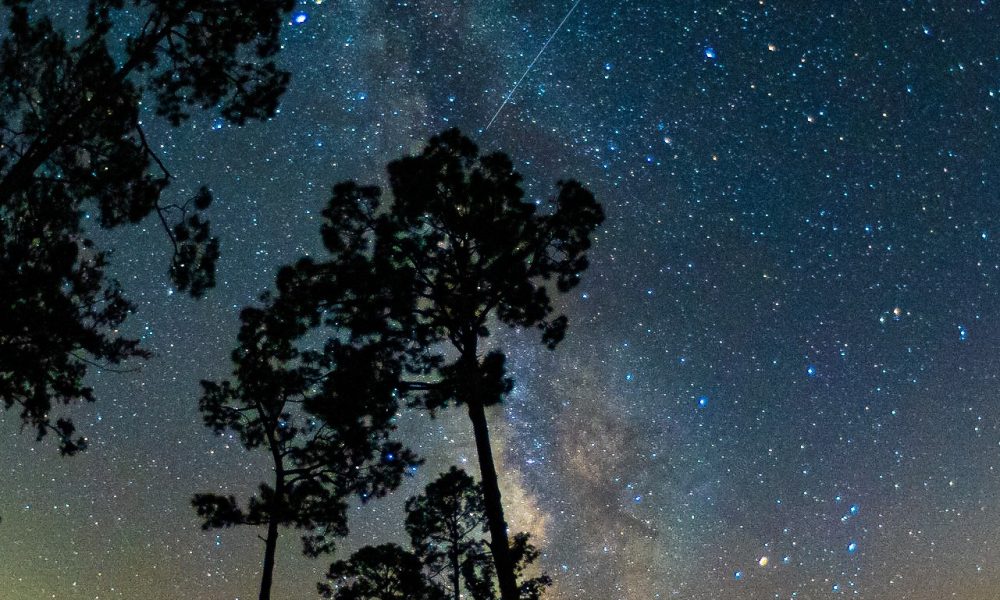
I began combining technical knowledge with the research of my own and applying parts of what I had learned in my 4 years of studies to photograph celestial objects. I had experimented with astrophotography in the past but hadn’t had the opportunity or tools to explore it further.
I’m sure you wouldn’t say it’s been obstacle-free, but so far would you say the journey has been a fairly smooth road?
Experimenting with new techniques while relying on the weather and celestial calendar brought a few struggles. There were nights where I might have spent a few hours shooting, only to find that some of the equipment was unbalanced, running too fast or that the humidity in the atmosphere had distorted all the images. Because of the nature of these images and how the process works, it is difficult to stop midway and check the images. Only part of the process is actually photographing, a large portion of the work is done in stacking programs on the computer after I have collected the raw data (images).
The process of learning and experimenting plays a huge role in my enjoyment of the work. Problem-solving, tweaking settings, and altering images is all worth the time when the end result makes you sit back in your chair and just stare in awe of what was captured.
This is classified as a fine art genre of photography (in my case anyway) and that means that I rely on people enjoying my work enough to want it for themselves. This is a very niche market and as a result, it takes time to make the business side of my passion successful.
Appreciate you sharing that. What else should we know about what you do?
Astrophotography is not necessarily unheard of, but it is unique in the world of art and photography (without computer-generated graphics). Combining technical know-how and photographic skills to produce the images with an artistic view and statement is not really something I have seen much of before, which is what sets me aside from others. The process entails using a large tracking mount for a camera and lens or camera and telescope, to lock onto an object in the sky, while many images are captured. The images can be made up of exposures that are 5-10 minutes long each. The idea is to build up exposure time, the more time you can stack, the better the images will look.
One of my favorite images was made over the course of a few hours of exposure time. Stacking and rendering the images in software (after I have finished capturing them) takes a while too, so by the time I am ready to actually retouch the image in Adobe Photoshop, I have already spent around 3-4 hours on the single image.
This makes each piece worth a lot more to me, because, compared to more mainstream photography where you can take several hundred images with different looks and shots to choose from, I will only have one image.
Most celestial objects are only available to see in the night sky for a limited period of time each night as it is, based on the time of year and my location. If I encounter an issue while shooting, such as a cloud passing over or an airplane flying across my field of view, I can’t recover that time and might have to try again the next night, or in some unfortunate cases, next year.
What’s next?
The best time for astrophotography (depending on what your target is and where you are located) is winter, so my season is just about to start and I will soon begin planning my targets around the moon phases and weather (closer to the time) to make the most of the dark nights this year. I would like to take a trip to another registered dark sky site to photograph some of the more challenging targets, but that also depends on availability and weather.
I also recently moved to a less built-up area, which should give me darker skies to try photographing some of the brighter objects in the night sky right from my backyard!
I plan to make the most of this upcoming season and build up my portfolio to create a new collection that could be available by mid to late Spring of 2022. Though I will have some individual pieces before the end of the current year.
Contact Info:
- Email: cpetersphoto@gmail.com
- Website: https://cpetersphotography.com/
- Instagram: https://www.instagram.com/cpetersphotography/
- Facebook: https://www.facebook.com/CPetersPhotography/


Image Credits:
Connor Peters Photography