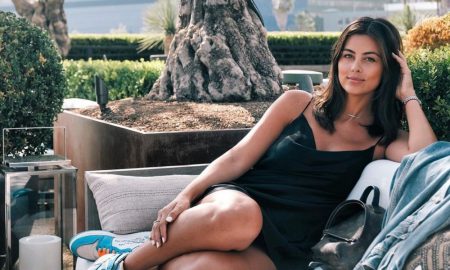



Today we’d like to introduce you to Kathy and Michael Rovito.
Alright, so thank you so much for sharing your story and insight with our readers. To kick things off, can you tell us a bit about how you got started?
I [Michael] detected a lump on my testicle when I was 16 and thought it was cancer. Since it was the mid-1990’s then and there wasn’t the access to information we have now, I was fairly isolated from understanding what exactly this lump was. I was a bit apprehensive to approach my parents about the issue as this wasn’t a comfortable subject to bring up to anyone. So I sat alone with my fear for some time. It drained me mentally and emotionally and took its toll physically and socially. The idea of dying at such a young age from cancer was devastating.
I eventually told my parents, and I ended up getting the care that I needed. The lump ended up being a varicocele, which a fair number of males get in their lifetime and is not a threat in terms of mortality, but it can cause infertility. I had it corrected but the same issue came back 10 years later. Again, the issue was corrected. It was at this point I was training in my doctoral program in public health, and I made a promise to focus my career on helping males navigate their life, health, etc. so as to avoid feeling the way I did so many years ago…. lonely, isolated, afraid, worried, and hopeless.
I started the Men’s Health Initiative in 2010 during Men’s Health Month. It was more of an idea and a hobby if anything. I gave guest lectures, helped in the community, and focused my research on testicular cancer and men’s health in general. It wasn’t until I moved to Orlando in 2011 and met Kathy, who also has a background in public health and health promotion, was this hobby of mine turned into a formal reality for us. Under Kathy’s leadership, we formalized the Men’s Health Initiative into a 501c3 nonprofit in 2015. We then underwent a rebranding effort in 2019 to better emulate the multidimensionality of male health and wellbeing and our ethos on living sustainably. And that’s when we started our new chapter as The Male Wellness Collective.
I’m sure you wouldn’t say it’s been obstacle free, but so far would you say the journey have been a fairly smooth road?
We’ve experienced many of what we like to call “opportunities for growth.” The field of men’s health is an interesting one. We have had many conversations, which felt like pushback, centered on why we think males need attention when clearly they are in a position of power and our focus should be elsewhere. We understand where these individuals are coming from. There are indeed power structures in place in our society where males do enjoy privilege over others, however, health and wellness is definitely not one of those areas.
Males live sicker and die younger than females. In the US alone there’s about a 5-year life expectancy gap where a woman should expect to live a half a decade longer than a man simply because of their sex assigned at birth. In every age category, females experience lower mortality than males. The largest gap is seen with 15-24-year-olds where boys have 3x the risk of overall mortality than their female peers. Injuries tend to be the cause of this increase in death, which stems from unintentional injuries, suicide, or homicide.
But, we are focused on the upstream determinants that are causing these different health outcomes in the first place. We feel that this is where we can find some common ground with those who don’t quite understand our mission and vision. Many times, the reason why males live sicker and die younger is because of the social constraints and expectations placed upon both males and females by society, which may certainly stem from a power structure issue.
Thanks – so what else should our readers know about The Male Wellness Collective?
As a 501c3 nonprofit, we’re on a mission to build a culture of wellness among males by providing the spaces and immersive experiences to support their journey towards optimal health and well-being. In other words, we’re working on getting more males on course with sustainable practices of self-care. For many people, the term “wellness” primarily invokes thoughts about physical health (e.g., diet, exercise, weight management). Wellness, however, is much more than just that. It includes intentionality, stress management, and connection- that is, connecting to oneself and the broader network around you, to name a few.
As we touched upon earlier, males need wellness more than ever. Data consistently show that males are experiencing a “silent” health crisis no one is really talking about; more males die by suicide, commit more crimes, have a higher addiction and abuse rate, more easily isolate, live sicker, and die earlier than females. Young males are also experiencing a ‘failure to launch’ crisis where they are having an increasingly difficult time transitioning into adulthood (e.g., growing unemployment and college dropout rates in this population). When we talk about health equity and eliminating health disparities, the health and wellbeing of males is typically not a part of that conversation.
Research demonstrates that our health and well-being can be positively affected by our thought processes, actions, and exploration of our own being. Wellness incorporates these aspects and they influence your health status. To us, wellness is the conscious effort of becoming aware of, and making the choices towards, a sustainable and fulfilling life. It is a complete integration of the mind, body, and spirit that, in turn, leads to an improved sense of health and well-being. We believe wellness is personal and that it begins deep within.
There are several societal barriers that make it more difficult for males to engage in and maintain sustainable lifestyles. We want to break down those barriers. At the MWC, we focus on the physical, emotional, mental, spiritual, social, and environmental aspects of male wellness. Each aspect contributes individually to your sense of wellness, but they also each affect one another. The totality of wellness is what is important to health and well-being in the long run.
Through our research, immersive programming, and consultation services, we focus on upstream prevention with a strengths-based approach. That is, we move beyond a singular focus on what puts us at risk for not being well and instead focus on the multiple sources of support (i.e., protective factors) around males so that when times get hard, they have their strengths to rely on.
We’re always looking for the lessons that can be learned in any situation, including tragic ones like the Covid-19 crisis. Are there any lessons you’ve learned that you can share?
The pandemic has reiterated the importance of wellness and self-care. We’ve all experienced some really big changes and challenges in our lives, many of them were new and others have been exacerbated. COVID taught us the value of slowing down and brought to light the things that really matter. Even for us, we found ourselves being more intentional with our self-care practices. None of us are perfect and we all experience those days of “I just don’t feel like doing this” or “I’m overwhelmed”, and that’s perfectly OK and normal.
If anything, COVID-19 taught us to be able to change/redirect/reinvent on a dime. One of our immersive programs, Rucking Pathways, takes individuals out on a local hiking trial with weighted backpacks and conducts activities and hosts conversations along the trail that supports the growth of connection with the environment, with each other, and within themselves. But, as grouping restrictions became commonplace and when some of the state parks and trails shut down, we were halted. We need to adjust and reinvent ourselves, so to speak, at least in the sense of how to offer services to the community.
Contact Info:
- Email: info@malewellnesscollective.com
- Website: www.malewellnesscollective.com
- Instagram: https://www.instagram.com/malewellnesscollective/
- Facebook: https://www.facebook.com/MaleWellnessCollective/
- Twitter: https://twitter.com/selfcare4males