



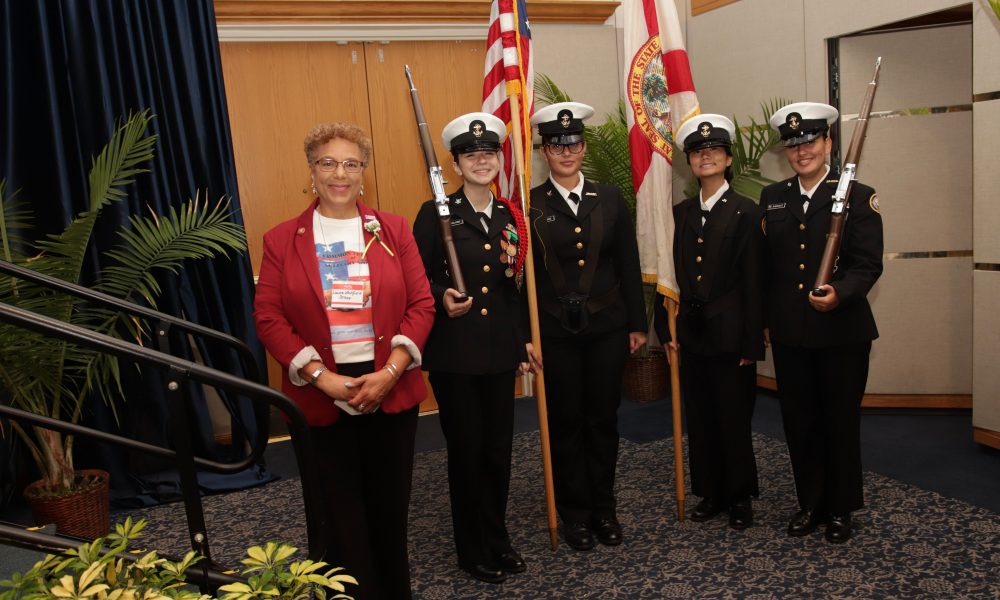
Today we’d like to introduce you to Laura Whitfield.
Hi Laura, so excited to have you on the platform. So, before we get into questions about your work-life, maybe you can bring our readers up to speed on your story and how you got to where you are today.
I am a native of Philadelphia, PA, and have lived in Florida since 2004. I have lived in several places stateside as well as abroad. I love to travel, read, listen to music (especially jazz), bicycle, swim, practice yoga, and enjoy a smooth glass of red wine. I enjoy being outdoors and am known to dance in public when feeling that vibe! Professionally, I see myself as a collaborative, people-oriented leader who achieves results through careful planning, creative problem-solving, and a persistent focus on priorities. As the Senior Director for Mission United with United Way Miami, I leverage those capabilities to collaborate with nonprofits, government agencies, volunteers, and corporate partners – in order to streamline access to and improve the delivery of veterans’ services. I understand the challenges veterans face when reintegrating back into civilian life because I also served. I am a Marine Corps Veteran with nine years of active-duty service in personnel administration, public and media relations, broadcast journalism, and leadership roles. After leaving military service, I gained valuable experience through program management and strategic planning for two state universities; achieved success as an HR Business Partner and Human Capital Consultant for several Fortune 500 companies; and served as an advisor and coach to C-level leaders of small and mid-sized businesses and nonprofits. I left corporate consulting for the nonprofit sector in 2016 to work with Heart of Florida United Way in several roles, to include Director of Mission United, supporting veterans residing in Central Florida. I joined United Way Miami to lead its Mission United program in 2019, continuing to build collaborative efforts that promote innovative solutions for veterans and their families to succeed after military service. Our team has expanded partnerships to remove barriers, launched a new technology platform to connect veterans to those partners, and currently convening a coalition to address the affordable housing needs of working veteran families.
Would you say it’s been a smooth road, and if not, what are some of the biggest challenges you’ve faced along the way?
I did experience some challenges after leaving the military. I was deployed in Japan at the time (1989) and had to make the choice of staying in the military and transferring back stateside for a two-year assignment as a military recruiter – away from my then fiancée – who had to complete his three-year duty assignment in Japan. We couldn’t negotiate extending my assignment in Japan or his accompanying me stateside, so I had to separate from the military. The exit process involved going to California with my then 5-year-old daughter for 30-days to attend the transition assistance program – then back to Philadelphia – where I entered the Marine Corps. In order for me to reunite with my fiancée, we had to accelerate the timing of our wedding; and then wait an additional 6 months to move back to Japan to join my husband. There are many stories of military families being separated for up to several years. The longer those separations, the likelihood families may have challenges staying together. I was very grateful to have been able to return to Japan as a military spouse but had a bit of adjustment to this new status. Near the end of 3 years, I gave birth to a second daughter, but regretfully she had a congenital heart defect, and we had to quickly evacuate stateside for her medical care. We found ourselves in Northern California living near the Oakland Children’s Hospital during the several months of her surgeries to correct the defect. Sadly, after 10 months, we lost our baby girl; and my husband decided to leave the military the following year. We ended up leaving California and starting our lives from scratch in North Carolina, where we had no idea what supports were available to us. Even though companies say they want to hire veterans, the process is not that straightforward; and we both struggled to rebuild our lives. My peers who went straight to college after high school already had well-established careers, and it took me a while to connect to a life without the support we had while in the military. I often felt isolated and didn’t acknowledge or discuss my service for many years. I’ve experienced a lot of starts and stops after what was a successful military career, but the resilience I built from those ups and downs is what fuels my strengths today.
Thanks – so, what else should our readers know about your work and what you’re currently focused on?
Despite the adjustment challenges I faced during the first several years, I was eventually able to establish a meaningful and rewarding career path after leaving the military. I initially started to pursue opportunities in broadcasting/ media/ communications, which was what I was trained for; however, I did not get opportunities in that industry. I had to figure out something else, and thankfully had a great mentor in my life – my sister, who was a Human Resources professional. She encouraged me to investigate the various roles in HR. Once taking a part-time administrative position with the Business Department at NC State University, after about a year, I secured a position as a Benefits Specialist – conducting new employee orientation and assisting staff and faculty enroll in health and retirement plans. That role positioned me to be selected for jobs that were increasingly more strategic and complex. After six years with the University, I advanced from a part-time administrative assistant to Senior Administrative Officer/Aide to the first female chancellor in the university’s history. I was then able to transition to corporate roles focusing on Talent Management. Grainger, Inc. supported my development goal of receiving my certification in Human Resources, and from there, I was selected for a regional role as a company trainer and lead in a company-wide change management initiative. This was an excellent time for me to pivot and lean into learning more about the company; and from there, my passion for the professional development of others really started to take hold. After my tenure with Grainger, I was able to continue building my expertise in business strategy and project management, developing cohesive teams, and coaching leaders in various industries. My diverse work experiences coupled with resilience now help me confidently problem solve in very dynamic and complex situations; and be able to adapt, adjust, and navigate uncertainty with innovative solutions.
Who else deserves credit for your story?
As I mentioned before, my sister has been my mentor, cheerleader, advocate, and best friend all my life. She supports me in many ways, but when I reenlisted in the Marine Corps and had to attend the Defense Information School for 5 months before being assigned the Public Affairs/Broadcasting specialization, she and my brother-in-law took care of my daughter (then 2years old); while I attended training and got everything set up for my overseas deployment. She also helped me to select Human Resources as a career after I left the military. Besides her, there are a few others whom I would give credit for positively influencing my life and career. While I was still in the military, I worked for a female officer (Major); who coached, guided, and modeled for me the collaborative leadership style I have today. She also encouraged me to pursue the Public Affairs occupational specialization when my first tour of duty was ending and it was time for me to reenlist. There were several seasoned and experienced HR colleagues who gave me opportunities to learn about and implement various organizational initiatives; and supported my career advancement with NCSU, Grainger, and Insperity. My first supervisor at Grainger approved the funding for my professional certification in HR; and recommended me for an expanded regional role – as a corporate training manager – where I fell head over heels with assisting others with their professional and career development goals. Conducting group workshops/team building, strategic planning sessions, and leadership development in this role prepared me for my next roles with Insperity, where I worked with several hundred small & medium-sized business owners to develop or enhance their organizational and people strategies. I have had three key mentors – two were direct managers – who also coached, guided and provided me the autonomy to try innovative approaches with our clients. That coupled with collaborative team environments, really brought out my strengths. Sadly, one of those mentors is deceased; but those of us who were on her team take time out every year to remember her amazing dedication to our professional growth. The third mentor is actually a founder/CEO of a small nonprofit who I was initially coaching. Turns out her brilliant business acumen and compassionate leadership style greatly influenced me to make the transition to the nonprofit lane, and I now give back as a board member of that organization. And for the past 5 years, I credit my team members and direct reports with the honor to help them succeed in their roles and careers. I also greatly appreciate the trust that I have been given to reshape the direction of the veteran services program I lead.
Contact Info:
- LinkedIn: www.linkedin.com/in/laura-whitfield-shrm-cp
- Email/Phone: missionunited@unitedwaymiami.org 305-646-7130
- Website: https://unitedwaymiami.org/what-we-do/mission-united/