


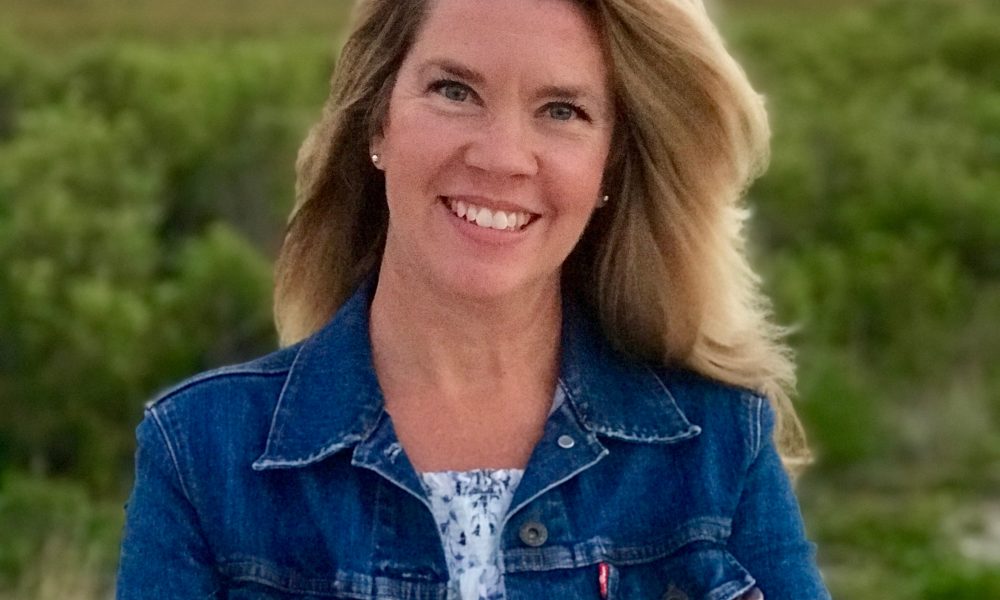
Today we’d like to introduce you to Amy Giannotti.
Hi Amy, please kick things off for us with an introduction to yourself and your story.
Although I grew up in land-locked West Virginia, I have always had an innate interest in water, the ocean, and the environment. I suppose it at least partly stems from the influence of my parents – my dad was a forester and wildlife biologist, and my mom was a competitive surfer – so our family vacations included lots of time at the beach and camping in the mountains. I loved it and knew I eventually wanted a career where fieldwork was the focus, and I would be outdoors more often than indoors. I also had some incredibly gifted and inspiring science teachers in my formative years as an elementary, middle, and high school student. They took us on meaningful field trips in the mountains, required participation in the science fair, and hosted fascinating guest speakers to expose us to various careers in science.
I attended Marietta College in Ohio, earned a Bachelor of Science degree in Biology, and rounded out my academic experience with minors in Leadership, Political Science, and Environmental Studies. I briefly thought about attending law school, but my passion is working outdoors and conservation, so I earned a Master’s degree in Environmental Science at the University of Virginia (UVA) in Charlottesville, Virginia, instead. This program combines four core areas of research and interdisciplinary education focusing on ecology, hydrology, geology, and atmospheric sciences. It was an intensive three-year program, and much of the work I do today draws on the knowledge and experience I gained at UVA. My Master’s thesis investigated the effects of nutrient enrichment on macroalgae (seaweed) in temperate coastal lagoons.
My field site was part of the Long-Term Ecological Research Site of the Virginia Coastal Reserve (VCR-LTER) – a series of uninhabited barrier islands off Virginia’s eastern shore. Working out there was remote and peaceful, and I fell in love with having my office in the great outdoors. While in graduate school, I gained some teaching experience as an academic mentor and instructing a great group of undergraduate students. I realized I am passionate about educating others – particularly about advocating for sustainability and protecting the environment. When I graduated from Virginia, I lived in a small, rural town in central Virginia with no opportunities for marine or environmental sciences work. So I put my teaching skills to use and worked as the Biology Department Laboratory Manager at Hampden-Sydney College, as an adjunct instructor at Longwood University, and eventually spent three years teaching environmental science, biology, earth science, and physics at Fuqua School – a small private K-12 school in the heart of Virginia. While teaching here, I connected with the Cambrian Foundation – a 501c3 not-for-profit scientific diving organization based in Orlando that was working in the Monitor National Marine Sanctuary documenting the preservation of this historic Civil War shipwreck and her artifacts. The Cambrian Foundation offered free presentations to local schools, and they touted their ability to use diving to reach every discipline in an educational curriculum. As a professional educator and scientist, I was impressed and intrigued, and they extended an offer to me to join them in the field for an expedition – and bring along my students. So, I got some grant monies together.
Two years later, my students and I were working alongside a team of scientific divers from the Cambrian Foundation, marine archaeologists, and National Geographic filmmakers on the wreck of the SS Commodore, which lies in 80’ of water about ten miles off of Ponce Inlet, Florida. It was a pivotal moment and impactful week of learning for my students – some of whom had never been out of the state of Virginia, and others had never seen the ocean. After that, the Cambrian Foundation offered me to come and work with them as their Director of Education. So, I moved to Winter Park in the summer of 2002 to pursue my combined passions of marine science and educational outreach. Three years later, I moved into the role of President of the Cambrian Foundation and was responsible for leading scientific and conservation initiatives here in the United States and several other countries of Central America and the Caribbean. These expeditions in Bermuda, Mexico, and Florida focused on promoting the preservation and protection of critical cave and karst (sinkholes, disappearing streams, fissures, springs, etc.) environments, historic shipwrecks, and implemented expedition participation programs for students and teachers in the United States and abroad. This required complex logistical coordination related to scientific/cave diving, environmental sampling, fundraising, and liaising with international government agencies, schools, and local interest groups, but it was an all-volunteer position. So I jumped into a biological scientist role with the Florida Department of Environmental Protection (FDEP) to have a regular salary and income.
My 20-year professional career in Florida has spanned state and local governmental entities as a scientist specializing in natural resource management. I have worked as the Biological Scientist for the Wekiva River Basin State Parks. I spent seven years as the Regional Biologist for the FDEP Bureau of Invasive Plant Management (which transitioned legislatively into the Florida Fish and Wildlife Conservation Commission’s Invasive Plant Management Section). Nearly eight years managing the Lakes Division for the City of Winter Park. For the last two decades, much of my daily work has focused on the technical aspects of habitat and resource management, including – invasive species management, impacts of nutrient enrichment and remediation efforts, stormwater management, watershed hydrology, water quality monitoring, environmental permitting/enforcement/and compliance, prescribed fire, and public speaking on environmental issues affecting lakes, springs, and karst community ecology.
In 2018, I started my own environmental consulting company specializing in lake and aquatic plant management, and my clients include:
- Municipalities
- Waterfront property owners
- Homeowners’ associations
- Golf course communities
- Real estate professionals
- Non-profit organizations
- Professional environmental societies and companies
I have designed and developed curricular programs for elementary, middle, and high school students emphasizing the threats to Florida waters from pollution and invasive species. I currently serve on the Advisory Council at the Center for Aquatic and Invasive Plants at the University of Florida and the Professional Certification Program Committee for the North American Lake Management Society. I also serve on the Board of Directors of the Aquatic Plant Management Society (APMS) and the Florida Aquatic Plant Management Society (FAPMS). I am the editor of FAPMS’s journal Aquatics. I am also a mentor for the University of Central Florida’s STEM Program and am an invited seminar presenter at many technical conferences and symposia.
While I love being a working scientist, my passion for non-profit work, service learning, and environmental education remain a priority in my professional and personal endeavors. Everyone needs purposefulness in their lives. Collaboration with like-minded individuals can be fulfilling, impactful, and powerful. Any group of dedicated people with a shared specific mission can provide a real sense of activism and facilitate change by fostering stewardship and promoting awareness. Also, a small non-profit with global reach and a massive but simple goal to “Promote good stewardship of the planet” is ambitious. Still, every member of that small collaborative group is vital and valued. That is especially (even particularly) meaningful to me.
In 2016, Schoolyard Films approached me about featuring my work with the Cambrian Foundation’s conservation education program for their upcoming documentary about the Floridan aquifer. Portions of this film were filmed here in Winter Park with local youth, and it was a huge success earning two Telly Awards in 2019 for Best Cinematography. The film’s central message is that we all are responsible for protecting and caring for the essential resources that provide life-sustainability on our planet. The impacts of global climate change and other problems we face are generations in the making. Providing good science and factual information to students K-12 and showing how they can actively participate, make informed decisions, and contribute toward sustainability and conservation efforts is empowering and important. I enjoy being a part of those educational efforts. I enjoy the collaborative efforts of our small team and that my skillset and experience are valued and helpful. (At least that is what they keep telling me.) In addition to my consulting duties, I now serve as the Director of Development for Schoolyard Films. Schoolyard Films, a 501c3 non-profit organization, was founded in 2008 to bring the planet’s most remote locations into schools and classrooms via high-end environmental documentaries for youth.
Raising awareness through expert filmmaking provides a bridge for connecting humans to these environments. The award-winning films are produced specifically for use in K-12 classrooms. Each one comes with study guides for teachers that correspond to state and national science education standards and provides discussion questions, writing prompts, and laboratory activities. Films are translated into other languages and available through the Described and Captioned Media Program (DCMP) for visually and hearing-impaired audiences. The movies and supplemental materials can be live-streamed or downloaded from the Schoolyard website and are also available on PBS Learning Media, Apple Podcasts, and the DCMP website. All the resources are offered free of charge and open to the public. There are now 18 natural history films in our library – and we are working on a three-part film series about the impacts of plastic pollution on marine systems. The first film in this series is nearly ready for release and focuses on the endangered albatross of Midway Atoll and how plastics affect wildlife that depends on the oceans for food. The second and third films will closely examine innovative solutions for cleaning up plastic waste and examine the role that economics and policy play in where, when, and how plastics are produced and used.
I’m sure you wouldn’t say it’s been obstacle-free, but so far would you say the journey has been smooth?
It hasn’t always been a smooth road. Still, I have had the privilege of working with amazing women scientists and mentors along the way, which have made a difference in successfully navigating a male-dominated profession. Learning to balance motherhood with the complexities of fieldwork and international expedition travel makes me incredibly grateful for a supportive and understanding family network.
Fundraising is always a challenge in the not-for-profit world. Connecting with philanthropic organizations who support the mission is exceptionally competitive these days, and the pandemic’s impact on giving has affected many organizations.
Politics, policy, and economics must coexist, but scientific implementation and results must be realized with integrity. Well-crafted environmental regulations are established and in place for long-term benefit to all. Oversight and compliance are essential, but I have experienced leadership and management circumventing statutory obligations for permitting and compliance that ultimately compromised water quality.
Thanks – so, what else should our readers know about your work and what you’re currently focused on?
WHAT DO I DO/SPECIALIZE IN: I specialize in managing lakes and waterways to ensure a healthy fishery, a usable recreational resource, protecting native biodiversity, and being a valuable anchor in the community. This includes monitoring and evaluating water quality, permitting and compliance, and effective communication with the public. I also help establish conservation organizations and communicate technical information related to protecting and preserving aquatic resources.
WHAT AM I MOST PROUD OF: I have enjoyed (and still do!) a diverse and meaningful career, but I am most proud of my non-profit service and commitment to environmental education, being an entrepreneur, and being a vocal advocate for environmental protection. I love watching kids (and adults!) have those lightbulb moments of learning in a hands-on setting – realizing that science now ‘makes sense! It is exciting and rewarding.
WHAT SETS ME APART: As an environmental consultant in the lake and aquatic plant management, I am in the unique position to have worked in government at both the state and local levels affording me a comprehensive understanding of environmental rules and regulations for proper management and compliance. I love helping people restore and protect their lakes and waterfront properties, and I enjoy helping bridge that connection between water quality, respect for complex sustainable habitats, and property values. Communicating complicated science for the public is my passion, and being able to couple that with educational outreach leads to practical advocacy efforts. My experience also enables me to empower the next generation of young scientists by providing them with information in a way they can understand. That makes them want to participate in STEM (Science, Technology, Engineering, and Mathematics) and make a difference.
So, how can our readers or others connect or collaborate with you before we go? How can they support you?
People can rely on me for sound scientific practices to restore, access, or protect their waterfront properties for boating, skiing, fishing, swimming, scenic views, and improved property values. Please reach out, too, if you need an engaging guest speaker for Clubs, Rotary, Community Centers, Civic Groups, etc. And any philanthropic foundations supporting science education, STEM, the environment, and the arts – I would love to connect with you! Let’s make a difference with unparalleled environmental education programs and award-winning cinematography!
Contact Info:
- Website: https://www.aquastemconsulting.com and http://www.schoolyardfilms.org
- Instagram: @aquastem_consulting and @schoolyardfilms
- Facebook: @AquaSTEM Consulting, LLC and @Schoolyard Films
- Twitter: @AquastemConsult and @SchoolYardFilms


Image Credits
Images, courtesy of Schoolyard Films, Cambrian Foundation, and Amy Giannotti