



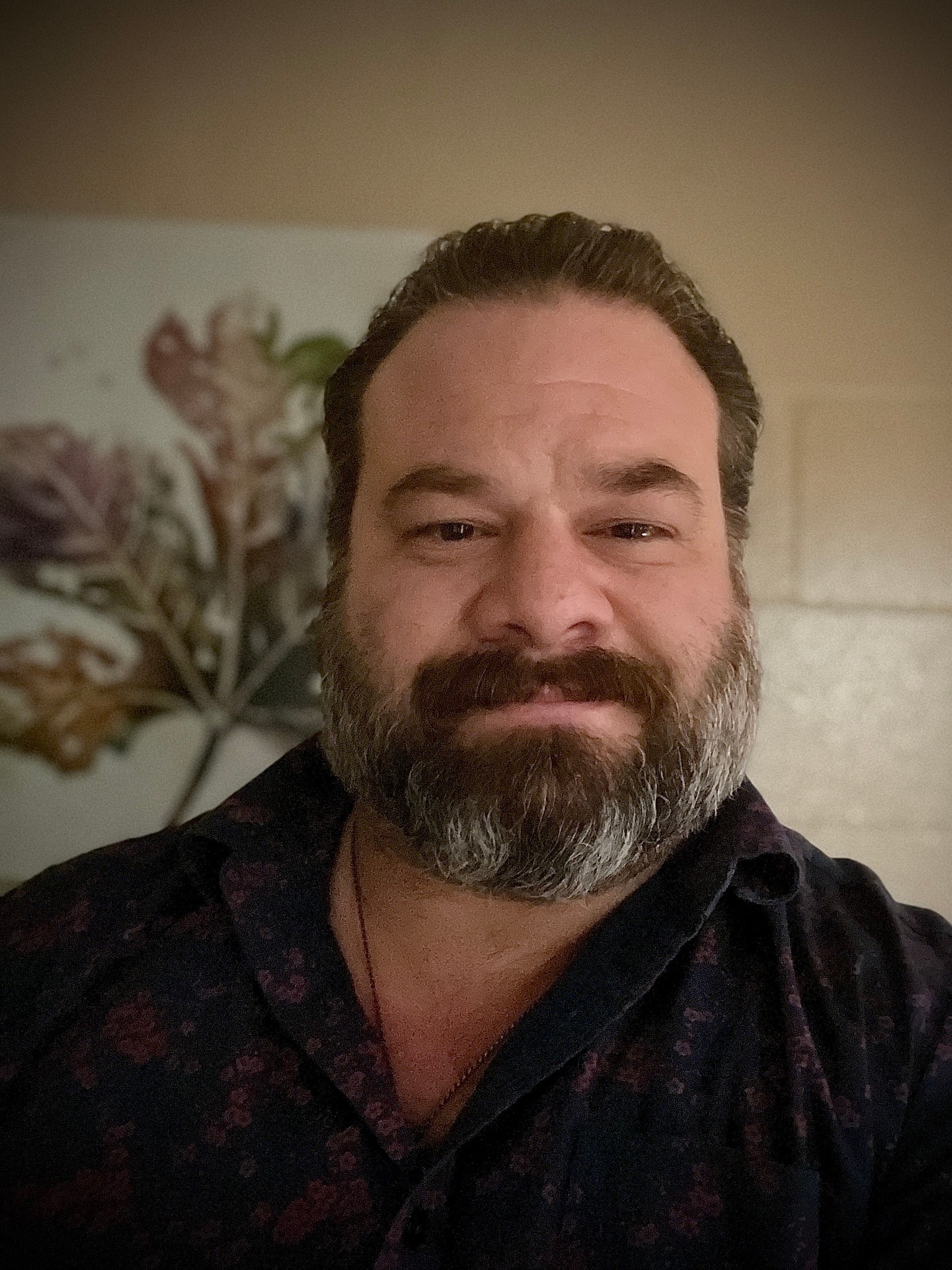
Today we’d like to introduce you to Rob Cravatta.
Hi Rob, it’s an honor to have you on the platform. Thanks for taking the time to share your story with us – to start maybe you can share some of your backstory with our readers?
I am an Air Force veteran and after being Honorably discharged I spent the next 10 years or so trying to figure myself out. I moved back in with my parents and did a lot of nothing for awhile. As a result my mental health started to really decline. I had no purpose. I just spent 4 years of my life in a role of protecting our country and feeling a sense of pride just to end up in my parents basement again. I was right back in the place I wanted to get out of in the first place. I found the VA and it gave me the boost to work towards some sort of feeling accomplished. From there I began my journey trying to navigate through the hoops of the GI Bill to attend college classes and working in meaningless jobs. A real ‘fish out water’ scenario. And just like any journey with no direction, I made a lot of mistakes and bad choices.
Throughout this whole ordeal I was going to the VA for mental health therapy. I spent a lot of time in those years working on gaining tools to help cope, It was a lot of back and forth with finding ways I can improve and then struggling until I had to reach out again. But, it wasn’t until 2013 that I received my AA in General Studies, a process that started 7 years prior. That was just the beginning to finding my place in this world and how I am going to contribute, all the while bringing me a sense of joy.
I found out about a VA program that would, once again, provide me with that boost I needed. It was called Vocational Rehabilitation and its objective was helping mental health service connected veterans find careers by offering assistance in trades that the veteran would be happy to do. Basically a reason to wake up in the morning. After I was deemed eligible and proved that I would take the process seriously, as a lot of the groundwork falls on the veteran, I was given an assignment. Based on IQ scores and deep thinking into what kind of career would best suit me I was to think of 3 job types. I came up with 2 (not relevant enough to recall) and asked my girlfriend (now my wife) what should I do. Without pause, and to my surprise, she replied, “a counselor, like a mental health therapist. You’ve done so much work on yourself over the years and I find you inspiring and helping your friends through difficult times just from the knowledge you gained for yourself.”
So, I brought that idea back to my VA liaison (glazing over the first 2 ideas) and she couldn’t agree more. She informed me about becoming a social worker and how my abilities could be useful in a career like that. With that good old help from the VA I was able to obtain my Bachelors and Master degree in Social Work from UCF began the job hunt.
I had a lot of knowledge in case management for the homeless population as well as substance abuse thanks to the internships I was placed. My first job was a detox center in Orlando. From there I went on to work for a veteran grant program call Supportive Services for Veterans and Families. The purpose was to provide case management and funds to homeless veterans and families so they could afford to move into their own apartment. With that experience I was able to begin working in the system that gave to me in the first place, the VA. I worked as a Homeless Outreach specialist, hitting the streets of Orlando and surrounding areas, looking for veterans in need. I became skilled at finding their hidden camps and offering services. Some declined or weren’t eligible but most accepted when I was able to provide them with the resources available. It brought me great joy to see a veteran be taken from a tent or car and into an apartment. I changed jobs and began working as a case manager in the VA’s drug rehabilitation program, assisting with their needs and conducting group therapy sessions.
If there is anything positive that came out of the pandemic it was the ability to meet with patients online instead of in person. I retired from the VA after 8 years of service took advantage of the opportunity to start my own practice. Since 2023 Ive been providing online individual therapy through multiple platforms such as Grow Therapy, Tava, and Headway.
Many don’t recognize it but people play roles in their life and confuse it with identity. Being a parent, partner, and even employee doesn’t necessarily mean thats who you’re supposed to be in life. I ask my clients to think about if those things were no longer available to rely on, if they disappeared, what they be left with? I am truly fortunate to have found my purpose and sense of identity. What I do isn’t just a job, its my passion.
I’m sure it wasn’t obstacle-free, but would you say the journey has been fairly smooth so far?
There has been difficulty building a case load and advertising my services. Despite its accessibility, promoting yourself online can be a challenge. People might not know about the resources or even that most insurance or Employee Assistance Programs (EAP) are able to cover the majority of costs, they may be missing out. Psychology Today is a really good place to start. Having the ability to filter out and view the bios of potential therapist across the entire state is an amazing way to find that someone right for your needs. Some might even be hesitant about the online approach. But, I can assure that its something that you get used to. Plus, its really convenient. Ive had clients do sessions from their bedrooms, cars, or alone in a park.
As you know, we’re big fans of you and your work. For our readers who might not be as familiar what can you tell them about what you do?
I’m sure most people that haven’t engaged in therapy might see it as laying on a couch while a well dressed therapist asks you, “how does that make you feel?” My clients have expressed they were looking for a therapist that will help them improve or fix their situation I am very task and solution oriented. Ill have my clients do tasks or homework in between our sessions because I don’t think the therapy happens in that hour we meet, its what they do in between those times that makes it count. I see our time as a “time out” during a sport. “Lets bring it in. Whats not working out there? What is? What needs to change and improve? Ok, get back out there and beat this thing!” I have often been complimented on my “candor” and ability to call the client out. And I feel connected to my clients because I have been there, in their seat, looking for and learning ways to get better.
Can you talk to us a bit about the role of luck?
I was feeling very burnt out working at the VA and it was hard for me to expand to other programs within it. It wasnt until a night with a friend, and fellow therapist, that I learned about how to establish your own practice. It was nice to not worry about having to rent office space and that online can reach more people than just in your area. I owe a lot to that friend.
Contact Info: