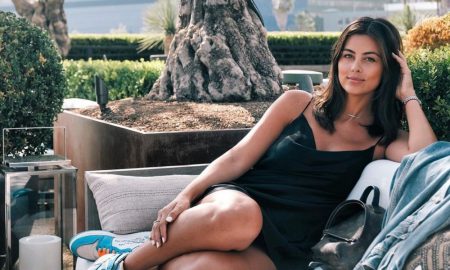



Today we’d like to introduce you to Brianna Jackson.
Hi Brianna, so excited to have you with us today. What can you tell us about your story?
I attended my first birth in 2006 at the time I was 15, my cousin (who was delivering the baby) was 18 at the time and just wanted me there because she thought I would be good support. Growing up my mother worked a lot and my cousins and myself spent the majority of our time at my grandmother’s house together and were raised more like siblings. From that moment my I was interested in birth. My cousins and friends would call me throughout the years to attend their births or just about questions with their births, pregnancies. I was operating as a doula before I even knew what a doula was. At 19 I had my daughter it was an unnecessary c-section that ultimately led to two subsequent c-sections. In 2014, my life took a turn, I was in nursing school because I knew I wanted to be in the medical field but had not quite found my niche. My cousin LaQuisha (Quasha) Williams went into the hospital in labor and unfortunately passed away before giving birth. Her daughter Zakeria was saved yet, losing Quasha in childbirth forever changed me. It was at this time that I realized that black and brown women were 3-4x more likely to die in childbirth and the year following than their white counterparts regardless of socio-economic status. I went to a formal doula training following that, and enrolled in midwifery school. I completed 3 years of midwifery school and I am now finishing my clinical hours/birth requirements in order to become a licensed midwife in the state of Florida and help my community.
Alright, so let’s dig a little deeper into the story – has it been an easy path overall and if not, what were the challenges you’ve had to overcome?
The journey of midwifery school has been anything but a smooth journey. Although midwifery was a practice that was commonplace in the communities of African women enslaved in the Americas as well a practice of Indigenous People it has been gentirfied like many other practices. Grandmidwives were forced out of practice by the medicalization of birth with heavy propaganda about how it was “unsafe” and “unsanitary” yet the ratio of maternal mortality between black women and white women has risen exponentially since the medicalization of birth began in 1935 to now which is about 4:1. Essentially being any woman of color is hard in midwifery, but being a single black woman, raised in the hood and having 3 children this has been a battle. From driving out of town weekly to paying for my current program out of pocket, to sitting through discussions/lessons that are embedded in racism and understanding that maternal mortality isn’t just a phrase or number, it is my cousin Quasha and has impacted my family immensely. These midwifery programs were not built for women of color, yet here I am excelling despite all odds.
Appreciate you sharing that. What should we know about NU Life Midwifery Services/ The Hood Midwife?
My preceptor Brenda Francis, is the founder of Nu Life Midwifery and a black woman. She welcomed me in to her practice and really taught me what I needed to know about midwifery practice and caring for women of color. We are a small practice consisting of her myself and another student Shuquia Prentice-Gonsalves, all women of color. We provide prenatal care, intrapartum (labor) and postpartum care to women in the childbearing years. The practice has a family feel. We primarily support home birth currently but with the opening of our new location, we are in the process of licensing as a birth center and will be delivering babies there within 2022 as well. We specialize in natural birth including water birth. What sets us apart from other midwives in the area is being a team of black women and primarily supporting black women. We pride ourselves on being a team of providers that our clients can say “look like them” as we know that representation matters. My personal brand is The Hood Midwife and I am so proud of my brand as a whole. So many women are seeing providers that they cannot relate to and are often afraid to openly talk to their providers about their struggles in life and having a provider like me makes a difference for these women. I am relatable, because in many ways I am many of these women or have been in the past or even have family members who are like them. My clients feel safe knowing that they can come to me about anything. People should know that midwifery is for everyone and that birth is not a medical event instead it is a natural process that generally should be undisturbed. Midwives are trained professionals and are experts at healthy and normal meaning that we are a great fit for most low-risk pregnancies as well as we are trained to handle emergencies, carry certain medications to treat said emergencies and know how to recognize an emergency that requires a transfer. We are medical providers. We also accept Medicaid for out-of-hospital birth. Midwifery has been mainstreamed to the point that many people believe midwifery and natural birth aren’t for us, I’m just here to remind people that the hood needs midwives too.
Let’s talk about our city – what do you love? What do you not love?
I love that our city is so diverse with a great mix of so many cultures, I dislike that the providers in the area do not reflect that diversity.
Pricing:
- $6,500 cash price for birth
- Midwives are covered by Medicaid (which covers 50% of pregnancies in Florida)
- Some insurance plans cover out of hospital birth as a part of out-of-network benefitstal birth
- Other insurance plans may require a gap exception.
Contact Info:
- Email: thehoodmidwife@gmail.com
- Website: https://www.nulifemidwiferyservices.com/
- Instagram: https://www.instagram.com/thehoodmidwife_/
- Facebook: https://www.facebook.com/TheHoodMidwife/
- Other: https://www.instagram.com/nulifemidwifery/


 Image Credits
Jimmie Roberts