



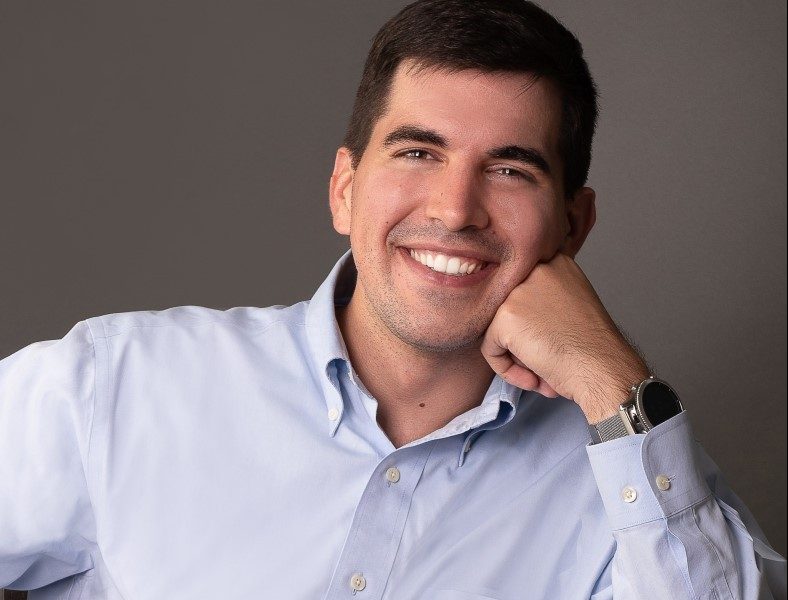
Today we’d like to introduce you to Jeffrey George.
Hi Jeffrey, we’d love for you to start by introducing yourself.
Hey, I’m Jeff. For starters, I’m probably the least conventional financial consultant you’ve ever met. I drive an older paid-off car, clip coupons, and I hate suits. But…working in accounting and finance is the only job I’ve ever known other than landscaping, dishwashing, teaching, and selling Christmas trees (badly). When the banks were bailed out in 2009, I said a eulogy for merit-based capitalism and the American Dream. When the occupy wall street movement started up in 2010 I cheered them on, even while working for J.P. Morgan Investment Bank (to be fair, they could have done a better job of cleaning up the parks they camped in). I’ve never really felt at home among other financial professionals, and a big part of that is because I never joined the industry with the goal of getting rich. In spite of that, I’ve managed to accumulate one of the broadest perspectives on finance of anybody I know (at least that’s what people tell me) – from accounting and financial analysis to investments, financial planning, and customized retirement plans. I’ve worked with Fortune 500 clients, advised on over $2 billion in investments, spent time in investment banking, earned two degrees in accounting, and am a CFA charterholder. None of this is meant to brag, just making it clear that I’m not a puffer fish. Using that knowledge to solve financial puzzles is fun, but what I really LOVE is helping business owners get their happy ending.
I think for most people the topic of money is kind of like that awkward aunt or uncle that shows up at the family Christmas party – you know they belong there but you’re not exactly sure how to handle them. It was an uncomfortable subject for my family, and when my parents divorced I always wondered how much of it was because of money. It’s simple enough to say “we just became different people”, but how much of that was personal differences and how much of it was the challenge of achieving the life they both wanted? If they had enough money, would it have been different? Those are questions I struggled with for many years before deciding to study accounting. I had no idea whether I’d like it or not, but I figured if I could make sense of money it would probably make life easier – I wasn’t wrong.
Unfortunately, it also wasn’t that simple. There’s some truth in the statement “ignorance is bliss.” It’s much easier to enjoy the day-to-day when you don’t understand the true price of inflation. It’s easier to disconnect when you’re not worried about the long-term consequences of major companies shipping jobs overseas, laying off staff, and underpaying employees. And it’s hard to feel good about the massive amount of money public companies have borrowed in recent years, which was spent mainly on buying back their own stock so insiders could hit their bonus targets (in my humble opinion supported by numbers). I promise you, once you “see” things like that you can’t unsee them.
It didn’t take long to figure out that the deck was stacked against the middle class, the working class, and small business owners. Costs have been rising for decades and incomes have stagnated. Private pensions are all but gone. All the while, financial literacy has never been a requirement in our education system. The closest analogy I can think of to what’s been playing out since the 70’s is “the slowly boiling frog in the pot”, which is a pretty grim picture. We now have a generation, my parent’s generation, that have saved only a couple of years’ worth of income for retirement (on average). They’re relying on social security being offered by a country going deeper and deeper into debt at an exponential rate. The people who are supposed to be paying into social security to cover that bill are saddled with student loans, stagnant wages, and low morale. That’s a recipe for a powder keg if I’ve ever seen one – but it’s happened so slowly as to avoid notice by most people. I think only now some people are waking up to this reality, but aren’t really sure what to do about it.
As I’ve grown over the years, it’s become painfully clear how much money plays a role in the happiness and wellbeing of nearly every person in our country, and possibly every person on earth. That’s not to say that money makes you happy – my grandfather taught me to never believe that. But…it does mean that you’re a lot closer to living whatever life you want for yourself when you can afford it, and living a virtuous and fulfilling life can be expensive in this country. So expensive, in fact, that when I did the math I realized it would be almost impossible to live the life I wanted for me and my family while working for somebody else. We’re not talking about yachts and country clubs…just a long trip or two a year, a comfortable but simple lifestyle, and financial independence at some point in my life before age 65. Ok, and maybe an affordable sports car at some point. But most of all, I needed that success to come from helping people achieve the lives THEY wanted and not by taking advantage of them. It needed to be win-win, not a zero-sum game. That was a very jarring moment for me…it forced me to choose between safety and security, or a chance at a better and more fulfilling life in line with my principles.
That choice is the same one that every person who decides to open a business, or work for themselves, has to make at one point or another. To sacrifice safety and security for a chance at a better life. It’s a high stakes game, and failure can cost you everything. My dad made that choice, and now I have too. I genuinely believe that in today’s world, becoming an entrepreneur is one of the only ways that someone can truly achieve freedom (if that’s what they want). I’ve made it my mission to not only empower other people to become entrepreneurs, but also to make sure they have the best chance at achieving the life they wanted when they decided to take that chance.
Alright, so let’s dig a little deeper into the story – has it been an easy path overall, and if not, what were the challenges you’ve had to overcome?
Absolutely not! I’ve always joked with clients and peers that I’m in the business of creating goodwill. There is a bit of a play on words there – I mean both the accounting type of goodwill but also the philosophical type. Taking that approach requires a very long-term perspective for it to work, and it involves investing heavily in the success of other people before you “get yours”.
Unfortunately, it’s way too easy for companies to focus on short-term profit and revenue goals. Too often, this often comes at the expense of clients and can hamstring your ability to build high quality trust-based relationships. There’s a big gray area between ethical and legal, and too often I found myself forced to compromise what I felt was right because it was profitable for the company. I felt this pressure at nearly every company I worked for at one point or another, and that pressure really killed my morale.
When I chose to leave my safe corporate job, I knew that the compliance department of any big company in my industry would be a major headwind to doing anything novel or unique (like helping a business owner with their business’ financial decisions as well as their personal ones). In a sense, those departments manage to the lowest common denominator – it’s too much effort to allow an exception for one person. Procedurally, they would have to implement controls as if everybody were doing it. Similarly, offering investment advice as an ERISA fiduciary (i.e., to 401k and pension plans) is held to a very high standard. It can bring on a lot of liability if you don’t know what you’re doing, so compliance departments often veto offering this service because they’re uncomfortable with it. That, or what you’re allowed to sell isn’t conducive to creating the best outcome for your clients. Whether or not you’re able and qualified to provide the advice is a secondary concern in that regard. Both of these services were critical to what I believed were necessary components of holistic financial advice for business owners.
Opening my own RIA (Registered Investment Advisor) firm seemed to be the most effective solution for providing the type of holistic advice I had in mind. The process of opening one of these firms is, in and of itself, not for the faint of heart. The work that goes into owning and operating an RIA falls outside of what most business owners experience, and many that I work with are aghast at the amount of time and effort required to meet regulatory requirements simply to be in business (much less owning and operating one profitably). Because of this, many advisors who choose to open their own firm end up outsourcing certain critical services such as investment management, financial planning, etc.
I fundamentally disagree with that choice, which has made business a little more challenging for me. I believe that if you’re hired to provide a service your client is expecting YOU, or at least your team, to do it. If you don’t feel qualified or would rather not spend the time doing it, perhaps that’s not a service you should be getting paid for. I can’t tell you how many advisors I’ve spoken with about this. Quite a few are doing it, and not many will admit it unless you ask the question directly. The ones doing it will say “but you’re missing out on being able to spend more time prospecting and making more money.” Again, I know… and I don’t care.
Engaging with your client as a middleman can seriously hurt their outcome – they could have hired the same service you did without paying you on top of it. That additional cost affects their bottom line in a big way over a period of 20 or 30 years. If they can pay for the other service directly, the money you’re making on top of that service’s fees is just a drag on their future. Unfortunately, most individuals have no understanding of this dynamic and that’s an obstacle that I’m forced to overcome every day. The things I say when I meet with a potential client are probably not much different than what someone else would say who’s outsourcing their services – the difference is in the actual service clients are receiving and what it costs. Most clients aren’t savvy enough to understand what they’re losing without being told or shown explicitly – if anything, those other advisors probably pitch their service better than I do since they’re getting more practice.
Appreciate you sharing that. What should we know about Tao Financial Inc. & Tao Consulting LLC?
With every client, I take a values-based approach. In practical terms, that means that if a client says time is what they want most, we focus on how to achieve that. If they’re willing to live on less to live more, that’s a personal choice and I support them in making it. My job isn’t to tell anybody how they should live, how long they should work, or how much they should save – my job is to make the numbers work as best as I can so that each person gets to live the life they want. If the numbers don’t add up, I get to help them with thinking through what matters most so that they can prioritize the goals that are most meaningful to them without inadvertently sacrificing other goals that are equally meaningful but farther away from being achieved.
While not a requirement by any means, the two companies’ services were really built to be offered in tandem to small- and medium-sized business owners. They rarely get offered a “big picture” perspective that takes their full lives and businesses under consideration, and by hiring me for both services they can have that. The value that such a holistic relationship creates can be tremendous, and at the same time, I get to see my clients served in the way that I wish my dad had been taken care of when I was younger.
As far as the companies’ services go, Tao Financial focuses on providing high-quality holistic financial planning, investment advice, and customized retirement plans for business owners. These services are available to individuals, businesses, and group retirement plans. The way that I provide those services is the result of nearly a decade working with top-tier firms. They’ve been streamlined to be affordable for individuals and small businesses. Ironically, there’s even more flexibility in what you can accomplish when working with small businesses vs. large ones. I don’t outsource them, and the disciplines I use for investing client money are what you would expect to see available to clients with multiple millions of dollars invested. The firm I worked with to start my career in investments only offered their services to clients with $10 million and up to invest – I’m offering a very similar service but with far fewer restrictions..
The second firm, Tao Consulting, focuses on filling the “gap” in most small businesses – the financial function. That “gap” can take a lot of shapes and forms. Sometimes it’s understanding and effectively using debt to grow a business, developing business intelligence to identify the most profitable activities, or pricing products or services to protect profitability. Other times it’s actively managing the value of the business up to the point of sale, or just coming in and providing a fresh perspective on how to more efficiently manage routine activities. There are too many services to list here – basically, if I can help my client I will. If I can’t, I will find someone who will deliver the service to the level I would expect if I was hiring them myself. I think of it as a decision-support service that helps owners make the most of what they’re working with at any given moment. The only things I won’t do are provide specific tax advice and perform audits (which are activities typically performed by CPAs), and handle day-to-day responsibilities like bookkeeping, payroll, collections, and billing. Anything else accounting-related is fair game. This is partly due to the cost (I think someone else could probably do it cheaper), but mainly because I have serious responsibilities to clients receiving investment management and financial planning services. It’s too important of a job to split my attention on other time-intensive, ongoing activities that might compromise the service they receive. As such, the work I typically take on through the consulting business is more “project-oriented” in nature.
Can you talk to us a bit about happiness and what makes you happy?
This is going to sound silly, but I get a high from seeing the look in a client’s face when they realize they can have the life they want. It’s incredible how much fear surrounds the idea of being successful, retiring, running a business, selling a business, etc. Most of that fear comes from a lack of knowledge, or understanding, about what it will take to get there. I genuinely believe most people are willing to put in the work to achieve what they want – they just need to know what the steps are and have faith that it can be achieved. By educating people to overcome those fears you help them to unlock their true potential.
On a more personal note, I grew up learning about history and the wonders of the world (my grandfather was a history teacher). I’ve always wanted to travel and would like to do a lot more of it than I’ve been able to the past few years. It’s one of the best feelings in the world –seeing how an entirely different group of people can live with completely different customs, traditions, etc. yet still have similar values. It’s really a humbling experience, and it helps to emphasize how much we all have in common. I’ve also become more adventurous when it comes to music, food, art, etc. I also have a wonderful wife, who’s the love of my life and my best friend. We have two adorable puppies and I spend as much time with all of them as I can. I think having spent so much time working 70–80 hour weeks taught me that the moments in life you have to treasure are the little ones we often overlook. Being “present” is an active effort sometimes, but it really does feel different when you’re doing it deliberately vs. running on autopilot. We try to spend a lot of time in nature too – having desk jobs, it’s easy to forget how much of the world can’t be experienced on the internet. Just a day or two away does wonders for your mental health.
Contact Info:
- Website: www.taofinancialusa.com
- Facebook: https://www.facebook.com/TaoFiUSA