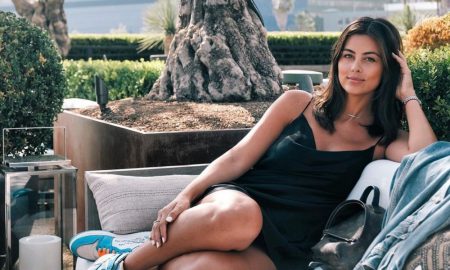



Today we’d like to introduce you to Amer Abukhalaf.
Hi Amer, we’re thrilled to have a chance to learn your story today. So, before we get into specifics, maybe you can briefly walk us through how you got to where you are today.
I graduated in 2011 with a bachelor’s degree in civil engineering. Shortly, I started a job in Safety Design with a company called AIC STEEL. My job was to integrate hazard identification and risk assessment methods early in the design process to eliminate or minimize the risks of injury and structural damage throughout the life of the structure that being designed, with a special focus on natural hazards such as earthquakes and storms. I wanted to learn more about Risk Management outside the context of structural design and construction, so I started a master’s degree with an Executive Management major at Ashland University, Ohio. During my master’s, I learned how to identify, analyze, prioritize, treat, and monitor different types of risk. I also learned about the different treatments and strategies of risk management, including risk acceptance, risk transference, risk avoidance, and risk reduction. And that inspired my master’s capstone thesis, which was “Revising Institutional Disasters Response Strategies in the U.S: Hurricane Katrina Case Study.”
After my master’s, I started my Ph.D. in 2019 at the Design, Construction, and Planning College at University of Florida under the supervision of Jason von Meding, whose work in disaster studies and social justice has inspired me for years. Nowadays, I work in research at the Florida Institute for Built Environment Resilience, and I am a member of a Research Lab called “Disasters, Trust, and Social Change (LDTS).” My research looks into explaining and predicting personal hurricane preparedness behaviors through understanding how housing conditions and structural details influence people’s risk perception. This topic is novel and has never been done before. It is also very multidisciplinary and requires a deep understanding and expertise in structural safety design techniques, risk and disaster management strategies, and theories in human behavior and psychology.
Would you say it’s been a smooth road, and if not, what are some of the biggest challenges you’ve faced along the way?
It has been a very long and challenging journey! And there were many moments where I doubted myself, but sometimes you only need one person to believe in you, and I was lucky because I found unmatched support from my supervisor Jason von Meding who has always given me the freedom to explore and learn! For the past few years, I have got the chance to work on many risk-related research projects that looked into disasters from many different angles. I also found out that college towns and institutions of higher education in the U.S. suffer from significant gaps in their crisis management and hurricane planning, especially in Florida, which motivated me to give this more attention in my research. I have conducted several research studies that looked into Disaster Mitigation, Preparedness, Response, and Recovery. I have published my studies in top journals in the field. Reporters in other journals covered my research, and I became a registered Hurricane expert. I was also asked to present my work at one of the biggest U.S. conferences in the field, and I got the chance to write about my research for some of the biggest research news websites around the world. So, at the end of the day, it was worth it for sure!
As you know, we’re big fans of you and your work. For our readers who might not be as familiar what can you tell them about what you do?
As the intensity and frequency of severe weather hazards have increased significantly in the past two decades as a catastrophic outcome of climate change, my research area became very critical. So, there is a need for more scholars to research natural hazards and disasters to improve how we prepare and respond to such threats, which are only expected to increase in the future. My goal is to keep working on improving individuals’ and institutions’ responses to natural hazards. My research makes several contributions to social studies and disaster research. First, my findings allow institutions of higher education in Florida to have a better understanding of why their students are regularly found unprepared during hurricanes. These institutions will be able to predict students’ behaviors in part based on information about their physical housing conditions, which can be easily gathered by the universities directly from students, or indirectly from housing agencies in college towns (e.g., campus dorms, grad housing, students’ private housing around campus, etc.). The second contribution of this research is including employees at public universities in this study, knowing that they are usually studied in Mass-Violence studies and overlooked in disaster studies. This will help universities address challenges faced by their employees and allow campus administrations better serve their college communities as a whole. The third contribution of this research is studying how housing conditions and physical characteristics can shape risk perception, which has not been done in any previous study. This may considerably contribute to a better understanding of how the built environment influences human disaster-related behaviors. And even though my research is specific to the context of institutions of higher education and severe weather hazards in Florida, they still provide new insight into this critical area of study more broadly, and it awakens further questions about human protective behaviors during disasters and emergencies, including incidents of mass shootings, and create new opportunities for future research.
Is there anything else you’d like to share with our readers?
I am planning to use my experience in structural safety design and my knowledge of disaster theories and human behavioral models to expand my research to more populations in other hurricane-prone areas in the U.S. and investigate other severe weather hazards such as tornadoes and snowstorms in the Midwestern States, as well as dust and sandstorms in the Southwestern States. I am planning to code these comprehensive models using different programming languages to improve the predictability of the model. By doing so, I will be able to integrate these models into early notification systems to identify vulnerable individuals and populations and customize the emergency communications that will be sent to them to help them prepare and respond to the approaching natural hazard. Finally, I hope to expand my work in human protective behaviors and risk perception to include other research areas, especially man-made disasters, such as incidents of mass shootings at educational institutions in the US, and the safe interaction between labor and AI (artificial intelligence) machinery in the construction industry, knowing that the protective behavioral models that I build will fit perfectly in these areas.
Contact Info:
- Website: https://engamerhamad.wixsite.com/risk-management
- Linkedin: www.linkedin.com/in/amer-hamad-issa-abukhalaf-71320275
- Twitter: @AbukhalafAmer