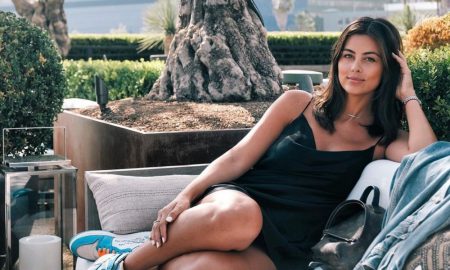



Today we’d like to introduce you to Keri Watson.
Hi Keri, we appreciate you taking the time to share your story with us today. Where does your story begin?
Mass incarceration is among the most crucial issues of our time. Although the United States comprises only 5% of the world’s population, we house more than 20% of its prisoners, and since 1978, the U.S. prison population has increased by 408%. Florida’s incarcerated population has risen 1000% over the last 40 years, and our state now has the nation’s third-largest prison system, with 80,000 people behind bars. Nearly 3 million people in Florida have a criminal record, and Orlando has one of the highest incarceration rates in the nation.
Each year, 33,000 people are released from Florida prisons, and another 80,000 are released from community supervision. Approximately a third of these ex-offenders will be rearrested within three years. Still, evidence shows that education increases the likelihood of post-release employment by 58%, reduces recidivism by 40%, and saves taxpayers money. Yet, until 2017, Florida was one of only 12 states that did not offer any college courses to prisoners. A team of UCF faculty and staff began the Florida Prison Education Project to address the lack of higher education in Florida prisons. The Project provides educational opportunities to incarcerated and formerly incarcerated people in Florida, researches the benefits of prison education, and integrates the study of justice into the University of Central Florida curriculum.
Designated UCF’s Community Challenge Initiatives, the Florida Prison Education Project supports UCF’s Mission by expanding educational access, serving at-risk populations, and offering students the opportunity to participate in internships, among the high-impact practices proven to increase retention and degree attainment. The Florida Prison Education Project also provides research, service, and mentoring opportunities to faculty, post-docs, and graduate and undergraduate students.
Prison education is at the forefront of the national conversation about criminal justice reform, and UCF, as a leader in partnerships, can leverage its scale and excellence to make a tremendous impact on our community. Nearly 80,000 people in Florida are behind bars. The Florida Prison Education Program could help halve that number, save millions of dollars, and positively impact the lives of those incarcerated and their children, families, and the wider community. Over 50 UCF faculty and staff from across the university have already volunteered to participate in the Florida Prison Education Program, and we have offered 75 classes to 750 men and women incarcerated at six prisons in Central Florida.
Alright, let’s dig a little deeper into the story – has it been an easy path overall, and if not, what challenges have you had to overcome?
The mission of the Florida Prison Education Project is to provide educational opportunities to incarcerated and formerly incarcerated people in Florida, to research the benefits of prison education, and to integrate the study of justice into the University of Central Florida curriculum. We offer college-level courses to those who are incarcerated and provide those who have been released from prison the opportunity to continue their education. We research prison education, recidivism, and mass incarceration. We engage UCF faculty and students in prison education and related areas of civic engagement, and we make public policy recommendations based on research. The COVID-19 pandemic presented challenges and opportunities. By August 1, 2020, nearly every prison in the state had a positive case of COVID-19, and 7,634 people had tested positive (6,217 among the incarcerated population and 1,417 staff members). FPEP continued our classes by pivoting to online and correspondence classes. We expanded to six prisons and had limited interruption of services, but we returned to in-person classes only in fall 2021. We have found that in-person courses are more effective.
As you know, we’re big fans of you and your work. For our readers who might not be as familiar, what can you tell them about what you do?
As an art historian and curator, I explore how art de/constructs normalized sexist, ablest, and racist representations and spaces, challenges neoliberal hegemony, and offers techniques for an expanded and inclusive worldview. These interests are inspired by my engaged study of the American Great Depression, a period that witnessed economic devastation and unprecedented federal support for the arts.
The impact and value of my research are measured by the quality of my refereed international publications and invitations to major conferences and evidenced by funding for and recognition of my work by such prestigious organizations as the National Endowment for the Arts, the Andrew W. Mellon Foundation, the Terra Foundation of American Art, the Wyeth Foundation for American Art, the Laughing Gull Foundation, the Pabst-Steinmetz Foundation, and Florida Humanities. I have received over one million dollars in grant funding, published four books, over twenty articles and book chapters in leading peer-reviewed publications, and presented at nearly 100 international and national conferences.
In the fall of 2020, I curated Illuminating the Darkness: Our Carceral Landscape, which brought contemporary artists to Central Florida to participate in discussions with incarcerated students enrolled in classes as part of the Florida Prison Education Project. This exhibition was funded by a National Endowment for the Arts Artworks grant and brought together a diverse selection of work made by twenty-five artists worldwide. My research into art and incarceration is ongoing, as I have just chaired a panel at the Southeastern College Art Conference (SECAC, October 2023) on landscapes of enslavement and am chairing a panel at the upcoming College Art Association (CAA) annual conference on the American carceral landscape (February 2024). A record seventeen people submitted abstracts to this panel, and I am putting together an edited collection, The American Carceral Landscape: From the Plantation to the Prison.
My most recent book, Visual and Performing Arts Collaborations in Higher Education: Transdisciplinary Practices (Palgrave MacMillan, 2023, co-authored with Pegasus Professor Julia Listengarten), examines the role of the visual and performing arts in higher education. Discussing interdisciplinary projects on mass incarceration, climate change, displacement, and aging, it argues for the importance of socially engaged transdisciplinary practices, not just to the college curriculum but also to building an informed and engaged citizenry. Early reviews describe it as “an important contribution to higher education and arts and wellness” (Eve Payor, Atlantic Center for the Arts).
Also published this year, This Is America: Reviewing the Art of the United States (Oxford University Press, 2023, co-authored with McKnight Doctoral Fellow Keidra Daniels Navaroli) “decentralizes American art history by focusing on voices often excluded from the traditional narrative” (Joshua Koenig, Worcester State University) and “brings artists and artworks into dynamic, unexpected conversations using themes and subjects that are highly relevant in today’s world” (Katie Knowles, Smithsonian Institution) designed for students and scholars alike, it has been adopted for use across the country and nominated for the Most Promising New Textbook Award by the Textbook and Academic Authors Association.
My expertise in art and disability is evident in my edited collection, The Routledge Companion to Art and Disability (2022), described in the most recent issue of Visual Studies as “an accessible and highly engaging resource for students and scholars alike [that] helps fill a longstanding gap in art history.” It brings together contributions by 31 scholars from around the world who work on art from across historical periods and geographical locations. In further recognition of my expertise in this area, I was invited to guest curate an exhibition for the Rollins Museum of Art, Silent Protest: Perspectives on War and Disability. I have been invited to host a forum on art and disability for the Orlando Museum of Art.
In recognition of my contributions to scholarship on the art of the United States, I was elected to serve as an executive editor for Panorama: Journal of the Association of Historians of American Art in 2021. I also serve as the journal’s Finance and Grants Manager and sit on the Board of the Association of Historians of American Art (AHAA). I also serve on the Publications Committee of the College Art Association (CAA). AHAA and CAA are the most prestigious professional organizations in my field.
In addition to publishing scholarly research, I am a public art historian and endeavor to share my interest in American art with non-specialist audiences. I am one of thirty-one speakers at the Florida Humanities Speakers Bureau, and I give public talks across the state on the Florida landscape and Florida’s post office murals. I also have a popular press book in April, Florida’s New Deal Parks and Post Office Murals (History Press, 2024).
If we knew you growing up, how would we have described you?
I was an adventurous and outgoing child and adolescent who has always had a lot of varied interests. I like to take on new challenges and contribute to the well-being of my community.
Contact Info:
- Website: https://cah.ucf.edu/fpep/
- Instagram: https://www.instagram.com/floridaprisoneducationproject/
- Facebook: https://www.facebook.com/FloridaPEP/
- Linkedin: https://www.linkedin.com/company/floridapep/


Image Credits
All images courtesy of the Florida Prison Education Project