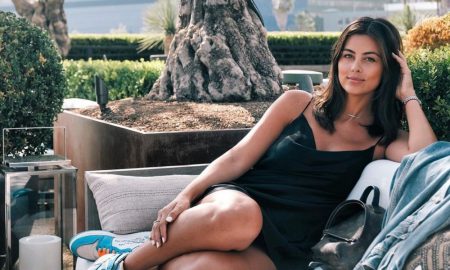



Today we’d like to introduce you to Francesca Mormanni.
Hi Francesca, can you start by introducing yourself? We’d love to learn more about how you got to where you are today?
I currently work across several mediums—I’m a novelist, screenwriter, musician, actress, and producer—and each discipline has deepened my perspective on the others.
Music came first. My dad started teaching me piano when I was three years old, and it quickly became a central part of my life. I eventually chose flute and harp as my main instruments, both of which I studied at Juilliard. After that, I focused on performing with a variety of classical ensembles, which I continue to do today.
My love for storytelling began the moment I saw The Fellowship of the Ring. I was fascinated by the world-building and the beautifully orchestrated soundtrack. I wrote my first high fantasy novel when I was thirteen, and have been regularly writing fiction since then. I’ve published two novels—Double Crossed and Mind the Gap—and I’ve adapted both into screenplays, alongside several original spec scripts.
As I continued to explore screenwriting, I realized how much I wanted to understand the full spectrum of the film industry. That led me to acting and producing, both of which have made me a stronger writer and performer. I love the creative problem-solving that comes with wearing multiple hats, and I’m always looking for ways to grow across disciplines.
Would you say it’s been a smooth road, and if not what are some of the biggest challenges you’ve faced along the way?
Like most creative pursuits, the road hasn’t always been smooth. There isn’t necessarily a steady upward trend when it comes to working on projects or getting gigs, which can definitely be tough at times. I had to get used to periods without auditions and to receiving lots of rejection letters.
However, what’s been most important is knowing that I have complete control over my own practice. While I’m waiting to hear back from a studio or for the next opportunity to come through, I regularly practice my instruments, work on screenplays, learn new acting scenes, and stay informed about what’s happening in the industry. There’s always something to be curious about or to improve, which keeps things consistent amid the industry’s ebbs and flows.
Appreciate you sharing that. What else should we know about what you do?
My creative work spans several areas, but it’s all rooted in a love for storytelling. As a classical musician, I’ve performed with orchestras, operas, and chamber groups around the world. On the writing side, I work on novels and screenplays with a particular focus on sci-fi, thriller, and dark comedy. Some of my scripts are written on spec, while others are developed in collaboration with other creatives.
One of the things I’m most proud of is my training at Juilliard. It took years of focused, consistent effort to reach that level of performance, and it continues to shape how I approach every other part of my work. I’m also proud of my published novels and the discipline it took to see those projects through, from idea to finished piece.
I think what sets me apart is the breadth of my creative experience. Because I work in so many facets of the entertainment industry, I’m able to approach storytelling from multiple angles and build more nuanced, multi-dimensional works.
Do you have any advice for those looking to network or find a mentor?
I find networking genuinely enjoyable—I love hearing about what other people are working on and how they got to where they are today. Over time, some of my most meaningful friendships have come out of networking conversations, even when they didn’t lead directly to collaborations. I think that’s the key to building long-term creative relationships: start with real connection. When there’s a foundation of friendship, people will naturally think of each other if the right project comes along—and it makes the process more fun, too.
My biggest piece of advice is to not be afraid to reach out. I’ve sent a lot of cold emails over the years (for instance, pitching scripts to producers and asking agents/managers to review my portfolio), and while the response rate is typically low, the few responses I’ve gotten have led to great conversations and unexpected opportunities. When you’re starting out, I also recommend reaching out to local collaborators. It’s easier to meet in person, build momentum, and actually get a project off the ground that way.
Contact Info:
- Website: https://www.ffmormanni.com/
- Youtube: https://www.youtube.com/@ffmormanni
- Other: Amazon Bookstore: https://www.amazon.com/stores/author/B098LTG3B2?ingress=0&visitId=1fa6049d-5dff-4df0-8c22-13f9d4900c09&ref_=ap_rdr&ccs_id=fc6eb361-77e4-494f-8b93-650182241b7f


Image Credits
Maria Riboli Photography (typewriter photos)
Scott Dentinger Headshots (acting headshot)