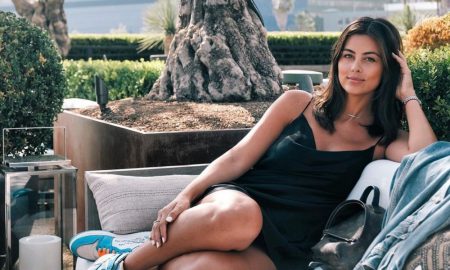



Today we’d like to introduce you to Jake Ryan.
Hi Jake, thanks for sharing your story with us. To start, you could tell our readers some of your backstories.
As an undergrad, I got into peer health education for alcohol safety and sexual assault prevention. I then went on to get my master’s in sports medicine, and I continued doing peer health education on campus but never considered making a career in it. In my second semester of grad school, I found out my program was unaccredited, and it felt like my life was falling apart – the past 8 years of schooling seemed to have been for nothing. Then, in a random moment where everything came together out of chaos, I discovered marriage and family therapy as a field of study and sex therapy as a profession. I realized my experience with helping to prevent sexual violence could help me to help those for whom it was too late. A few weeks after the spring semester in my grad program ended, I formally dropped out of that one. I enrolled in a new one, for marriage and family therapy, to become an AASECT Certified Sex Therapist to help LGBTQ victims of sexual violence. Near the end of that program, I realized I could do more than be a clinical therapist, and I picked a Ph.D. program in human sexuality based on AASECT criteria. That Ph.D. education was heavily focused on social justice, and it clarified how bad some disparities were in this country and what I could do to help fix them. As I head into my dissertation, I’m excited to join forces with a classmate to launch a nonprofit to correct some of these injustices and put my extensive educational career into practice.
We all face challenges, but would you describe it as a relatively smooth road?
It has been anything but easy! My educational career took many twists and turns, and I thought at many points that I had “wasted my time” or “gotten it all wrong.” Once I got far enough, I could connect more of the dots and find creative ways to tie in all the things I’d learned along the way, both from school and life. I got expelled from undergrad after my first year because of my poor grades, and it helped me realize how badly I wanted an education. When I graduated and struggled to find my first post-college job, I thought it meant I wasn’t special. I then began my master’s degree online while working full-time, but I had to live with my parents because I couldn’t afford to live alone. When I got to my unpaid internship at the end of my master’s, I had to continue my job part-time, so I worked about 28 days a month to get my counseling hours and still make ends meet. Two months after finishing my hours and thus getting my master’s, I began my Ph.D., only to have COVID start in my second semester. I continued my coursework as a sex and relationship therapist to get the 3000 hours necessary for licensure in California. Luckily, I’m now just 50 hours away from achieving my license, and I’m moving into the dissertation phase, where I can address the harms of masculinity on male rape victims.
Appreciate you sharing that. What else should we know about what you do?
Right now, I work as a sex and relationship therapist, primarily for gay men and same-sex couples, trans and nonbinary people, and victims of sexual violence. I mostly enjoy working with men because I can help them reflect on the unhelpful messaging in our society about what it means to be a man and decide to be more compassionate with themselves. I’m proud of being able to use the work I’ve done on myself to help other men realize that gender roles haven’t set us up for success. I try to be real with clients because I know they don’t need someone to prove they know many things. They need someone to care. I’ve learned a lot in my 14 years of higher education, but my ability to help others feel safe is of most use to them.
I’m also working on launching a non-profit with some friends, one of whom is from my Ph.D. program. We are excited to implement our education and help make therapy and relevant sex education more accessible for BIPOC and LGBTQ people. Queer Wellness Network is an ambitious project, but I’m lucky to be as privileged as I am, and even though things have been hard for me, I know they’re harder for others. I want to do everything I can to help fight the terrible injustices in our society. Our oppressions are interrelated, and our way forward is by coming together and supporting each other – we can’t rely on our government to take care of us.
What does success mean to you?
To me, success is about setting and achieving personal goals. Ideally, that success also helps others live happier, fuller lives, no matter how big or small the difference. Success is continuing a pursuit that lights you up, even when it gets hard, because you know you’ll be a better person and the world a better place.
Contact Info:
- Website: www.queerwellnessnetwork.org
- Instagram: instagram.com/queerwellnessnetwork

Image Credits
Rideia Wilson