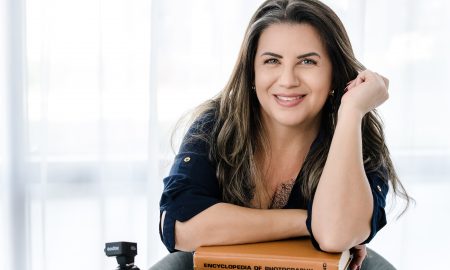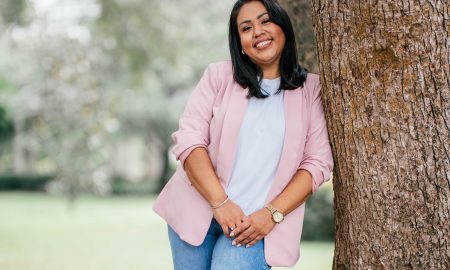



Today we’d like to introduce you to Jill Bolander Cohen.
Alright, so thank you so much for sharing your story and insight with our readers. To kick things off, can you tell us a bit about how you got started?
Before The Lifeboat Project, I was a professional jazz singer and I also ran my family’s coffee roasting business. I am a member of the Presbyterian PCUSA church, and in 2010 I took a position with Presbyterian Women, doing justice and peace work. I learned there was going to be a gathering in Washington DC called Ecumenical Advocacy Days. I wasn’t sure what it was all about but I wanted to go. As it turned out, it’s where different faith denominations gather and they workshop a chosen topic. The topic could be gun violence, mass incarceration, the SNAP program, etc. but that particular year, they were looking to renew the Violence Against Women’s Act (VOWA).
When my husband and I arrived at the gathering, we attended classes. One of the classes was advertised as having a woman speak who had been a sex slave. I didn’t attend the talk because I knew I would cry. Fast forward to six months later, while speaking to someone from our national Presbyterian office in Louisville, I happened to be having a conversation with a woman who facilitated that particular class and she explained to me that human trafficking was not only alive but thriving, in the United States. She said, “Jill, do you know that Florida is ranked third in the nation for human trafficking, and Central Florida is ranked third in the state?”. I was astounded. As a born and raised Central Floridian from Seminole County, I wasn’t going to have this happening in my backyard. I knew I needed to do something, but I didn’t know exactly what. Around this time, The PCUSA vetted a group of service providers across the nation. They had been brought together by the Department of Justice to address human trafficking. Out of that DOJ meeting, they decided to form a coalition, which is now known as The Freedom Network. They would go into cities and conduct first responder training; for attorneys, police, doctors, nurses and so forth. I decided to hold my first training with The Freedom Network. Many of Central Florida’s law enforcement attended, and afterwards, they were hungry for more.
So, about six months later, we held another training. This one was really focused on trauma and how there is serious requirement for first responders to deal with victims gently. These victims are not choosing to prostitute themselves. One police officer, at gentleman standing at 6″4, walked out of the room with tears in his eyes. When we asked him if he was ok, he answered, “No. I’m so upset with myself for not treating victims of human trafficking with the compassion they deserve over the years.” He told us that the training had seriously opened his eyes and his heart. I knew after having both of these trainings that I really needed to step up my game and further educate myself. So, I formed The Lifeboat Project. We receive our 501(c)3 on September 11, 2013. At this time, I knew I needed to have a great relationship with law enforcement in order to move The Lifeboat Project forward, so I also founded the Greater Orlando Human Trafficking Task Force that same year.
Alright, so let’s dig a little deeper into the story – has it been an easy path overall and if not, what were the challenges you’ve had to overcome?
It was not a smooth journey, to say the least. I had all of this information about the problem… but then, now what? At the time, no one really knew anything about human trafficking. I made more calls to The Freedom Network and came to the conclusion that the wheel didn’t need to be reinvented; the wheel needed to be built. And so I began building it. I reached out to organizations that had a stake in this work, but they were really only involved in building awareness. I used that as a starting point and decided to create The Lifeboat Project. For the first eight years, I didn’t take a single paycheck. I learned that working for free can be a double-edged sword in the world of donors. There was one agency who had been interested in providing us with some funding, but when they found out that I didn’t take a paycheck, I was told they couldn’t take our organization seriously (let alone give us money) when the CEO doesn’t even get paid.
As you know, we’re big fans of you and your work. For our readers who might not be as familiar what can you tell them about what you do?
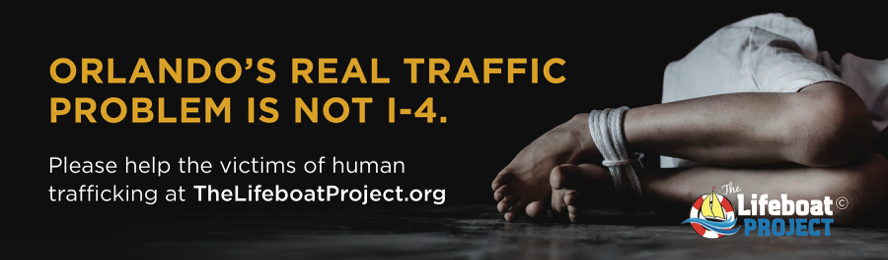
I am the CEO of The Lifeboat Project. Our organization supports survivors of human trafficking and assists them in establishing sustained freedom. We provide wraparound services to survivors; our approach is trauma-informed and centered on victim’s rights. An important part of our program that really sets us apart from other providers is our provision of low-barrier housing. If an individual is intoxicated when they arrive at our safe house, we don’t have a compulsory detox requirement. We’ve experienced instances where victims have been forced by perpetrators to use illicit substances. If you force detoxification upon an individual who has been subject to modern slavery, you’re once again stripping them of their freedom and subsequently re-victimizing them. Our approach is designed where survivors are treated like family members. Typically, other human trafficking programs will issue certificates to survivors after they complete a relatively short course, ranging anywhere from 12 weeks to 6 months or a year-long program. Then, they close the door, telling the survivor to make their own way.
At The Lifeboat Project, we walk through life alongside survivors, facing challenges together. Survivors will be exposed to triggers and trauma throughout their lifetime, and they need to have continued counseling and the tools to deal with that. I’m most proud of how we have managed to build this incredible agency with hardly any funds. We’ve been supported by amazing volunteers in the community. Again, a decade ago, when this began, no one even knew what human trafficking was. There was no funding. There still isn’t a lot of funding. But there has become more and more awareness. Years of groundwork have been laid for this, we’ve been around a long time and we have credibility now. Which I’m so proud of.
Is there anyone you’d like to thank or give credit to?
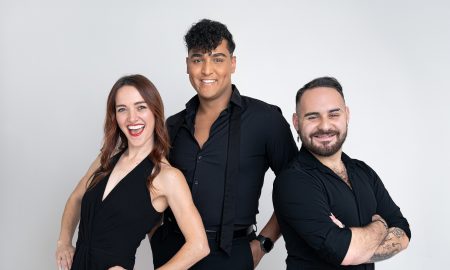
Our current program director, Migdalia (‘Millie’) Roman, came to us in 2018. We were in a place where we really needed a talented and compassionate leader to help run the show. I was just so impressed with her dedication, especially considering we couldn’t offer her a whole lot of money. In fact, she took a pay cut when she joined The Lifeboat Project, but it didn’t affect her tireless work ethic. She never stops. And that’s one of the reasons why we get along so well. In addition to the blessing of being joined by Millie herself, she also brought four residential properties with her, with which we were able to facilitate supportive housing for survivors. These four properties were a gift from the agency she had been working with prior to joining us, who were closing down. Needless to say, all of Millie’s wonderful efforts have been a huge contributor to our success.
My own success has been greatly impacted by the person who mentored me when I was a worship leader and during my many years of musical performance, Margaret Patten. She founded the Maitland Symphony Orchestra. She believed in me and fought for me to have a good, paid position in the music industry. I believe you have to continue to pay it forward, and that’s why Margaret’s support has inspired me to fight for my team at The Lifeboat Project. I want them to be able to earn a living by doing what they love as well. I’d like to mention Ultima Morgan (of Morgan & Morgan). She was always there, helping us fund many of the little but important things. She repeatedly gave us installments of money here and there to help us achieve our goals. Ultima is a consistent sounding board and even connected us with an excellent therapist who visits regularly with all of the survivors in our program. I am very appreciative of Ultima. Now, if it wasn’t for my magnificent husband, Gary Cohen, our organization wouldn’t even exist. He is truly the backbone of The Lifeboat Project. Gary is so compassionate, extremely focused, and intensely disciplined. His confidence in me has been unwavering. And, my father, John Bolander. He’s a 21-year recipient of a liver transplant and a severe diabetic. Dad recently recovered not only from pneumonia but COVID-19 as well. As you can tell, he’s a real fighter. He will be 86 on December 30th, and he makes a trip to visit myself and the staff at the offices of The Lifeboat Project every single day, without fail. Not to mention, he has the very best sense of humor.
Contact Info:
- Email: info@thelifeboatproject.org
- Website: www.thelifeboatproject.org
- Instagram: https://www.instagram.com/thelifeboatproject/
- Facebook: https://www.facebook.com/TheLifeboatProject
- Twitter: https://twitter.com/LifeboatProject