


Today we’d like to introduce you to JJ Holmes.
Hi JJ, we’d love for you to start by introducing yourself.
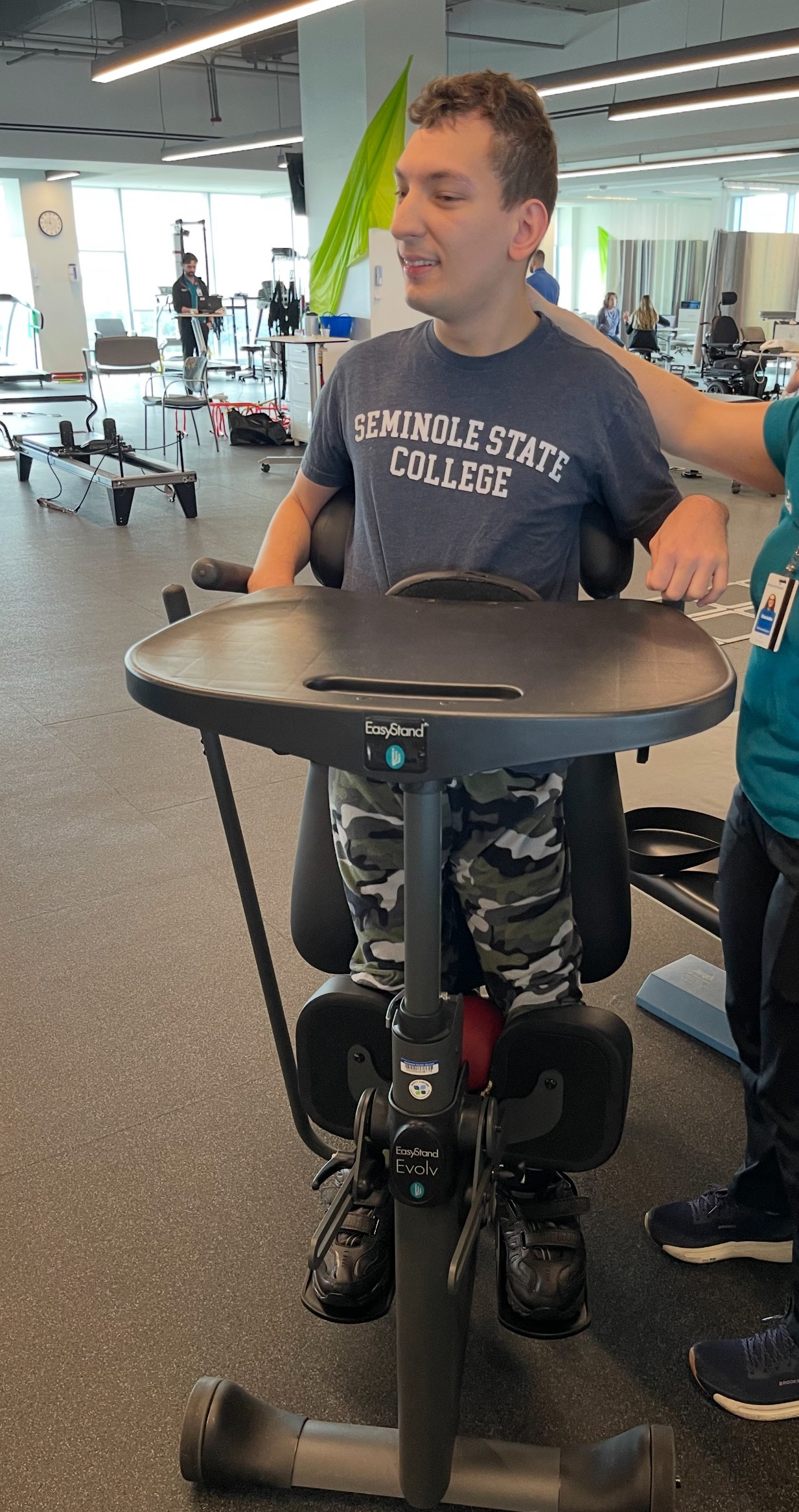
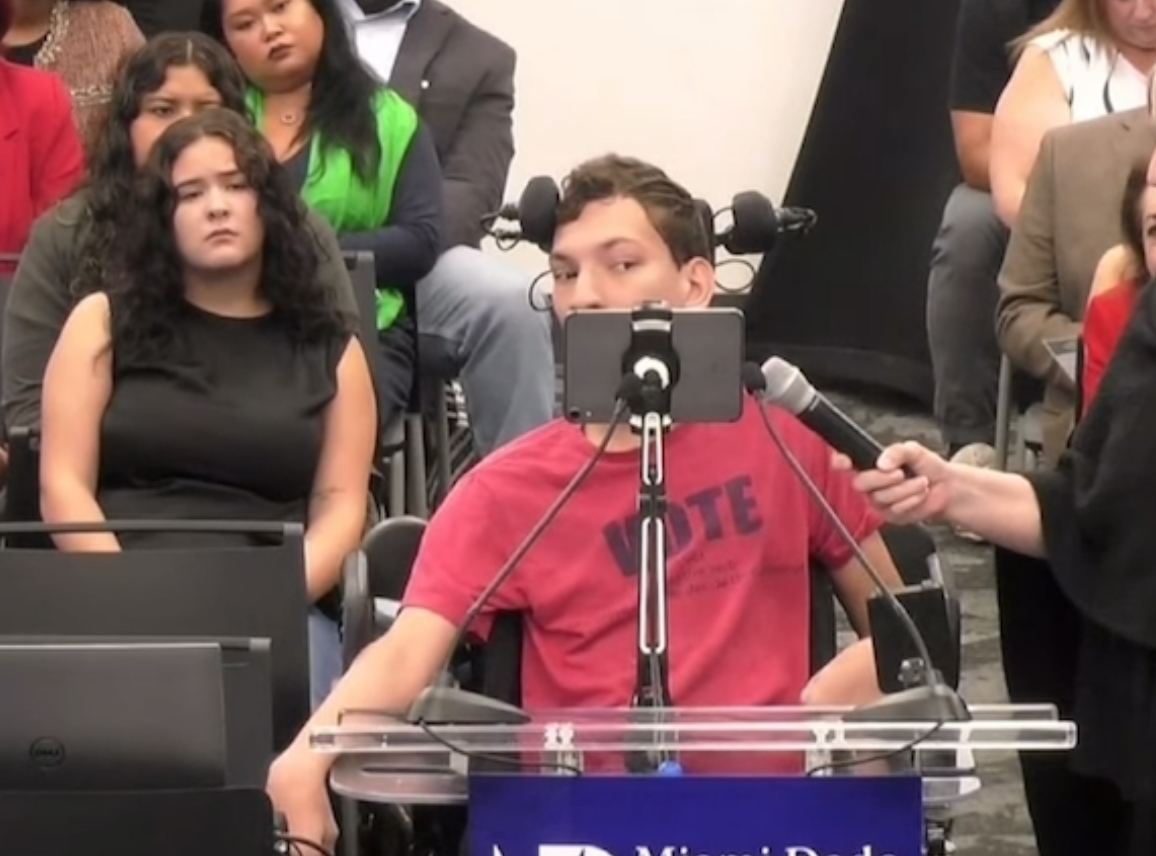
I’m a 21-year-old college student studying political science and I’m a disability advocate. I have cerebral palsy, I use a wheelchair, and I communicate through an iPad that I type on with my nose. That combo pretty much sets the tone for how I move through the world and how the world deals with me. It’s also how I ended up in advocacy, because I’ve spent my life noticing the gap between what the system promises and how things actually work for people with disabilities, especially here in Florida, a state that manages to be spectacularly unserious about disability access.
I didn’t wake up one day and decide to become a disability advocate. It started with me speaking up at my local school board meetings and eventually realizing that if people with disabilities don’t explain how things actually work, decisions will keep getting made without us at the table. For me, it was always in the background that I’d been waiting years for disability waiver services. That wasn’t shocking as Florida ranks 49th in the nation for funding the program, but when I found out that tens of thousands of Floridians with disabilities were stuck on the same list I was on, it stopped feeling personal and started looking intentional. So I began showing up at legislative delegation meetings in counties around the state and, during session, I headed to Tallahassee to say out loud that maybe essential disability services shouldn’t come with a decades long waiting period.
In 2024, the legislature did pass a bill to increase waiver funding and I was invited on the senate floor to watch it pass. It didn’t fully fund the program, which is what I’d been pushing for, but it did take about 300 people off the waitlist. That made a real difference to hundreds of people, including me and after 18 years, I finally received disability services through the waiver. It wasn’t sweeping reform, but it proved something important. When lawmakers act, lives actually change.
I’m going to continue advocating for Florida to clear the waitlist and now I’m also fighting to get a new law repealed. In July Florida passed a law letting someone who’s pregnant use disabled parking spaces. I understand pregnancy can be physically demanding, but we shouldn’t be acting like pregnancy is a disability when it’s literally how every human got here. Giving people who can walk just fine the legal right to park in spaces meant for people with mobility disabilities is a great example of good intentions colliding with poor planning. It’s like fixing traffic by letting more cars drive in the bike lane and calling it equity.
I’ve gotten here because I’m stubborn, I have strong support from my family, and I’m not willing to accept “that’s just how it is” as an answer. Now, I’m using my voice,to push for better systems so the people coming after me don’t have to treat access like a scavenger hunt. Access isn’t charity. It’s infrastructure. And when it’s done right, everyone benefits.
Alright, so let’s dig a little deeper into the story – has it been an easy path overall and if not, what were the challenges you’ve had to overcome?
Has it been smooth? Not even close.
There’s the everyday stuff first, the usual access issues that come with living in a world that was very clearly not built with someone like me in mind. Doors that assume hands. Systems that assume speed. Spaces that assume independence looks exactly one way.
Then there are the moments that remind you how fragile access still is, even when the law says otherwise. When I enrolled in college, the disability director told me that since I need an aide at school, which I do, because I can’t use my hands and things like opening and closing doors are not exactly optional, I’d have to pay double tuition. One for me. One for my aide.
Luckily, I know some good people. They pushed back and shockingly, it didn’t take long to fix, because charging someone extra just for being disabled is Discrimination 101. The kind of thing that’s supposed to be settled law, not a negotiation.
That’s the part that sticks with you. It’s not just the access barriers. It’s the fact that even with laws on the books, you’re still expected to catch the discrimination yourself, call it out, and fight it. Progress exists, but it’s fragile, and it only works if someone’s willing to say, “No, that’s not okay,” every single time.
Appreciate you sharing that. What else should we know about what you do?
Most of my work sits at the intersection of disability, policy, and real life. I focus on the gaps between what laws and programs are supposed to do and what actually happens when people with disabilities try to use them. I translate lived experience into language lawmakers and institutions can’t ignore, whether that’s at school board meetings, legislative delegation meetings, or during session in Tallahassee.
I’m probably best known for being very comfortable showing up in spaces where people with disabilities are usually talked about but not invited. I don’t do abstract arguments. I talk about waitlists that last decades, services that exist on paper only, and “accessible” systems that stop working the moment you actually need them. I try to be clear, persistent, and just funny enough to keep people listening.
What I’m most proud of is helping turn advocacy into outcomes. After spending 18 years on Florida’s disability waiver waitlist, I finally received services in 2024 when the legislature increased funding. It wasn’t full reform, but it proved that showing up consistently can move policy, even in small but life-changing ways. Knowing that hundreds of other people benefited too matters more to me than any headline.
What sets me apart is that I live inside the systems I’m pushing to change. I’m not advocating from a distance. I’m navigating college, public policy, and daily life as a wheelchair user at the same time. I understand the theory, but I also understand the paperwork, the delays, and the human cost. That perspective keeps my work grounded, urgent, and hard to dismiss.
What do you like and dislike about the city?
What I like most about Orlando:
Orlando is surprisingly easy to live in as someone with a disability, once you’re inside places. It’s flat, spread out, and built for tourists, which means ramps, elevators, and automatic doors show up in spots you’d never expect. Theme parks accidentally nailed accessibility decades ago, and that mindset has trickled into hotels, venues, and public spaces. Also, nobody here stares. Between tourists, costumes, scooters, and general chaos, someone in a wheelchair typing with their nose barely registers.
What I like least:
Getting between those accessible places is where Orlando really shows its personality. The city was clearly designed by someone who thought sidewalks were a bonus feature. If you’re not in a car, getting from point A to point B can feel like a side quest, and public transportation is more of a hopeful concept than a reliable system. Accessibility shows up in bursts, but the connections between them are shaky, which makes everyday life harder than it needs to be.
Orlando is a city that’s great at access in individual moments and less great at connecting the dots.
Contact Info:
- Instagram: https://www.instagram.com/jj___holmes
- Facebook: https://www.facebook.com/jj.holmes.7165
- Twitter: https://x.com/jjhoimes
- TikTok: https://www.tiktok.com/@jj_holmes