



Today we’d like to introduce you to Mike Larson.
Hi Mike, can you start by introducing yourself? We’d love to learn more about how you got to where you are today?
We actually opened Thrive Music School just two weeks after I proposed to my wife—she’s the worship pastor at the church we rent space from. Around that time, we both started noticing how few young musicians were stepping up to play in churches. I’d been teaching at a university for years and had played music for over two decades, and I’ve always been drawn to the idea of social entrepreneurship. So I thought, why not build something that brings all those worlds together?
The vision was simple: create a space that pays musicians fairly for their craft while also making lessons accessible to families who can’t always afford them. I started with just one or two guitar students a week. Within a couple of months, we added three incredible teachers, which opened the door to voice, piano, ukulele, bass, and even early-childhood music education.
From the very beginning, we’ve made it a priority to give back. A portion of our profits goes toward sponsoring lessons for local students—especially young people who dream of playing in their church band one day. In just 18 months, we’ve sponsored nearly 20 students and even partnered with another church that fully funds music lessons for teens in their congregation. Watching the community rally around that mission has been incredible. At our first recital, every dollar raised went toward buying instruments for local youth. For our upcoming December recital, instead of selling tickets, we’re asking guests to bring an unwrapped toy to donate. For me, business has always been about community development, not just profit.
Still, our mission reaches far beyond the church. We want Thrive to be a place where anyone—of any age or background—can feel inspired and supported. Too often, music schools are rigid and transactional, with high fees and strict policies that take the joy out of learning. We’ve turned that model on its head. Our students don’t work for the school—the school works for them. And the relationships we’ve built with our students and their families are what make it all worthwhile. There’s nothing quite like seeing a student light up when they realize they can really do this.
Would you say it’s been a smooth road, and if not what are some of the biggest challenges you’ve faced along the way?
It definitely hasn’t been a smooth road but honestly, that’s what’s made us who we are today. I’ve tried to take a page from the tech world and take on an iterative approach to growth: when something breaks, you fix it, learn from it, and make it better. I think there is such a temptation to make sure the road is perfectly smooth before starting anything. In the past 2 years I have been trying to push myself to be more comfortable with being uncomfortable. We spend so much time workshopping and never testing but it is in the testing that we can learn what is valuable to our customers.
In the early days, I was doing everything manually, having to chase down payments after each lesson, managing four teachers’ constantly changing schedules in a single spreadsheet, and running entirely on the honor system. It was chaos, but it taught me a lot. Since then, we’ve moved to a scheduling and billing platform that automates most of that work, which has made enrollment and payments much smoother for families.
One of the toughest challenges we still face is cancellations. Kids are busier than ever, and music lessons are often the first thing to get cut when sports or school activities come up. I get it—I love sports too—but it’s pushed us to make lessons more engaging and goal-driven. The martial arts world does this really well with clear progression systems and belt rankings. We’ve been experimenting with a similar gamification in music. I even wrote my own intro-to-guitar book that lets students “level up” through different tiers, like earning a Blue wrist. band when they master certain skills. It’s been incredible to see how motivated students get when they can see and celebrate their progress.
However, I think the biggest ongoing challenge, though, is the balancing act of growth. To expand our impact, we need more students—but to serve those students well, we also need more teachers. It’s a constant dance: we can’t bring on new instructors without steady demand, but we can’t grow demand without having enough teachers ready to go. At the end of the day, it really comes down to families who value music education and are willing to make that investment in their children’s growth. When parents see music as more than a hobby, as something that builds confidence, discipline, and creativity—it changes everything.
Appreciate you sharing that. What else should we know about what you do?
I actually started my career in finance. I loved the strategy behind business—the creativity, the potential—but not necessarily the fine print of balancing books. While working in underwriting, I spent my evenings earning a graduate degree in business, which eventually opened the door to teaching.
My first teaching position was with a Chinese university about two hours outside of Beijing. While overseas, I transitioned to an American university based in Kansas that had a campus in the same city. That’s where I became one of their leadership professors—a role that completely reshaped my philosophy. My main course was in civic leadership, where we helped students design sustainable nonprofit initiatives tackling real community needs like food safety, elderly care, clean water, and waste management. My colleagues and I even published research on teaching servant leadership in Asia. During those four years, I traveled across the region and saw firsthand how deeply communities needed sustainable solutions—not just charity. That experience convinced me that business, when done well, can be one of the most powerful tools for good.
When COVID hit, I returned to the U.S. full-time and continued teaching online while also stepping into the corporate world to build training and development programs from scratch. I found myself drawn to the creative problem-solving side of business—figuring out how to make systems work better for people. After a few years, I decided to take the leap and start building my own ventures. The first two didn’t work out (and cost me quite a bit), but what I learned through those failures, especially around marketing, strategy, and resilience was worth far more than the money I lost.
Today, I still teach leadership as an adjunct professor while running Thrive Music School full-time. My next goal is to create a network of business leaders who can mentor and fund youth-driven business ideas. I genuinely believe the American church has an untapped opportunity to become a hub for community entrepreneurship. Not just for its members but for everyone in their surrounding communities. Churches have space, resources, and thousands of experienced professionals within their walls—we just need to channel those assets to empower the next generation of entrepreneurs who want to solve real community problems.
In terms of your work and the industry, what are some of the changes you are expecting to see over the next five to ten years?
I think we’re standing at a crossroads in education, especially in music. On one hand, technology is reshaping how we learn at a speed we’ve never seen before. Tools like AI can create highly personalized learning paths that respond to a student’s curiosity, pace, and interests. That kind of adaptability is powerful and it has the potential to reignite a student’s intrinsic curiosity.
What I think we will see is the need to balance two competing forces, the innovation that helps students learn smarter, and the intentional effort to rebuild social, real-world music experiences. Kids today have more access to online lessons and digital tools than ever, yet many are learning in isolation. Many find it hard to stick with learning long term while missing out on some of the most powerful parts of playing an instrument.
Some of my favorite musical moments weren’t structured or polished they were sitting around with friends in a living room, figuring out songs together. I think the next big shift in music education will be finding ways to merge those two worlds: the personalization of technology with the community of shared experience. That’s where I see the future—tech-powered, human-centered learning.
Pricing:
- We are a qualified step-up provider for our homeschool families
- Lessons start at just $32 per session
Contact Info:
- Website: https://www.thrivemusicschool.com/
- Instagram: https://www.instagram.com/thrivemusicschool/
- Facebook: https://www.facebook.com/profile.php?id=61560541126894

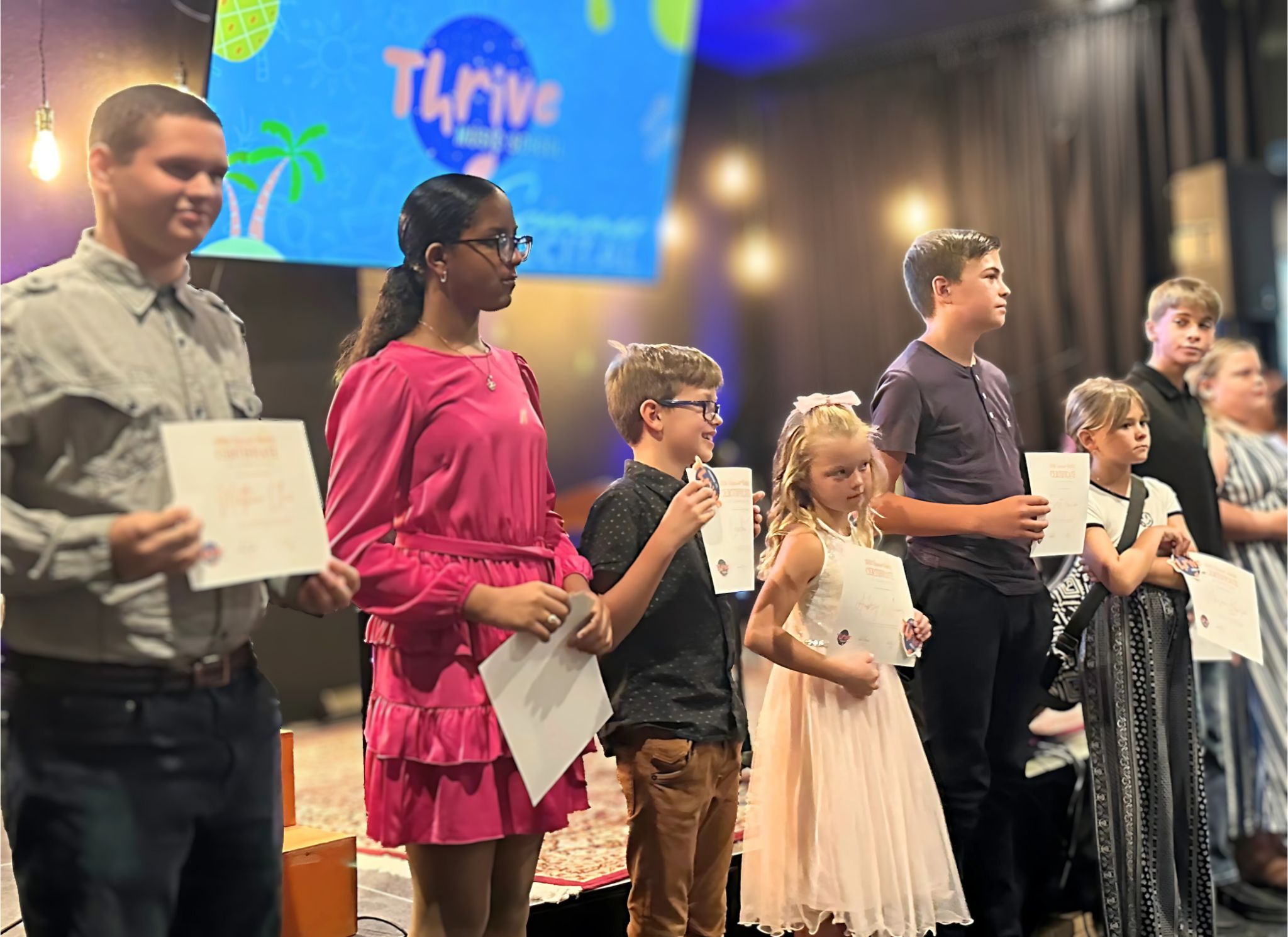
Image Credits
Photos taken by Mike Larson