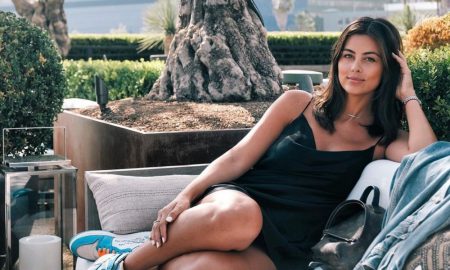



Today we’d like to introduce you to Cendie Stanford.
Cendie, we appreciate you taking the time to share your story with us today. Where does your story begin?
I was born on a warm July day in 1977—just about 12 years after Jim Crow segregation laws officially ended. My story doesn’t start with a résumé or an organizational milestone; it begins with a name.
The six letters in my first name—CENDIE—hold a lesson. Three consonants, three vowels, one repeating. Not just a grammar note, but a reminder of what it means to be human in a world that once denied people their full rights (learning to read and write), and the power a name carries.
I was named after my paternal grandmother, a gesture of honor from my parents. Yet, because of the laws at the time, I was required to leave the hospital carrying the surname of my mother’s estranged husband—someone who was not my biological father. So, before I could even walk, I carried two stories: a first name that looked like a “misspelling,” and a last name tied to someone who was not my biological dad.
That “start-up story” shaped the way I saw identity, belonging, and truth. It gave me an early introduction to adversity, injustice, and the hidden costs of systems that overlook the humanity of a child. But it also prepared me to see the world differently.
Where I stand today is a continuation of that journey—showing others how childhood adversity leaves deep imprints on who we become, and more importantly, what we can do about it. My nonprofit, ACEs Matter, is the vessel—my ark—to move the needle forward. Through it, I work to challenge and update the belief systems—what I call the “BS”—that we live by, so that future generations don’t have to carry the same invisible burdens that so many of us did.
Can you talk to us a bit about the challenges and lessons you’ve learned along the way. Looking back would you say it’s been easy or smooth in retrospect?
Has it been a smooth road? Absolutely not. The road has been paved with adversity after adversity since the day I left the hospital.
Though my brain has blocked some of the earliest memories, I carry the verbal records of my mom’s struggles after another failed relationship. As a young girl, I was exposed to domestic and intimate partner violence—watching my mother wrestle with independence, survival, and the deep desire to feel loved.
Back then, her belief system—her “BS”— told her that independence was tied to the town’s biggest high-roller, the neighborhood drug dealer. At other times, it looked like the hard-working W-2 man who kept a job but battled alcohol or crack cocaine. Survival often looked like compromise.
My mom’s greatest joy was her children. My older brother—her pride and joy—struggled with untreated mental health issues and was tragically murdered when I was only 15. The father listed on my birth certificate was his biological dad. He too was murdered in New York when my brother was just 12. That loss rippled through our entire family, and for me it was personal—because even though he wasn’t my father, he treated me like his own whenever he visited.
My younger brother carried his struggles differently—always in the principal’s office, disruptive, searching for attention and belonging. My mom missed several days of work because of my brother’s behavior. At one point, a truancy warrant was issued for her arrest because my brother had been skipping school.
And then there was me. I was bullied for the spelling of my name, for the dark pigmentation of my skin, for the short coils of my hair that cousins compared to a kitchen brillo pad. In Black culture, we call the knots at the nape of the neck “the kitchen”— my ancestral knots became the punchline in rooms where adults weren’t watching.
Even in her own struggles, my mother still tried to make me shine. She scraped together money to doll me up so I could appear more beautiful than others chose to see me. But I still remember the nights I heard her crying in the room next door, holding in pain she had no outlet for.
If I were to calculate the struggles, they would include:
1. Parental abandonment (absent father)
2. Emotional abuse (taunting and name-calling)
3. Bullying (mental and physical)
4. Domestic violence
5. Substance misuse in the home
6. Poverty, crime, and drugs in the neighborhood
7. Mental illness in the home
8. Discrimination (skin color, opportunity denied)
9. Violent loss of loved ones (brother and stepfather)
So, smooth? No. But those very obstacles became the curriculum that taught me resilience. They became the lens through which I now see the urgency of addressing childhood trauma. They are the raw material I now transform into purpose.
Alright, so let’s switch gears a bit and talk business. What should we know?
My organization is called ACEs Matter, Corp. The name itself is a statement: Adverse Childhood Experiences—what we call ACEs—do matter, because they shape the way people think, feel, and show up in the world.
At our core, ACEs Matter is a nonprofit with a mission to make conversations about childhood trauma and resilience as common as conversations about the weather. We are a vessel for truth-telling and healing, a community-driven movement designed to help people recognize how their past impacts their present—and how they can break cycles for the future.
What sets us apart is the way we translate science into story. ACEs research can feel clinical, but when it’s woven with real life, with metaphors, with culture, it becomes unforgettable. We use creative approaches—comedy, art, workshops, even vinyl record–painting sessions—to teach people about ACEs and the science of epigenetics. We don’t just inform—we transform the way people see themselves and each other.
We specialize in building trauma-informed communities. That means equipping everyday people—teachers, business owners, faith leaders, parents—with tools to recognize and respond to trauma in themselves and others. Our programs like RIB TRIBE and the SoulUtioN Summit are designed to connect, educate, and heal across generations.
Brand-wise, I am most proud that ACEs Matter has become known as the voice for the voiceless. We are not afraid to say the hard things, to look at the uncomfortable truths, and to invite people into conversations that shift belief systems—what I like to call updating the “BS” we live by.
If there’s one thing I want readers to know, it’s this: ACEs are not just statistics, they’re stories. And when we take the time to understand those stories, we can reimagine how families, schools, workplaces, and communities function. At ACEs Matter, we’re not waiting on the system to change—we are building new systems of hope, healing, and humanity from the ground up.
Is there anything else you’d like to share with our readers?
Know your ACE (15 questions) and PCE (7 questions) core by visiting acesmatter.org to take the inventory assessment.
Pricing:
- Free
- Free
- Free
Contact Info:
- Website: https://acesmatter.org
- Instagram: https://www.instagram.com/aces.matter/
- Facebook: https://facebook.com/acesmatter
- Youtube: https://www.youtube.com/@ACEsMatter


Image Credits
i own all the images