



Today we’d like to introduce you to Rupert Meghnot
Hi Rupert, can you start by introducing yourself? We’d love to learn more about how you got to where you are today?
It hurts me to see entrepreneurs fail. And, when 95% do, it’s a monumental problem for us all!
I’ve founded or invested in dozens of startups, with multiple exits and failures, in multiple industries.
I’ve also started and/or ran: consulting companies, charities, tech associations, business incubators/accelerators, venture capital firms, and other entrepreneurial service organizations.
By combining my passions for entrepreneurship and project management, my success rate is 12X the average.
The Wall Street Journal won’t print about any of them, but when the entrepreneur, investors, and employees are happy, that’s what we call a “success”! Everything doesn’t have to be a “unicorn”.
Now consider this: everything we take for granted – every part of your clothes, your car, your home – is provided by what was once a startup.
Every stock in your 401K was also.
So, effectively, our world is built upon a 5% success rate!
Can you imagine what would happen to humanity if we just doubled it, to 10%?
That’s still a 90% failure rate, though we would effectively double innovation and wealth in the world!
That is my purpose, and why I’ve founded Orlandopreneur.
Everyone calls themselves a “hub” of something. Any mechanic will tell you that hubs just spin.
At Orlandopreneur, we use collaboration, networking, and education to add teeth to those hubs, and turn them into gears.
Two gears make a machine. More gears make more powerful machines!
We utilize our proprietary techniques to empower startup founders, service providers, and investors to create greater quantity (and quality!) of investable startups, and small businesses.
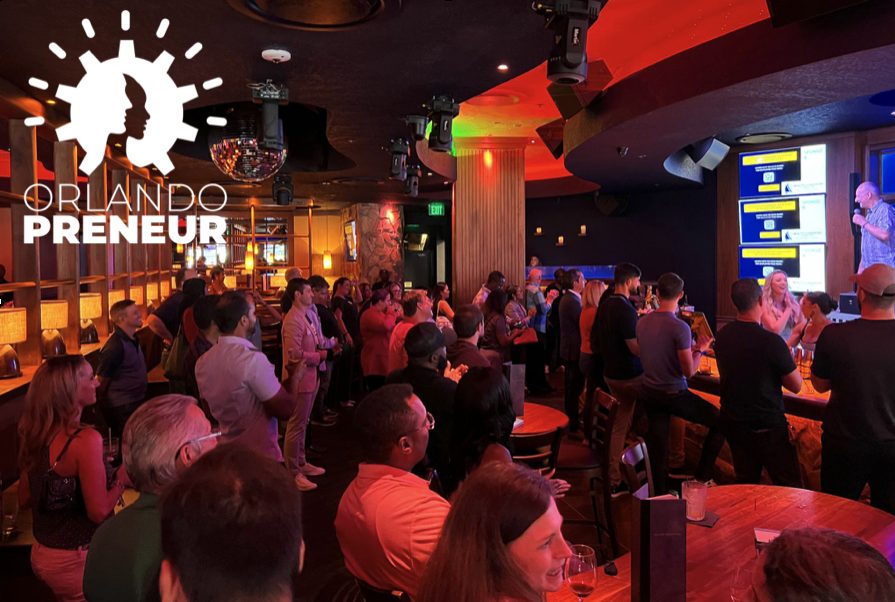
Since starting in 2023, we have more than 3000 members, and our monthly networking events average 140 attendees.
New programs will add even more value to our entrepreneurial community.
Alright, so let’s dig a little deeper into the story – has it been an easy path overall and if not, what were the challenges you’ve had to overcome?
First, getting out of my own way. As you get older, more things begin to distract you (e.g., mindset, family, money, people who have no business being in your business, etc.). And, ADHD intensifies. Managing it all is a herculean effort. STILL trying to have a life.
Second, finding the right people to help along the way. To paraphrase John Donne, no person is an island. Pretty much anyone who says they’re a “self-made” millionaire is a liar. There’s always someone along the way who helped them get there.
It’s been very difficult finding people who have even sufficient amounts of entrepreneurial attitude, and realistic expectations about being in a startup. Everyone’s an expert. Until you find out that they aren’t (after spending money that could have been better spent elsewhere).
This is not new. All entrepreneurs are experiencing this. We just have to stay optimistic, develop the right plan (and onboarding processes), tell the Universe what we want, believe, and eventually make it so.
Other than that, it’s been relatively smooth. We’ve been profitable since day one. And, have garnered 3000+ members (organically), in just two years. Anxious to provide greater value to our ecosystem.
We’ve been impressed with Orlandopreneur, but for folks who might not be as familiar, what can you share with them about what you do and what sets you apart from others?
Aside from what I’ve already mentioned, we set ourselves apart from all other ESOs by incorporating “innovation” into EVERYTHING we do: our events (different places; all small, locally-owned establishments; all with a learning component); what we teach (with the standard 95% failure rate, whatever people are teaching isn’t helping very much); and, how we conduct business (with honor and respect; in our agreements; how we negotiate, etc.).
The second way we set ourselves apart is that we’re for-profit. 99.9% of ESOs are non-profit. With all due respect to non-profit ESOs (whom we support) the problem with that is that you tend to have the wrong people providing guidance (e.g., corporate types, not entrepreneurs), and little – if any – accountability. ALL our staff (and mentors) are entrepreneurs. Anyone providing mentorship to our community from our organization will be entrepreneurs.
Aside from our community benefiting from being taught by those who have truly “been there, done that”, we are for-profit because we want to set and example, of how a startup organization should be run. We’re not perfect by any stretch of the imagination, as we don’t have to be. All we need to be is inspiring, and provide sufficient guidance (and opportunity).
Another benefit of being for-profit is that we won’t take funding opportunities from NPOs. They get their funding from a completely different budget item (e.g., charitable giving), whereas we get ours from marketing departments (e.g., marketing expense). Totally different. We can even get funding from all those who regularly give to our NPO brothers and sisters, and not reduce their revenues in any way. And, when we provide better value (ROI), we’ll be in a better position to encourage our Sponsors to maintain – if not increase – their philanthropic donations.
We are all about challenging the status quo. Again, it’s not working for entrepreneurs. With almost ALL of us failing, almost ALL of the amazing ideas, products, and technologies we’re inventing are never seeing the light of day.
This is a monumental loss for mankind.
In 1968, people saw a movie (2001: A Space Odyssey). When 2001 came around, we were disillusioned. “Where is our moon base, or my vacation home on the moon?”
If we went from 50% of missiles blowing up, to building rockets big enough, and putting people on the moon in less than 10 years (all without what we consider “computers” today), we could have seen that. Easily.
As previously mentioned, our purpose is to DOUBLE the success rate, to at least 10%. This would effectively DOUBLE the wealth (and innovation) in the world.
And, as the tallest trees begin with but the smallest seed, we’re starting in Orlando (an auspicious place, indeed).
We started our Lunch & Learn Ya™ events, which build upon the lessons taught at our monthly Startup Happy Hours (24 events, 4800 RSVPs, 3300 attendees, 4.8/5 stars – from 12% of attendees).
These will be built upon further with workshops, which will provide attendees ACTIONABLE DELIVERABLES, which will do more to help them achieve success than anyone else’s teachings.
The beauty of it is that we do NOT contradict what other people teach. In fact, we welcome all. We just show how to best utilize it, once they have the foundation for stability and growth we help provide (which nobody else does).
So far, we’re the top entrepreneurial/small business community, in the city that WalletHub has deemed “The #1 City for Startups in the U.S.” five out of the last six years.
We’re just getting started.
In terms of your work and the industry, what are some of the changes you are expecting to see over the next five to ten years?
Without us, no real changes. With us, monumental ones.
Everyone teaches from a very limited viewpoint. For example, Forbes, CB Insights, Techstars, etc. all publish their “Top XX Reasons Why Startups Fail”.
We recognize the Truth – every “reason” they point out is NOT a CAUSE of failure. They’re SYMPTOMS.
There is, has been, and will always be only ONE CAUSE for failure: US (the founders, entrepreneurs, and CEOs). “The buck stops here.”
Why do we fail so much? Three (root) causes:
1) We don’t have the right mindset. “I’m gonna change the world (or become a billionaire)! And, I can do it working just 30 hours a week!” Or, they just have no clue as to the amounts of initiative, creativity, resilience, and risk tolerance needed to become successful. This leads to…
2) A lack of self-education. “I’m an expert, because I’ve read 100 books, and know Grant Cardone’s teachings by heart!” Uh, no. Grant gained those teachings from 45 years of struggle. There is no substitute.
Having said that, if you know what information you need, how to get it, and what to do with it – which nobody really teaches – you drastically increase your chances of success (which is our approach). So, a lack of self-education leads to…
3) Insufficient planning. Planning is like management and driving. Everyone judges everyone else (regarding these things) based upon their own experience of these things. Let’s face it: we all suck at management, driving, and planning! We have no basis upon which to judge others on any of these.
If we all knew what a “good” plan was, and implemented one, we would all drastically increase our chances of succeeding. We’ve done it. Multiple times, in multiple industries. Using the same processes. Which we teach others.
Pricing:
- Happy Hour Events are FREE to $15/pp
- Lunch ‘N Learn Ya Events are $49-$99
- Workshops are $99-$499
Contact Info:
- Website: https://www.preneursuccess.com/orlandopreneur (in process)
- Instagram: https://www.instagram.com/orlandopreneur_official/
- Facebook: https://www.facebook.com/orlandopreneur
- LinkedIn: https://www.linkedin.com/company/orlandopreneur/
- Twitter: https://twitter.com/orlandopreneur
- Youtube: https://www.youtube.com/channel/UCqJkAXfWGO9G644MScvnUcg
- Other: https://www.linkedin.com/in/rupertmeghnot/
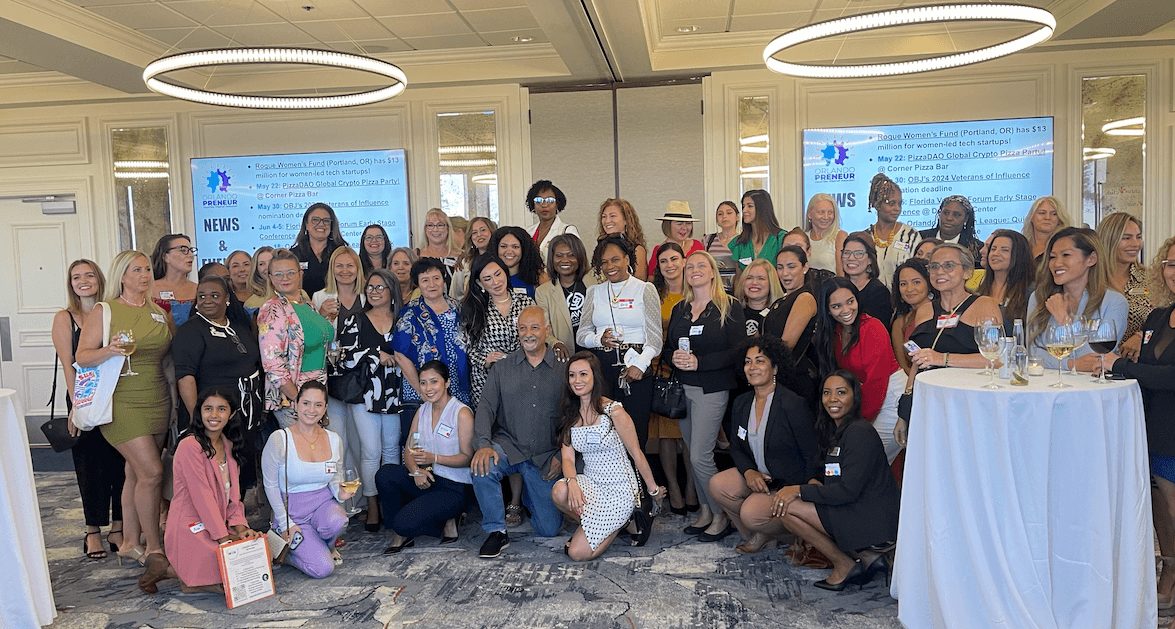


Image Credits
Professional pictures (have permission): Francisco Rodriguez; other pictures are from attendees.