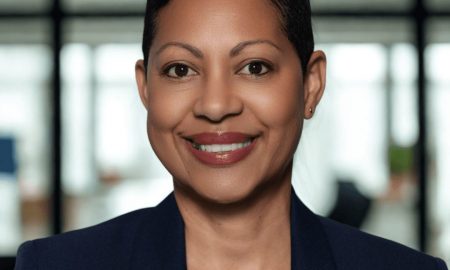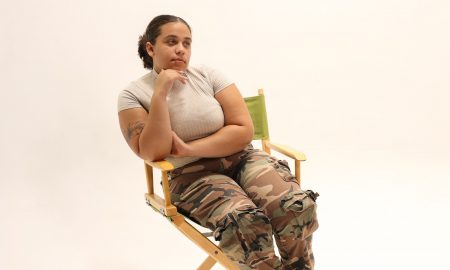



Today we’d like to introduce you to Cathy Yi.
Hi Cathy, we’re thrilled to have a chance to learn your story today. So, before we get into specifics, maybe you can briefly walk us through how you got to where you are today?
I have always wanted to help people in some sort of medical capacity. When I was in college, I was half-heartedly on the pre-med track but was weary from school after pushing myself so hard in high school with track/cross country, NHS, 4.3 GPA, dual enrollment classes, AP classes, etc. I mentioned that I wanted to do something medical and help make people’s lives better to my dorm-mate and she said she had the same struggle when considering a major that didn’t have to necessarily be med school. She asked if I knew what physical therapy was and then began to explain the profession to me. I loved that it was more hands-on and gave more time with a patient when helping them so I went to the advisor’s office and selected it as my major to work towards! She dropped my second-year schedule, put me on track for applying after my second year was completed, and I was selected to be in the first Master’s Physical Therapy class by the start of my third year!
I’m sure you wouldn’t say it’s been obstacle free, but so far would you say the journey have been a fairly smooth road?
It definitely has not been a smooth road. I almost changed my major the year prior to finishing PT school and I almost quit the profession about three different times in the 20 years I’ve been practicing. I believe when I was in school, it was self-growth struggles mixed with academic frustrations we typically come across when busting your tail in school. I was grateful to have stuck it through. During my practicing years, my major struggles were when I was in the typical clinical setting where you saw three patients an hour, had to document per insurance standards to insure reimbursement, and real hands-on intervention time was limited to about 5-8min per person (and that was if you made an effort to do so). I noticed the vicious cycle where we didn’t have mutual respect from fellow healthcare professionals because we were viewed as giving exercise and stretches; yet, the clinical settings didn’t give an opportunity for us to do much more than that.
Can you tell our readers more about what you do and what you think sets you apart from others?
I have my own practice and it is about 1.5 years old! I worked in traditional clinics since graduating in 2001. It quickly became frustrating that time per patient was limited and I could barely get more than 8min with a patient to do manual skills. My emphasis is manual, hands-on skills for the majority of the duration of the time a patient is seen. I do give exercises, stretches, self-mobilizations, self-releases, and lifestyle changes, but it’s more via Youtube videos I filmed to email and have patients come back with questions. If a patient can do it independently, I prefer to emphasize their time with me for treatment they cannot replicate or perform on their own. I definitely think out of the box. I take textbook knowledge, biomechanics of joints, anatomy of muscle/fascia and blend it with various interventions (cupping, Graston, joint mobilization, deep tissue release, etc.) to address what’s hindering YOUR body. For instance, someone with ankle pain that had a history of surgery to the Achilles may receive work from their hip joint downward while releasing their quad and peroneals so I can free-up their knee joint followed by their ankle joint because it’s really their fibula that descended and hindered full ankle motion after having walked in a boot for too long.
I also brainstorm if a patient is not responding or relief is not long-lived. I will change up the intervention, course of care, or area emphasized to assure the patient achieves their goals versus implementing the same interventions simply because they worked for someone else. I look to not just resolve their pain for now but also to prevent a return of pain in the future.
If you had to, what characteristic of yours would you give the most credit to?
I believe it’s a combination of addressing the body as a whole as well as treating a bit unconventionally. Everything is truly connected, and in the basic clinic setting, you don’t get to practice that nor learn that model. Having been able to treat 1:1 since 2015, I have grown in leaps and bounds as to why your pain exists and where it’s truly stemming from versus treating only the symptoms. Getting someone better, making them happier to no longer be suffering, having a patient be truly stunned they can squat again or bend over again without pain means the world to me. I will tirelessly brainstorm and create treatment methods for a patient to achieve relief.
Pricing:
- Evaluation (includes treatment) $150
- $150/hour
- $80/30min session
- Packages begin at 4 sessions and drop to $140/hour or $70/30min (total of package is due the first day of the package)
- $50 “drive-by” (quick 5min intervention)
Contact Info:
- Email: cathyorlandopt@gmail.com
- Website: cathyorlandopt.com
- Instagram: @cathyorlandopt
- Facebook: https://www.facebook.com/CATHYORLANDOPHYSICALTHERAPY
- Twitter: @CathyorlandoPT
- Youtube: https://www.youtube.com/channel/UCS4FuDiTehPSdlIk6Opanhg
- Yelp: https://www.yelp.com/biz/cathy-orlando-physical-therapy-winter-park-2


 Image Credits
Julie Little Misbehavin Media Sylvia Oberlin