



Today we’d like to introduce you to Mike Young.
Hi Mike, I understand that you are the founder and president of Puppy Rescue Flights, an 802c3 non-profit based in Winter Park. Tell us about your organization: what you do, its mission and operation.
At Puppy Rescue Flights, our mission is to provide safe transportation for rescued puppies and dogs, primarily through air transport with the help of volunteer pilots like me. We focus on saving pets from overcrowded shelters, particularly those classified as “high-kill” shelters, and private rescues in rural areas of Alabama. In these regions, outside of major cities and towns, the likelihood of adoption is very low, often leading to euthanasia for many of these pets.
Through our efforts, we transport these rescued pets from Alabama to private rescue groups across Florida. Once there, they receive the necessary medical care and are spayed or neutered, ensuring they are healthy and ready for adoption into loving homes.
How long have you been doing these rescue flights? How did you get started?
I began doing rescue flights in September 2010 while living in the Washington, DC area. It all started with an email asking if I could fly two rescued dogs from Myrtle Beach to Delaware. As a passionate pilot always looking for meaningful ways to use my skills, I saw this as the perfect opportunity to combine my love for flying with helping animals in need.
After that first flight, I became increasingly involved in dog rescue programs, forming direct relationships with both sending and receiving rescue organizations. In those early days, many of my flights transported dogs from rural areas in North Carolina to rescues in the DC and Philadelphia regions.
In 2014, after moving to Winter Park, I relocated my plane to the Orlando Apopka Airport. I connected with Save A Life Pet Rescue in Oviedo, where I learned they were driving rescued dogs and puppies from Alabama—a grueling 12-hour journey—to central Florida. When I offered to fly the animals instead, they were thrilled, and the partnership with them and other rescues has been a success ever since.
How was it once you started doing puppy flights in Florida?
Once I started flying rescue missions in Florida, the demand quickly grew, and I found myself flying almost every weekend. By 2018, the need had expanded so much that I began recruiting other pilots to join the effort. Today, we have a strong team of over two dozen Florida-based pilots who occasionally transport pups from Alabama, along with more than 30 Alabama pilots who bring dogs from rural areas to our meeting point in Enterprise, Alabama. From there, we fly the animals to Apopka and other locations across Florida.
Our operation also relies on an incredible support network. In Enterprise, over 100 Ground Crew volunteers care for the pups before they’re loaded onto planes. On the receiving end, more than 300 Ground Crew volunteers at Apopka assist by feeding and caring for the dogs until the rescue organizations arrive to pick them up.
Initially, I managed the entire operation on my own, but as it grew, I decided to incorporate the organization in January of this year. This step allowed us to accept donations to help cover costs for our volunteer pilots, particularly fuel expenses, which are a major part of keeping these life-saving flights going.
How do you determine where the rescued pups are and who will be the groups in FL who can take them in and get them adopted?
We work with over two dozen shelters, rescues, and even a few veterinary clinics in Alabama. These organizations coordinate with more than 30 receiving rescues in Florida to determine which groups have space available. Since most of the receiving rescues are foster-based, their capacity is limited, and many can only take in new pups after they’ve adopted others out.
Each week, we identify which sending rescues have specific pups that the receiving rescues can take. Once that’s determined, we add the details to our Transport Sheet. The next step is coordinating with Alabama pilots to fly the pups from various small towns to our rendezvous point at Enterprise, Alabama.
From there, I fly the pups in my plane to the Orlando-Apopka Airport. However, in recent years our operation has grown and oftentimes we need more than one plane from Florida to bring all the pups down from Alabama.
What is a typical rescue flight like for you?
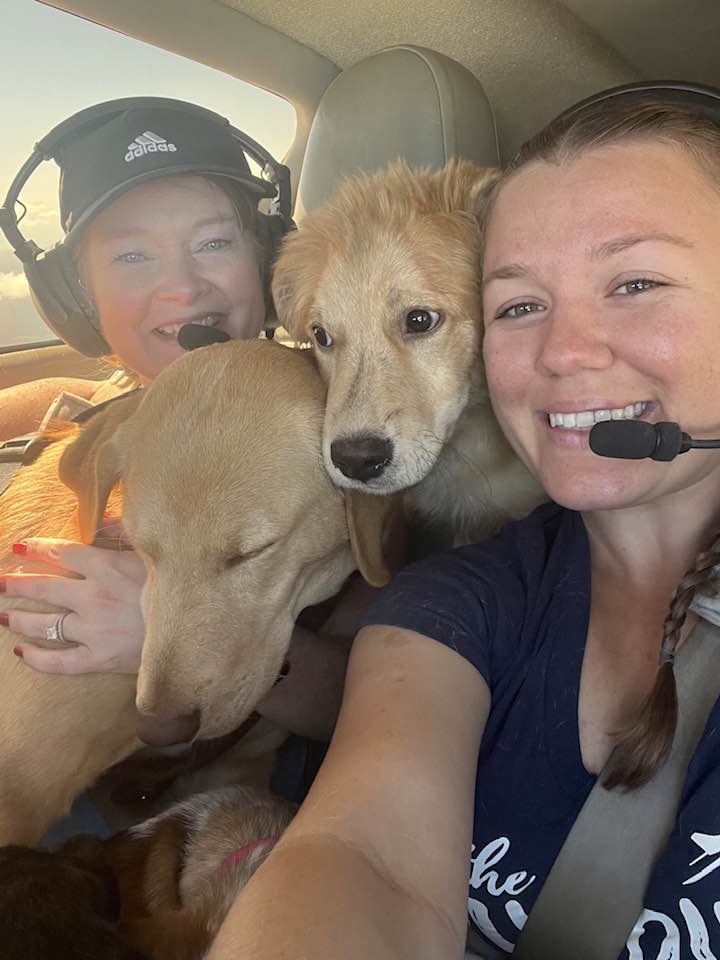
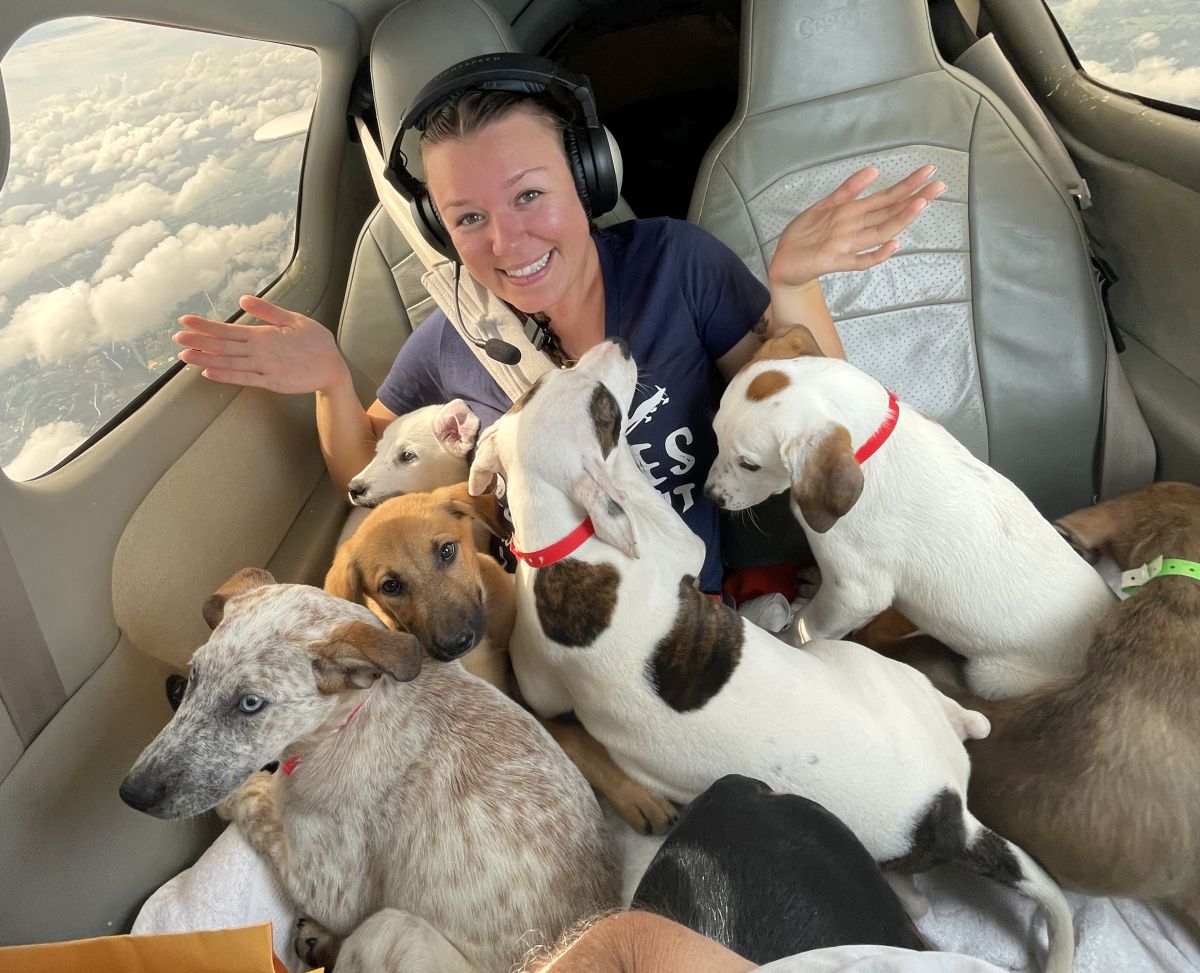
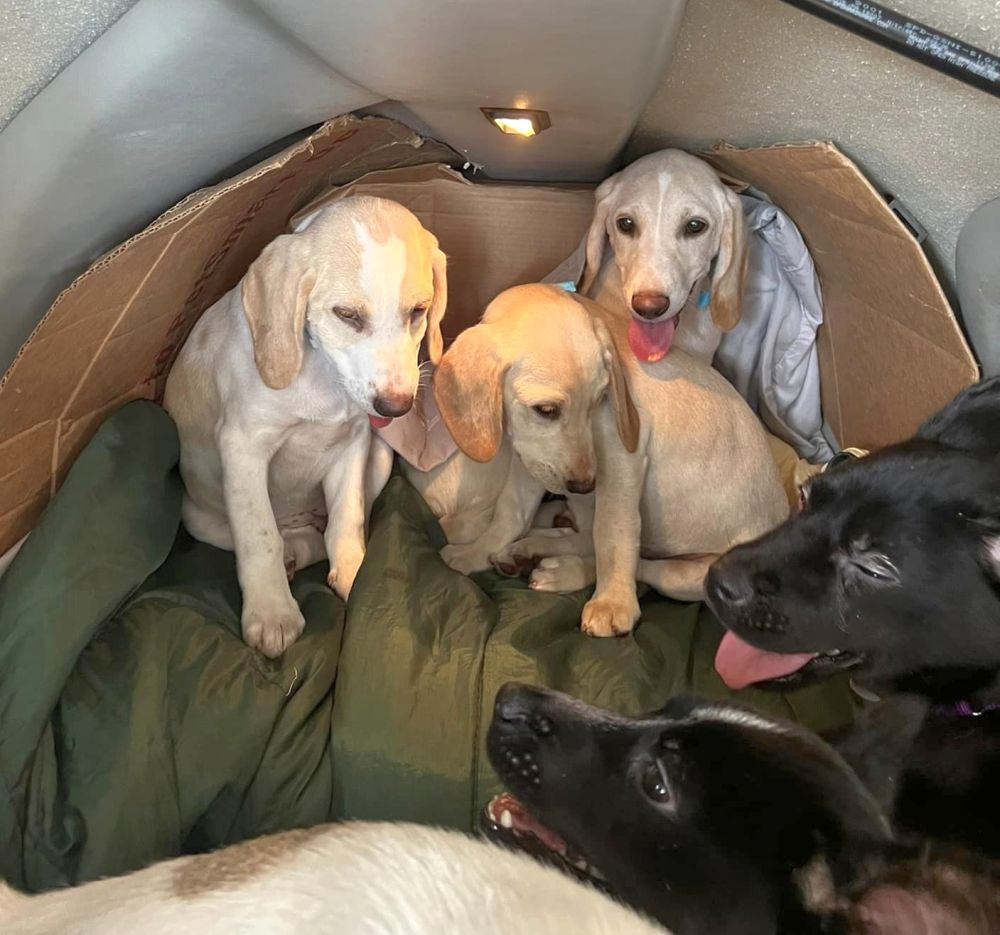
Well, we meet at my Hangar at Apopka Airport around 8:30 get the plan ready and get fuel then we are off to Alabama. I want to get there before the Alabama plane arrive with the pups. Then we put all the pups and dog in a big pen outdoors, so they all get the know each other. Since we do not use crates in my plane, we have to make sure we can separate any two or more pups that do not get along. We would put one in the baggage area and the other in the back seat. We never had an issues ever with this technique with over 10,500 pups flown, It just works.
What are some of the issues you have to deal with?
The primary challenges we face are finding available pilots and dealing with very bad weather. While many of our pilots are instrument-rated and capable of flying in less-than-ideal conditions, severe weather occasionally forces us to cancel or reschedule flights. For example, if bad weather occurs on our usual flight day (Sunday), we might need to move the flight to Saturday. This often requires us to find substitute pilots on short notice, which can be difficult. Balancing these logistical issues is an ongoing challenge in ensuring successful rescue missions.
This version streamlines the explanation, maintains clarity, and emphasizes the effort required to adapt to challenges.
How can the community help support this amazing cause ?
To keep operating, we primarily need volunteer pilots with airplanes who are willing to donate their time and resources. Flying private planes is costly—aviation fuel alone costs about $6 per gallon and accounts for only about a third of the total operating expenses. The Alabama pilots who fly the pups to Enterprise, they spend $100–$200 on fuel per flight, which can limit how often they can participate. Our Florida pilot who have a much longer way to fly fuel cost is typically $300-$400.
To address this, I established our organization as a non-profit to accept donations that help cover fuel costs for these critical rescue flights. Additionally, we want to support rescue groups in Alabama by providing funds for vet bills, vaccinations, food, and other essential expenses. Increasing donations would allow us to sustain our operations and extend more help to rescue partners working tirelessly to save these pups.
Contact information:
- Website: https://puppyrescueflights.org/
- Facebook: https://www.facebook.com/puppyrescueflights




Suggest a Story: OrlandoVoyager is built on recommendations from the community; it’s how we uncover hidden gems, so if you or someone you know deserves recognition please let us know here.