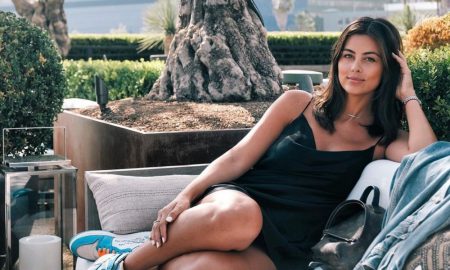



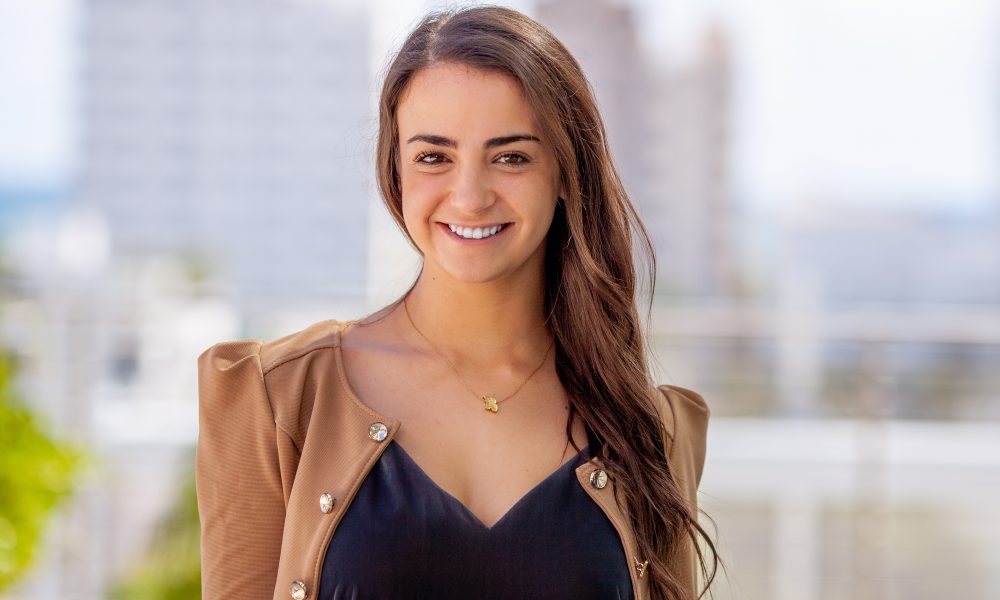
Today we’d like to introduce you to Yasmin Flasterstein.
Hi Yasmin, thanks for sharing your story with us. To start, maybe you can tell our readers some of your backstory.
Usually, I say I am a “hispanic jew gone country.” I was born in Israel, my parents are Argentinian and Bolivian, I spent my childhood in a small town in North Carolina, moved to South Florida when I was a pre-teen, and then to Orlando about six years ago. I have been a part of social justice advocacy work since I was 14, when I was the “straight” person at the gay-straight alliance (spoiler alert: I come out later). My early mental health advocacy work was done because I was inspired by someone struggling near me; it wasn’t until I was at what, at the time, felt like the peak of my career working in the mental health field that I experienced my own mental health breakdown, work became deeply personal after that. I have worn many hats, including being a supervisor at an inpatient treatment center and running a program at a nonprofit that was providing free mental health services following the Pulse tragedy in Orlando.
In my early days getting into mental health work, I struggled immensely with the decision because I hated the mental health system and what I had seen it do and not do. I thought, “I can be the good person within the system, the one that truly cares, and that will make a difference.” I kept finding myself in situations where there really weren’t any resources for individuals and found that the most I could often do was validate how awful an individual’s situations were. The barriers and struggles individuals face became evident to me when I was navigating my own cPTSD and Dissociative Disorder. With each negative experience, I felt so angry, not just for me but for all those that I had told, “it’s okay to get help” THIS was the help? I was able to tangibly channel my energy and passion when I began learning about the peer recovery movement work being done in other states. By creating healing spaces led for and by the communities they serve – separate from any system – we were giving people a safe landing space to reach out for help, we were creating culturally affirming spaces for those that most lack access to quality mental health services, and we were giving people a support system to have as they navigated life-fighting the intense isolation that can often come with mental health struggles. I reached out to my friend and we began Peer Support Space in February of 2019, the nonprofit has since helped over 8,000 individuals receive peer support at no cost to them and many have shared how that has saved their life.
Would you say it’s been a smooth road, and if not what are some of the biggest challenges you’ve faced along the way?
Candidly, launching a new nonprofit is tough. In an effort to meet my basic needs but work full time on Peer Support Space, I ate way more McChickens and Wendy’s 4 for $4s than I would like to admit during Peer Support Space’s first year. I am immensely passionate and confident about the impact of peer services, though and it seems like every time I feel discouraged, someone shares how they were impacted by Peer Support Space and it gives me the fuel to keep advocating. I’ve never been 100% confident about the correct path forward for our intended goals and I struggle a lot with imposter syndrome. While peer services are technically old as time, the use of peer professionals that use the modernly embraced core values of peer support is pretty new to Central Florida. Peer services are becoming more and more embraced but having to educate about what peer services even are has been one of the most difficult obstacles to fundraising and being in the circles that help us to be successful. The largest struggle right now is keeping up with our growth; while we provide so many free services, we have a waitlist of 32 communities we would like to start communal spaces for but we are at a capacity standstill on expanding until we raise more funding to expand our staff.
Thanks – so what else should our readers know about Peer Support Space?
Peer Support Space is a grassroots 501(c)3 rooted in disability justice and collective liberation, the idea that to reach a mental health revolution, nobody can be left behind. Our mission is to build and be a central hub for diverse, peer-led recovery communities. We create communal healing spaces and support systems for populations that lack access to quality mental health services; these same communities are often the most deeply impacted by mental health challenges, including suicidal thoughts. We are 100% led for and by those that have lived experience with their own obstacles to mental wellness. PSS envisions a world where anyone reaching out for help has a safe landing space to do so. In two years, we have built a community of over 8,000 individuals providing peer-led support groups, opportunities to explore new wellness activities, a drop-in center, and peer-led advocacy initiatives.
Our goal is to open up Central Florida’s first overnight peer-led respite center. A nonclinical, homelike environment staffed by those with lived experience, where people can take a (free) break and get away from their home environment for a little before reaching a point of crisis. Our goal is to fill gaps in the mental health system, focusing more on prevention than crisis, referring out when something exists, and working to create the spaces and resources that don’t exist. Peer services are important because in a world where mental health is so stigmatized, talking to someone who has “been there before” can be a lot more approachable. Peer services are an additional wellness tool for individuals. While everyone is unique, each with a combination of things that works best for them, research shows that those that use peer services aren’t just happier with their overall mental health but they are happier with the other resources they are using in tandem with the peer support. Having identity-focused peer services are important because nobody understands the nuances of a community like that community itself.
Where we are in life is often partly because of others. Who/what else deserves credit for how your story turned out?
I would like to give a lot of credit to my good friend and Co-Founder, Dandelion Hill. Dandelion prefers not to be the one doing speaking engagements so I end up getting more credit than due. My passion partner is incredibly gifted at creating peer spaces and they bring the peer values into every part of the organization, everything being done in a communal process. I have learnt so much from Dandelion and they do a lot to support me not just professionally but personally. I am additionally grateful for our Board of Directors, Advisory Council, our 26 peer professionals, our donors, our partners, and for my personal network of friends. It very authentically takes a community to heal a community and I am so blessed to have all the support I have had and for the growing community that makes Peer Support Space what it is, community healing community.
Contact Info:
- Email: yasmin@peersupportspace.org
- Website: PeerSupportSpace.org
- Instagram: @PeerSupportSpace
- Facebook: Facebook.com/PeerSupportSpace


Image Credits
Photo of Yasmin talking to a clapping group is by JD Casto, the photo cutting the ribbon is also by JD Casto. Photo gardening and photo sitting on banner is by Tea Tran Photography.