



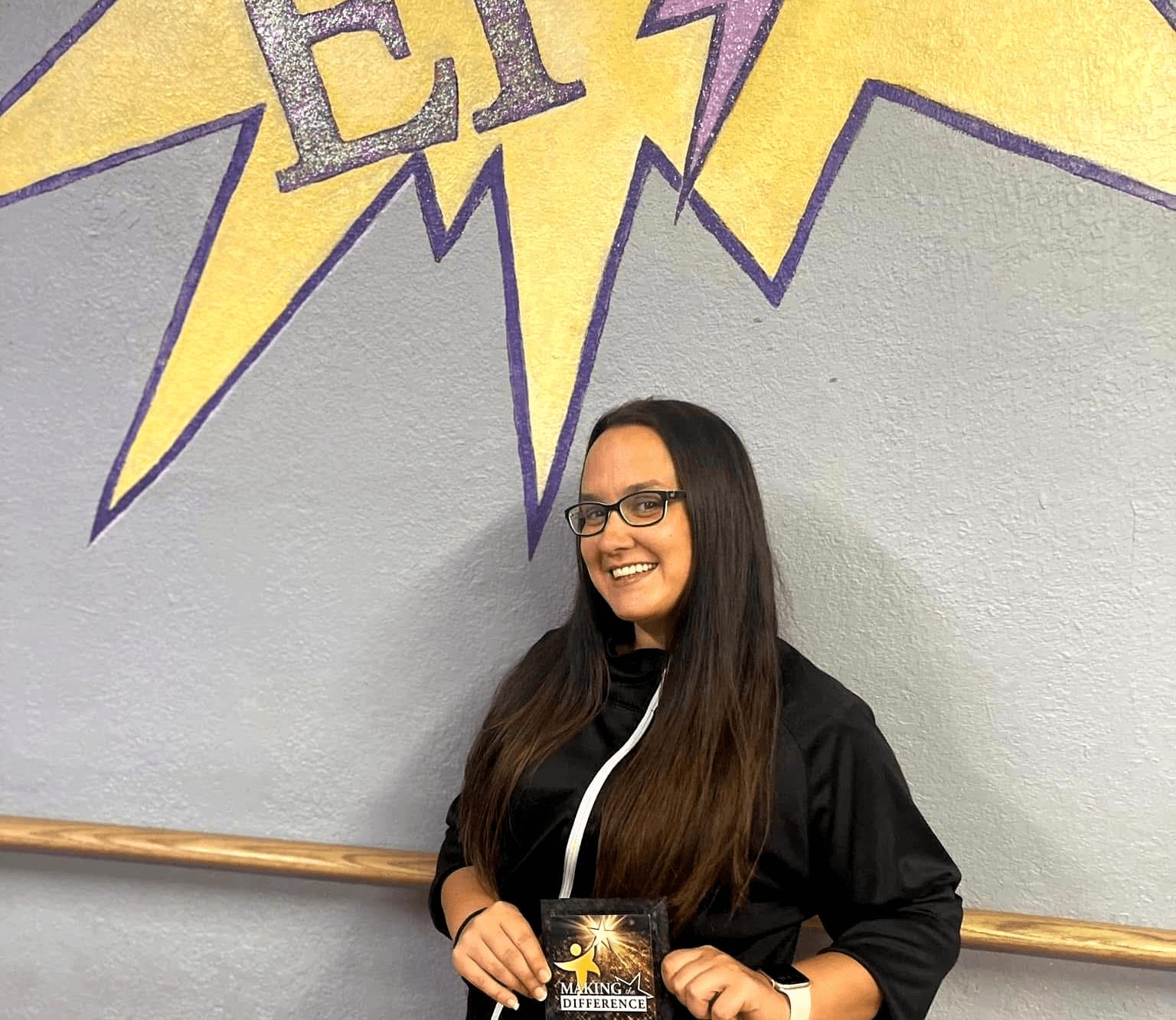
Today we’d like to introduce you to Caitlin McClure O’Connor.
Hi Caitlin, please kick things off for us with an introduction to yourself and your story.
Dance has been part of my life for as long as I can remember. I began dancing at just two years old at my mother’s dance studio in New Hampshire, so in many ways, I truly grew up in a dance studio. What started as something I loved as a child eventually became something much bigger—a career, a passion, and one of the greatest ways I’ve found to make an impact on young people.
At 19, I took over my mother’s studio, which meant I learned very quickly that being a dance educator is about so much more than teaching steps. I learned how much influence a teacher can have on a child’s confidence, work ethic, resilience, and sense of belonging. Those lessons have stayed with me throughout my career and have shaped the teacher and mentor I am today.
Eventually, life brought me from New Hampshire to Florida, and I found a new dance home at Epic Dance Center. Over the years, my role has grown from teaching into working extensively with our competitive dancers and helping develop our competition program. I teach and choreograph across multiple styles, but what I love most is watching dancers grow—not only technically and artistically, but as people.
I believe dance is an incredible tool for preparing children for life. Yes, I want my students to have beautiful technique, perform confidently, and achieve their goals. But more importantly, I want them to learn how to work for something, how to accept correction without allowing it to diminish their confidence, how to recover when something doesn’t go their way, how to support the people beside them, and how to believe they are capable of more than they initially thought.
At the end of the day, only a small percentage of the children we teach will make dance their career, but every single one of them will take the person they became in that studio out into the world. My goal is not simply to build strong dancers. It is to help build strong, confident, resilient young people who will become part of our future society. That is what makes this work so meaningful to me.
Would you say it’s been a smooth road, and if not what are some of the biggest challenges you’ve faced along the way?
It definitely has not always been a smooth road. There have been many times throughout my career when I’ve wanted to quit. One of the hardest challenges has been learning to continue believing in myself when other people didn’t—or when I felt like I constantly had to prove that I was good enough to be doing what I was doing.
Imposter syndrome is very real, especially in an industry where there will always be someone more accomplished, more technically trained, more successful, or doing something differently than you. I have questioned myself more times than I could ever count. Am I good enough? Am I giving these kids enough? Do I actually belong in this position? Sometimes those questions came from other people, but very often they came from me.
Over time, I’ve realized that being a great educator doesn’t mean knowing everything or never questioning yourself. In fact, some of that questioning is what continues to push me to learn, evolve, and become better for my students. The important part has been learning not to let doubt become the thing that stops me.
That struggle has also deeply influenced the way I teach. I know what it feels like to question whether you are good enough, and I never want a child’s confidence to depend entirely on a score, a placement, a role, a trophy, or someone else’s opinion of them. I want my dancers to learn that they can be proud of themselves while still having room to grow. They can receive criticism without believing they are a failure. They can lose and try again. They can walk into a room where someone doubts them and still know exactly who they are.
There are still days when I question myself. The difference now is that I keep going anyway. And maybe that is one of the most important lessons I can model for my students: confidence isn’t never doubting yourself—it’s refusing to let that doubt decide what you’re capable of.
Can you tell our readers more about what you do and what you think sets you apart from others?
My work as a dance educator and choreographer spans many different styles, but my greatest passion is working with young dancers and helping them discover what they are capable of—both inside and outside of the studio.
Technique is incredibly important to me. I want my students to understand that becoming a strong dancer requires discipline, consistency, attention to detail, and a willingness to be corrected. I believe in setting high expectations for my dancers because I believe they are capable of meeting them. At the same time, I never want their value as a person to become tied to how high they can leap, how many turns they can do, what role they receive, or what score they earn at a competition.
If there is something that defines me as an educator, I think it is that balance. I don’t believe we have to choose between raising strong dancers and protecting strong, confident kids. I believe we can—and should—do both.
I’m also incredibly passionate about storytelling through choreography. I love finding music and concepts that allow dancers to connect emotionally with what they’re performing rather than simply executing movement. Some of my favorite moments aren’t necessarily the routines that win the biggest awards. They’re the moments when a dancer finally understands how to make an audience feel something.
What I’m most proud of, though, can’t really be measured by trophies. It’s watching a shy child begin to take up space. It’s seeing a dancer who once cried when corrected learn to say, “Okay, let me try again.” It’s watching teammates celebrate one another’s successes. It’s seeing older dancers become role models for younger ones. And it’s having former students come back years later and realizing that something they learned in the studio stayed with them.
I want my dancers to leave me knowing how to work hard, how to be accountable, how to handle disappointment, how to advocate for themselves, how to lift up the people around them, and how to walk into a room believing they deserve to be there.
Dance is what I teach. Young people are why I teach it. If that’s what I’m ultimately known for, I would be incredibly proud of that.
We love surprises, fun facts and unexpected stories. Is there something you can share that might surprise us?
Something that surprises a lot of people is that dance isn’t actually my full-time job. I work a full-time career in healthcare during the day, and then most evenings you’ll find me at the dance studio teaching, choreographing, rehearsing, planning, or working behind the scenes on our competition program.
People sometimes ask me how I manage to do both, and the answer is probably that I’m still figuring that out! There are definitely days when I leave one job exhausted and walk into the studio knowing I have several more hours ahead of me. But once I’m in a room with my dancers, something changes. Dance has always been the part of my life that feels less like a job and more like a purpose.
I think that’s also why I’m so invested in what happens beyond the choreography. My time with these kids is time I’ve chosen to give them, and I want it to mean something. If I’m going to spend my evenings helping young people grow, I want them to leave with more than great technique and great memories. I want them to leave stronger and more confident than when they walked through the door.
So maybe the surprising thing isn’t simply that I have another full-time career. It’s that after all these years, dance is still the thing I choose to come back to every day.
Contact Info:
- Website: https://Www.theepiccenterarts.com
- Instagram: @The_epic_center
- Facebook: The Epic Center