


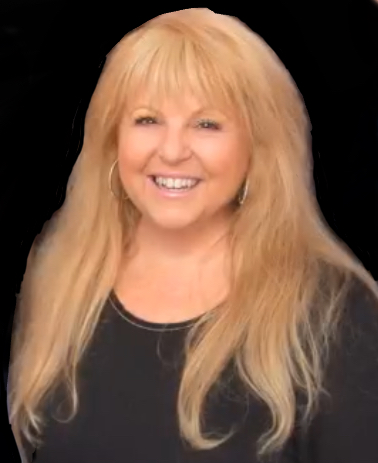
Today we’d like to introduce you to Marcie Cramer.
Hi Marcie, thanks for sharing your story with us. To start, maybe you can tell our readers some of your backstory.
Even as a young girl, I was the person that all my friends (and even some adults) came to for input and advice. However, growing up, I never did well in school because I had undiagnosed ADHD, learning disabilities, as well as undiagnosed autism spectrum disorder. This led me to feel stupid, not good enough, and wonder if I was intellectually deficient in some profound way. By 13, I was already using drugs and alcohol as a way to medicate my sometimes suicidal depression and unwanted other feelings. I managed to graduate high school by the skin of my teeth, but, of course, flunked out of my first two terms of college. I was lost and directionless and had no idea what I was ever going to make of myself—if anything.
By a profound stroke of luck, I met someone who told me he was auditioning for Florida School of the Arts, a professional arts college in Palatka, Florida, based on New York’s School of the Arts. I had always loved theater, so I auditioned and was one of 13 students admitted to their professional theatre program. Florida School of the Arts changed my life deeply and profoundly, because it gave me the discipline to commit to something I had a passion for. The culture at that school was “step up or get left behind,” and it challenged me in ways I had never been challenged before, while continuously expecting my absolute best. I somehow rose to the occasion, and when I graduated, I moved with some college friends to New York City.
I was immediately overwhelmed by the audition scene in New York, surrounded by incredibly talented actors, singers, and dancers. So I ended up drinking heavily and cocktail waitressing for a year while going on zero auditions. Eventually, I gave up and moved back in with my parents in Florida. I was now 24 years old.
We all face challenges, but looking back would you describe it as a relatively smooth road?
At that point, with a degree in theater, there weren’t a lot of employment opportunities. I started seeing a career counselor, and he told me he thought I would make a great therapist. Somehow, he also got through to me that if I continued drinking and using drugs, I wouldn’t be able to be a good therapist because I’d have no credibility. I got sober and relapsed repeatedly for the next year, but eventually, I was able to truly get into recovery. I’ve now been clean for over 42 years.
In spite of being clean and sober, school still seemed quite daunting to me. But I could feel a passion driving me to become a therapist, just like I had felt that same calling to theater. I applied to Rollins College in Winter Park, Florida, and was accepted into their Social Science program. My learning disabilities were still undiagnosed, and by the third time I failed Spanish—because I conjugated all the verbs wrong—I was sent for testing. That’s when my auditory and visual learning disabilities were confirmed. With some assistance, I was able to graduate.
At the time in Florida, one didn’t need a master’s degree to become a therapist. With my bachelor’s in Social Science, I opened a private psychotherapy practice. I started out seeing adolescents because even at 26 years old, I still looked 16 or 17, so we related well. Within a couple of years, I had a full caseload.
However, Florida soon passed the 491 Law, which required therapists to have a master’s degree in order to practice legally. Because of my learning disabilities and other challenges, I had never completed the paperwork to be grandfathered in. So I applied to the University of Central Florida’s master’s program in Mental Health Counseling and got to work on my Master’s degree.
While doing my master’s internship, I had the profound honor of meeting Jean and Jack Mezera (who have both sadly passed away). Together, we opened Counseling Services of Central Florida in 1989 (we rebranded as the Center for the Healing Arts about 15 years ago). As all three of us came from alcoholic and drug-addicted backgrounds and we were all in recovery, we became deeply committed to supporting the substance abuse recovery community in Central Florida and in 1986, we helped pioneer the Adult Children of Alcoholics movement, as well as the Codependency movement here in Central Florida, and opened the Adult Children of Alcoholics Treatment Center on Howell Branch Road in Winter Park.
Alright, so let’s switch gears a bit and talk business. What should we know about your work?
As I started my private practice, I was became known for two areas of expertise. First, I had many gay friends growing up, so I was connected to the LGBTQ+ community even as a teenager—despite identifying as straight. This was the early ’80s in Florida, and the LGBTQ+ community was still at risk and often underground. I was one of the very few therapists who openly welcomed LGBTQ+ clients. It was—and still is—a profound honor to assist in the liberation and healing of this community for over 40 years.
Second, I was still seeing many adolescents, especially those with alcohol and drug issues. I soon found that parents needed help, too. Of course they did—there is no perfect parenting handbook. As I began working with parents, that work naturally evolved into couples therapy, which I hadn’t had much training in at that point. One day, a colleague recommended the book Getting the Love You Want: A Guide for Couples by Harville Hendrix. Halfway through reading it, I threw it across the room because I realized: if he was right (and he was), I needed more training. His theory and methods are called Imago which means image of in Latin. Basically his hypothesis is that we choose someone who has the same level of trauma that we have. And the relationship is the living lab to help each other heal. And while all of this is true, none of us have the skill level until we learn it. This is because our models for relationships are often in our parents and let’s face it. Most of them aren’t qualified. However, to become a Certified advanced Imago clinician would require four more years of postgraduate education—and it was expensive. But I wanted to be excellent at couples therapy, so I did it. The Imago 4 year post graduate training changed my life, my relationships, and absolutely elevated my skills as a therapist.
Along the way, I started using my rescue dog, Cocoa, in my psychotherapy practice. The healing my clients experienced while being attended to by this incredible being in a dog’s bod was profound. I wanted others to experience this type of healing on a larger scale so I then then co-founded my nonprofit, Psychological Service Dogs (a 501(c)(3) organization) with Jocelyn McGuinness (who sadly passed this pass February). We were the first service dog organization in the world at that time to rescue, rehabilitate, and train dogs specifically for individuals with invisible disabilities. While we thought our main clients would be veterans with PTSD (and that is true in part), most of our clients have been individuals on the autism spectrum or those with anxiety and depression. One of our stated missions is that: We rescue dogs to rescue people!
At this juncture in my career, I present deep trauma trainings for other therapists, as well as healing intensives for individuals and couples. I also lead full-day couples’ healing intensives designed specially for that individual couple. Additionally, I provide training for therapists on how to become clinically competent in both trauma treatment and Florida laws affecting the trans community. I am as passionate about all of this therapeutic work now as I was over 42 years ago.
I approach each therapy session as an opportunity to meet and assist someone very special. My core belief is that we are not “sick trying to get well,” but rather, hurt trying to heal. I deeply believe that a therapist’s main job is to listen—not only to what clients say about where they need to grow and heal, but also to what they’re not saying—especially when they don’t yet know it themselves. And an excellent therapist’s next main job is to know what questions to ask – to take the client deep into their unconscious so both the client and therapist are profoundly aware of what healing needs to happen next.
I am committed to ensuring that every client’s therapeutic experience helps them heal, grow, and change in profound ways so that they can reach their full potential and find the happiness we all deserve.
My areas of expertise continue to include couples therapy, Adult Children of Alcoholics, individual therapy, addictions, relationships, and families. I feel profoundly blessed to still be working in a profession that feeds both my soul and my life’s purpose.
Let’s talk about our city – what do you love? What do you not love?
I moved here in 1968 and Winter Park was a very small little town. Disney wasn’t even here. So needless to say, I’ve seen a lot of changes. I love our cultural arts, of course! And while I am not LGBTQ+ myself I am a fierce ally to the LGBTQ+ community. And while we still have plenty of work to do and investments to make, I love that Orlando has become a warm safe space (for the most part) for my LGBTQ+ brothers and sisters.
I would be surprised if anyone did not mention the traffic as our least favorite about our city. The Orlando-Winter Park area has a unique way of still continuing a small town feel, while offering all of the amenities of a big city.
Contact Info:
- Website: www.centerforthehealingarts.com and PsychologicalServiceDogs.org
- Facebook: https://www.facebook.com/search/top?q=center%20for%20the%20healing%20arts%2C%20inc and https://www.facebook.com/PsychologicalServiceDogsInc