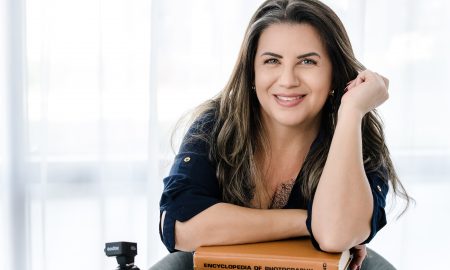


Today we’d like to introduce you to Natalie DiIenno.
Hi Natalie, so excited to have you on the platform. So before we get into questions about your work-life, maybe you can bring our readers up to speed on your story and how you got to where you are today?
My first semester of college, I was planning on studying biology and was interested in a career in natural healthcare. It was during this time that I took my first photography class, and my professor had us analyzing images, considering cultural theories, and exploring ourselves as humans and creators. While I initially waited before truly accepting a career in the arts, trying to involve myself in more lucrative or ‘traditional’ opportunities, I eventually realized that I wanted to be in his place – making art and teaching others the methods and value of photographic-based images. I welcomed this change in trajectory for my future and consumed myself in creating fine art. I often took self-portraits. I was fixated on and explored this contemporary era of photography and the camera phone. Most of us (if not all) are ‘photographers’ – we take pictures of a sunset or our cat to distribute with our social groups; we take self-portraits to represent ourselves on media platforms like Facebook, Tinder, Instagram, and Snapchat; we have easy access to a camera and the means of sharing our images essentially anytime, anywhere. I was consumed by the communal custom of the ‘selfie’ and examined how we personally identify with photographic images of ourselves. I realized that I have a unique opportunity to explore self-portraiture and identity with one’s photograph. As a triplet with an identical sister, I had a literal, living ‘image’ that I could include in my work. I would often include my sister in my self-portraits, provoking a conceptual debate ‘who is who’. I explored my identity, my represented identity (how others perceive me), and the process of photography as a means of creation.
All of these themes are subcategories of a main concept: the double. The double can be described as an embodied manifestation of the ego which may assume different forms. Freud explains that the double poses the encountering of the self as other, facilitating the action of taking oneself as the other and the other as oneself – just like our doubles in our selfies. Before going to New York to study for my MFA in 2014, I had an emergency appendectomy. It was severe and life-changing. Sometime after this surgery, I experienced an indescribable amount of pain. It was an uninterrupted, intense ache, and it made activities walking, driving, or even getting out of bed agonizing and difficult. For a long time, it only got worse with every day. Any kind of activity was a struggle, but despite this, art became a means of trying to live through this painfully demanding time. My art transformed into a meditative practice. I photographed myself slowly, creating work carefully, working at the most comfortable pace possible. I found myself quiet, comfortable while I was shooting, concentrating on light and darkness, rather than solely how much pain I was experiencing at the moment. I expanded the focus of my artwork to explore beyond and the body and its limitations, and this practice became a process to help me mentally sublimate beyond my physical experience.
Shortly after, my father unexpectedly passed away. It was abrupt and startling. I felt like I was living my life going through the motions while I was mentally elsewhere. I realized recently that without creating art, I do not know how I would have been able to process the physical and mental pain I was encountering. Photography became a source of relief, contemplation, distraction, and portrayal of what I was enduring. My self-portraits became abstract and referred to that which is immeasurable and much larger than the body, such as cosmos, deep oceans, and the infinite. I photographed myself in exploration of the notion of ‘the void’ – concepts of the universe and the unconscious. As Carl Sagan says, “we’re made of star stuff”. I occasionally incorporated medical imagery as I endured countless strategies to alleviate me from the physical pain I was in. With each new procedure, I delved deeper into abstraction. This phase of my life lasted for quite some time, and most of my 20’s investigated physical and mental relief. This relief was not only for myself; I wanted my viewers to experience some sort of meditative peace when viewing my work. I experimented with methods of making my art more immersive, increasing the size of my prints and experimenting with projected light. I wanted my viewers to feel as if they are able to step outside of their world for a moment into a tranquil space where they may contemplate these larger-than-life concepts/spaces/ideas… I notice now that much of my art is a balancing of two parts, a union of two into one.
Eventually, I found myself exploring the double, tranquility, and infinity in new ways. Of course, I never stopped collaborating with my sister, but I refined my processes with her. I also delved further into abstract images and began shooting landscapes, continuing to examine the notion of the infinite. Specifically, I analyze and employ what is known as the aesthetic sublime. The aesthetic sublime can be described as a quality of greatness (physical, mental, aesthetic, artistic, and spiritual greatness), which implies an intensity beyond possibility of measurement or imitation. One of my current bodies of photographs I am actively working on is titled ‘In Search of the Miraculous’. I call it ‘a portrait of the sublime’. The work began after viewing Lake Ontario for the first time. The optics of the lake horizon reminded me of the ocean, a seemingly infinite abyss. The body of work is a series of seascapes, infinite horizons of sky and sea, balanced equally on the picture plane. This new series of landscapes explore the same ideas of the aesthetic sublime, infinity, and two-part balance. The work is also addressing the idea of the pair, abstractly externalizing my personal history as someone who has gone through life with an identical sister. I became interested in the ways this landscape evoked the sublime and subsequently began searching for places that bring about a parallel experience.
It also provided a new meditative photographic practice, as the series forces me to be beachside and shoot long exposures during sunrise or sunset. The manipulation of the image creates balance and tension, like a ying-yang, an abstraction of the multiplicity of experiences that a confrontation with the infinite elicits. My newest photographs with my sister are similar, focusing on an equal balance of two parts to compose a photograph. In many of our images, my sister and I are mirroring each other, doubling each other and each other’s actions. It is impossible to view one figure without the other, automatically resulting in a visual relationship between the figures as a ‘pair’. I describe this as an exploration of synergy, or the notion that a whole is greater than the sum of its parts.The composition often transforms our bodies into matching, balanced, and connected lines while abstractly suggesting growth and conjunction. The linked figures generate one shape, augmenting our individual bodies into a single, embodied unit, visually demonstrating our symbiosis. I want my artwork to be calming, abstract enough to hold your attention but clear enough to enter the mental space I am trying to attract attention. I think it is healthy to consider sublime greatness and that which is beyond the body. It is humbling, intense, yet peaceful to think about how large our Earth is, how our time here is such a small portion of the history of everything, yet despite how small we are, we can be at peace through our time here.
Would you say it’s been a smooth road, and if not what are some of the biggest challenges you’ve faced along the way?
In 2015, I prepared to move to New York and study for my Masters of Fine Art. A few months before the big move, I had an emergency appendectomy. Shortly after the surgery, an agonizing pain developed in my right hip. It got worse with every passing day and it made simple activities like walking, driving, or even something as simple as getting out of bed difficult. Dispute struggling through this uninterrupted, intense pain, art became a means of trying to process and live through this demanding time. My self-portraits started becoming fragmented and abstracted. I endured countless procedures to alleviate me from the physical pain I was feeling. With each new procedure, I delved deeper into abstraction. None of the procedures worked that well, if at all. Shortly after, my father unexpectedly passed away. It was abrupt and left me feeling like I was living my life going through the motions while I was mentally elsewhere. Photography became a source of relief, contemplation, distraction, and portrayal of what I was enduring. These experiences transformed my artwork.
My self-portraits became further abstracted and referred to forces much larger than the body such as cosmos, deep oceans, and spaces evocative of infinity. Creating artwork became a meditative practice. I worked slowly, the only pace possible without creating further discomfort. I found myself feeling quiet, focusing on feeling comfortable while I was shooting, concentrating on light and darkness rather than how much pain I was experiencing at the moment. For most of my 20’s, I investigated physical and mental relief in my artwork. The process of artmaking elicited a meditative and soothing state of mind that I share with my viewers when reflecting upon my work. My photographs encourage viewers to experience a sort of mental peace, an introspective and grounding moment of contemplation. It is humbling and enlightening to consider how small we are compared to our Earth and galaxy and how short our time here is compared to the age of the universe. Yet, despite this, we can feel content and at peace as we live our lives.
Alright, so let’s switch gears a bit and talk business. What should we know about your work?
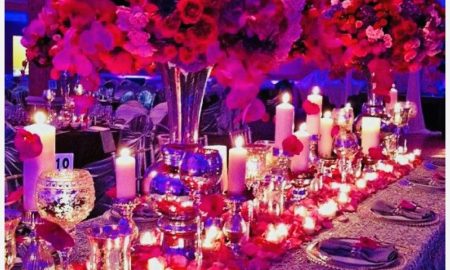
I have worked hard to become a successful professional photographer and professor. I work as faculty at University of Tampa and Erie Community College. Photography is my specialty, and I teach a range of photographic classes, from 35mm film and analogue processes to digital photography and Photoshop. I also teach 2-D Design techniques and 3-D Design at ECC in Buffalo. Additionally, I teach Visual Literacy in the communications department at UT, instructing non-art majors on image design and social studies established on our image-based culture. I enjoy having a variety of art and image-based classes and am passionate about the content in these courses. However, I am most known as a Fine Art Photographer – specifically, I shoot exhibitions and collections for artists, museums, estates, and galleries. My images may be used as a documentative image for a publication, as an archival source for a collection, or for reproduction prints. I have worked for painters, sculptors, and conceptual artists alike. I worked hard to get to this point in my business, drudging through many different commercial photography niches, from sports and family events to architecture and weddings. Some of the work I enjoyed, and some of the work I did not. Along the way, I faced sexism, ageism, and beliefs that the value of my work is only worth a minimum wage. Despite these setbacks, I networked, passed along business cards, and built a foundation to create my own business.
Is there anyone you’d like to thank or give credit to?
There are some valuable people I think are worth mentioning that helped me find inspiration and motivated me to continue to create artwork. One person is my sister, Juliet. While we grew into artists through very unique ways, she constantly supported me to continue creating ambitious work. She never denies any conceptualizations I pitched while preparing for a photoshoot together and offers through her own contribution of ideas. She is open-minded and willing to try anything to collaborate with me. My sister encourages a drive in myself to continue pushing forward – not only together but also for myself. I know that I am better with her because I know I feel less whole/complete when we are not together. We make a great team, and she is such a positive force in my life. Another person is not someone I know personally but constantly feels inspired by. Yves Klein and his iconic blue hue is a source of interest for me in my own work. As you may be able to see, much of my work is black and ultramarine blue. He uses this color to discuss similar topics as myself, such as the idea of the void, deep sea/skies, and incorporeality. Lastly, A dear friend of mine, Matthew, has been a rock of support for me in my artistic endeavors. He has introduced me to other creatives that I may be able to work with or work for. He is a craftsman, and he was my go-to for troubleshooting issues during production. He has the tools and the knowledge to help me create artwork, including set props, finishing and framing methods, and technology-based content. Always encouraging, Matthew helps me look positively, believes in my talent and skills, and assists with any advice he can offer. He has a special place in my life and I am grateful for him.
Contact Info:
- Email: nataliediienno1@gmail.com
- Website: nataliediienno.com
- Instagram: https://www.instagram.com/nataliediienno/
- Facebook: https://www.facebook.com/nataliediiennoart


 Image Credits
Photographs by Natalie DiIenno